
You Can Test Your Phone’s Water Resistance Without Tools — Here’s the Trick…
There’s a way to test your phone’s water resistance without any special tools. There is a catch, though. You need a phone with a physical SIM card slot.
In this example, the Huawei Pura X is used because it carries an IPX8 water resistance rating. Since it’s designed to survive water immersion under controlled conditions, it’s a good reference point for how a properly sealed device behaves.
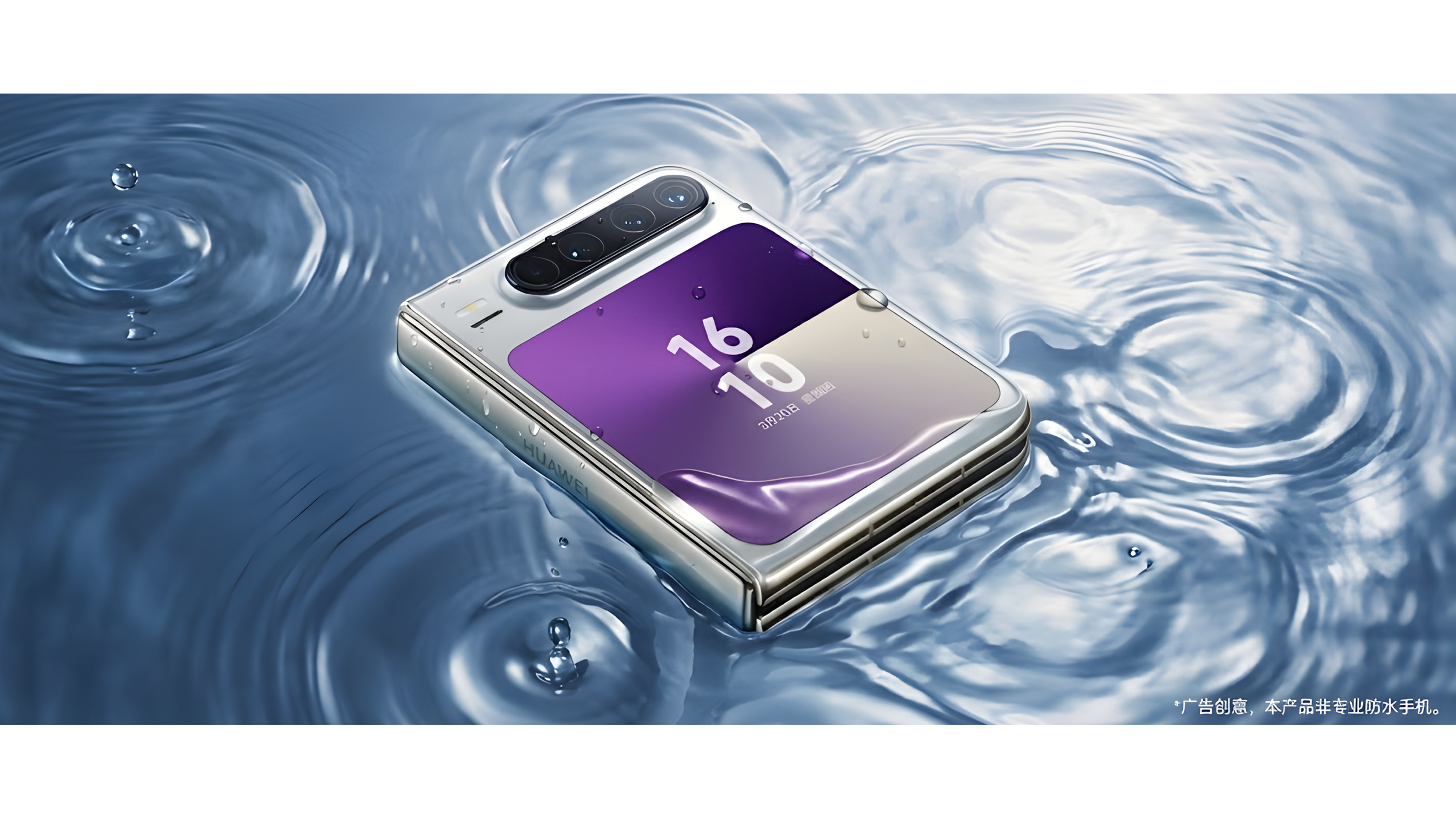
The idea behind this method is simple. Water-resistant phones are sealed systems. If the internal gaskets and adhesive seals are intact, air cannot easily escape. That same resistance to air is what helps keep water out.
And that’s exactly what we’re testing.
How the SIM Tray Pressure Test Works
The steps are straightforward:
| Step 1 | Step 2 | Step 3 |
|---|---|---|
| Pop out the SIM card tray. | Place your mouth over the SIM slot. | Gently apply air pressure. |
When this is done on a properly sealed device like the Huawei Pura X, you’ll feel pressure build up. The air does not have many places to go because the phone is sealed. That resistance is a good sign.
Now compare that to a phone with compromised seals. When you apply the same pressure, you won’t feel resistance. The air leaks out immediately through weak adhesive, frame gaps, damaged gaskets, or cracks.
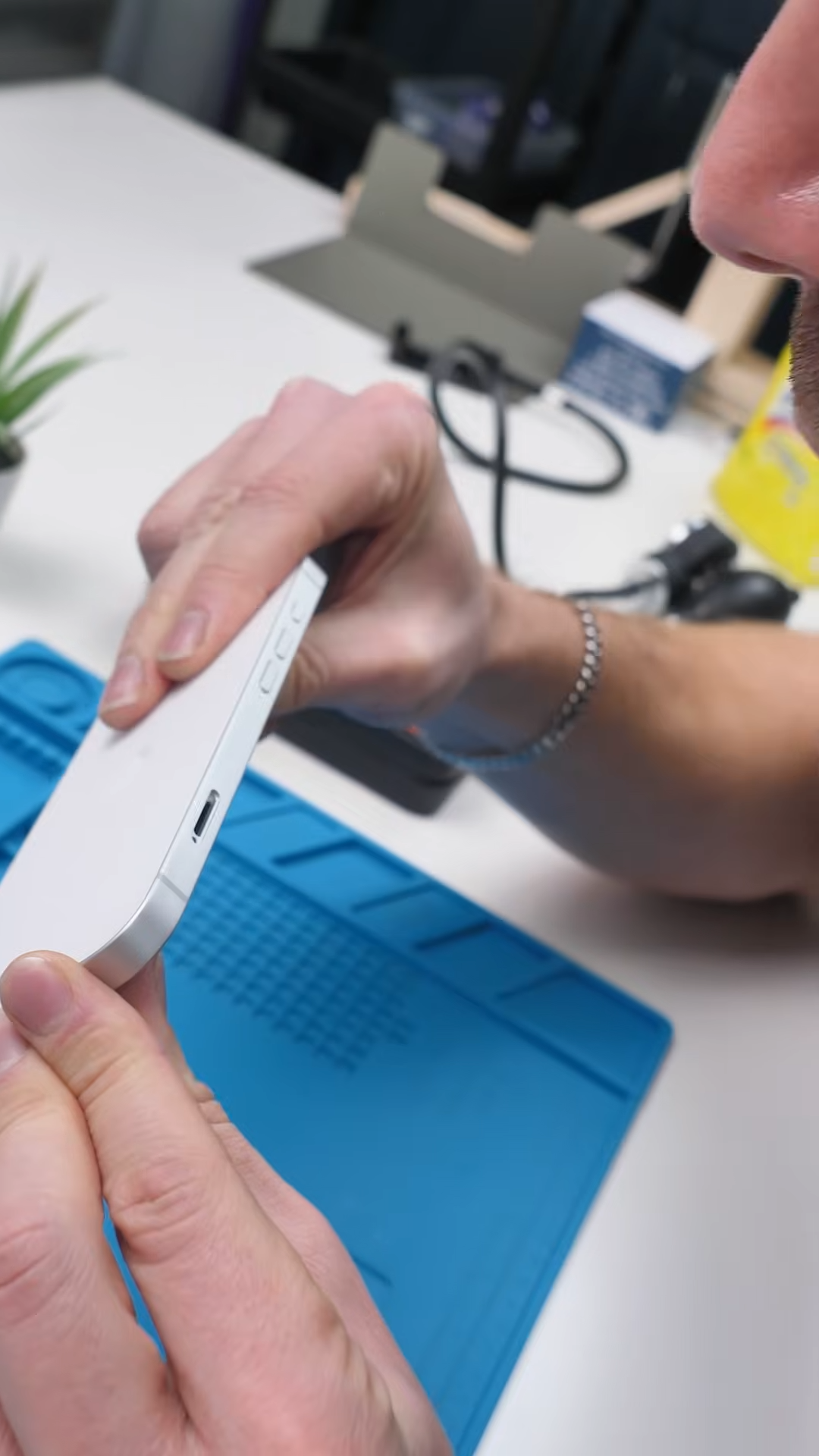
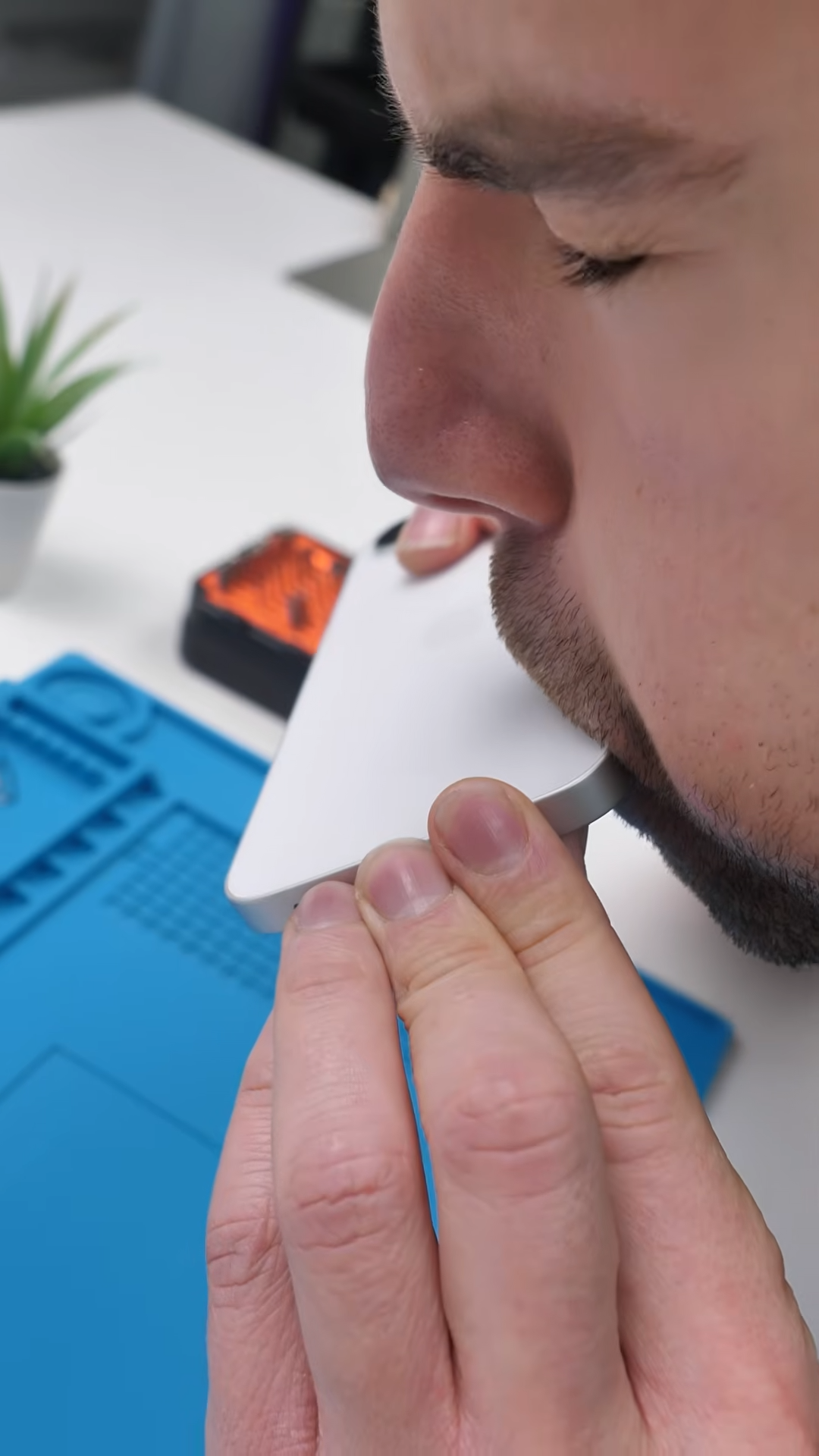
If there’s no pressure buildup, that’s usually a warning sign.
Why This Works
Water resistance relies on:
Display adhesive sealing
Back panel adhesive
Rubber gaskets around ports and buttons
The SIM tray’s rubber O-ring seal
Internal mesh membranes over microphones and speakers
Modern phones use microscopic hydrophobic membranes over speaker and mic openings. These allow air to pass through for sound, but block water droplets. That’s why phones aren’t perfectly airtight even when sealed correctly. So when you feel pressure buildup, you’re not testing absolute airtightness. You’re testing whether the primary structural seals are still intact.
If those seals are weakened, air escapes quickly. That’s exactly what professional pressure testing tools measure.
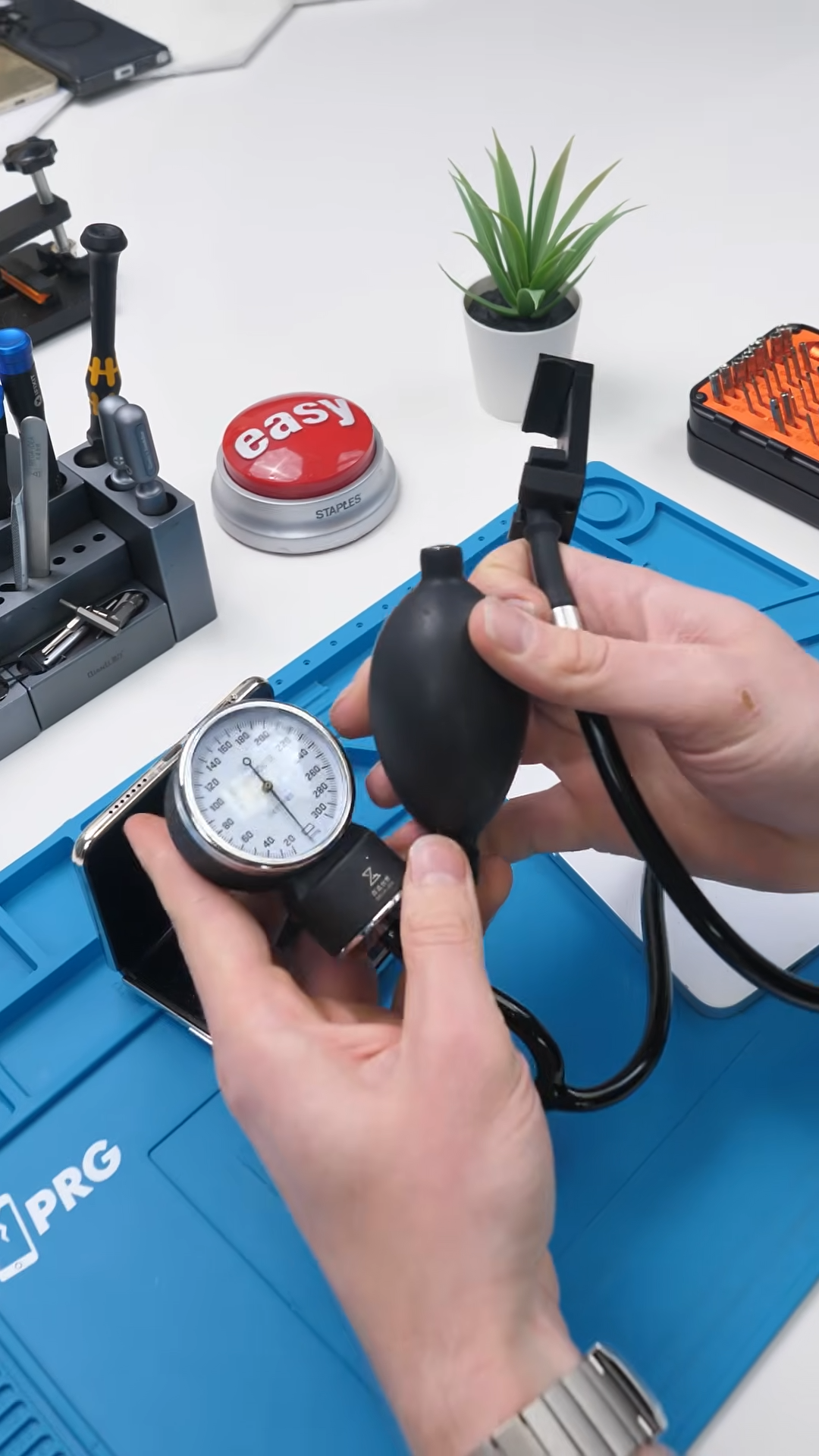
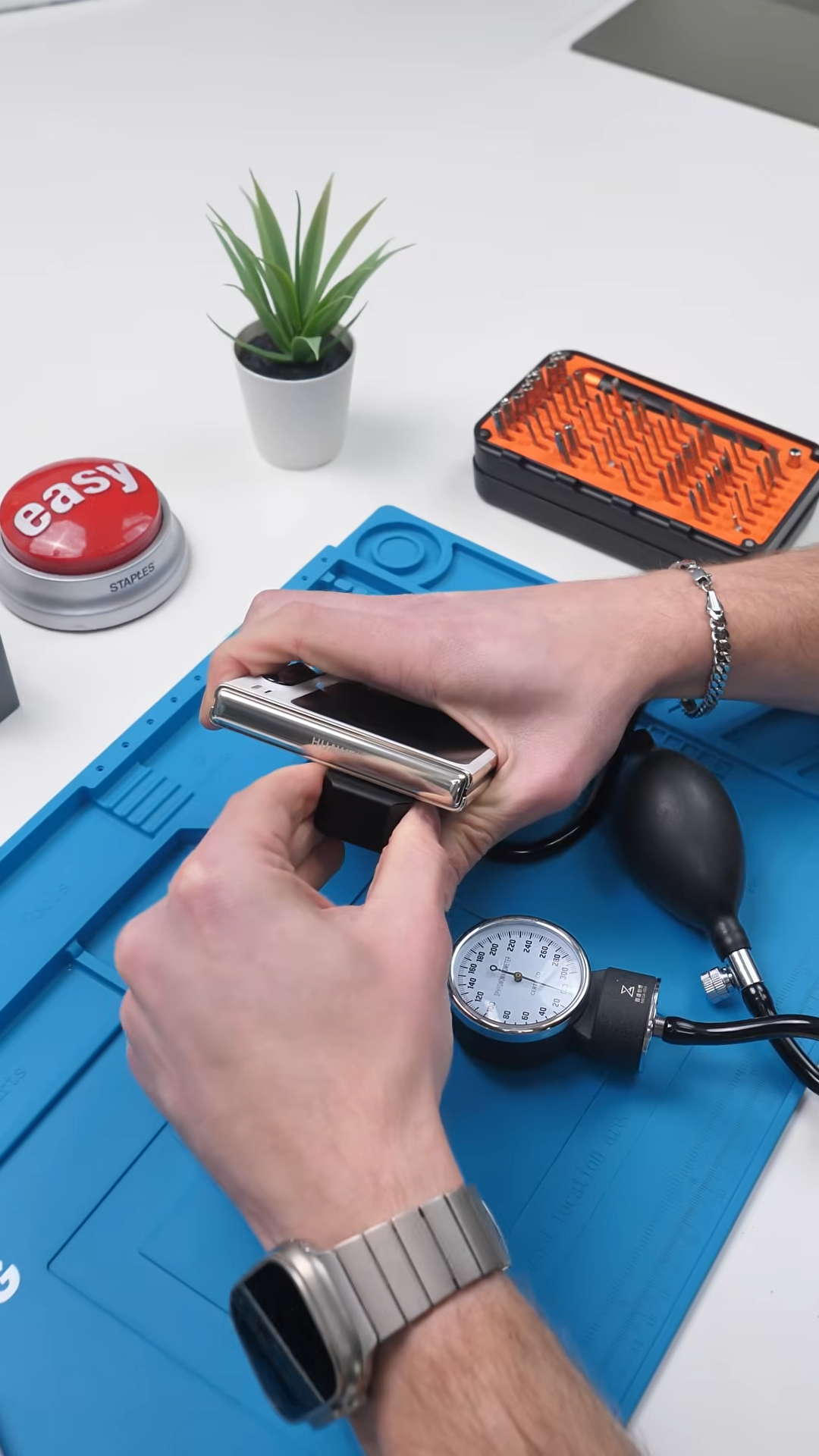
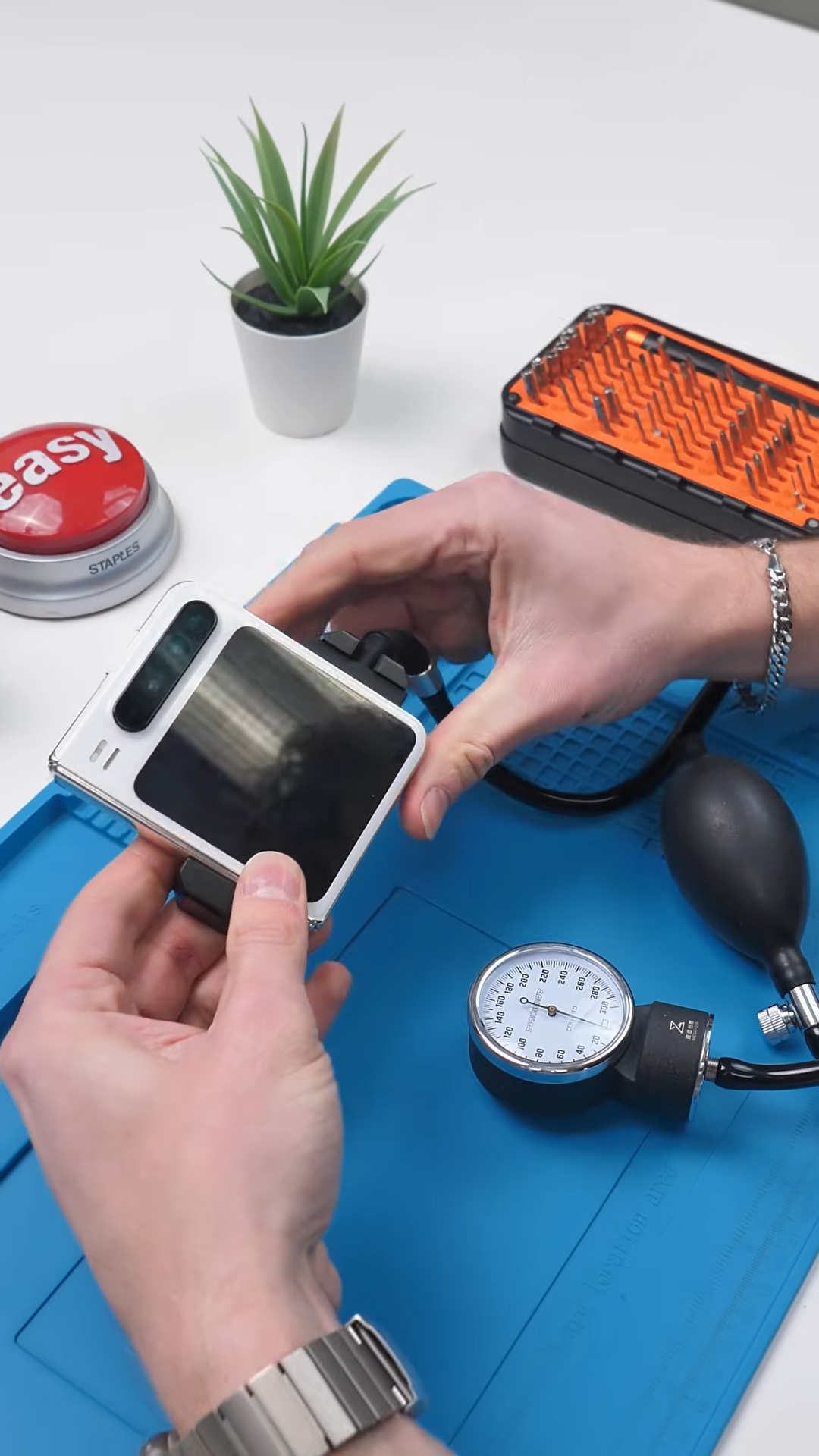
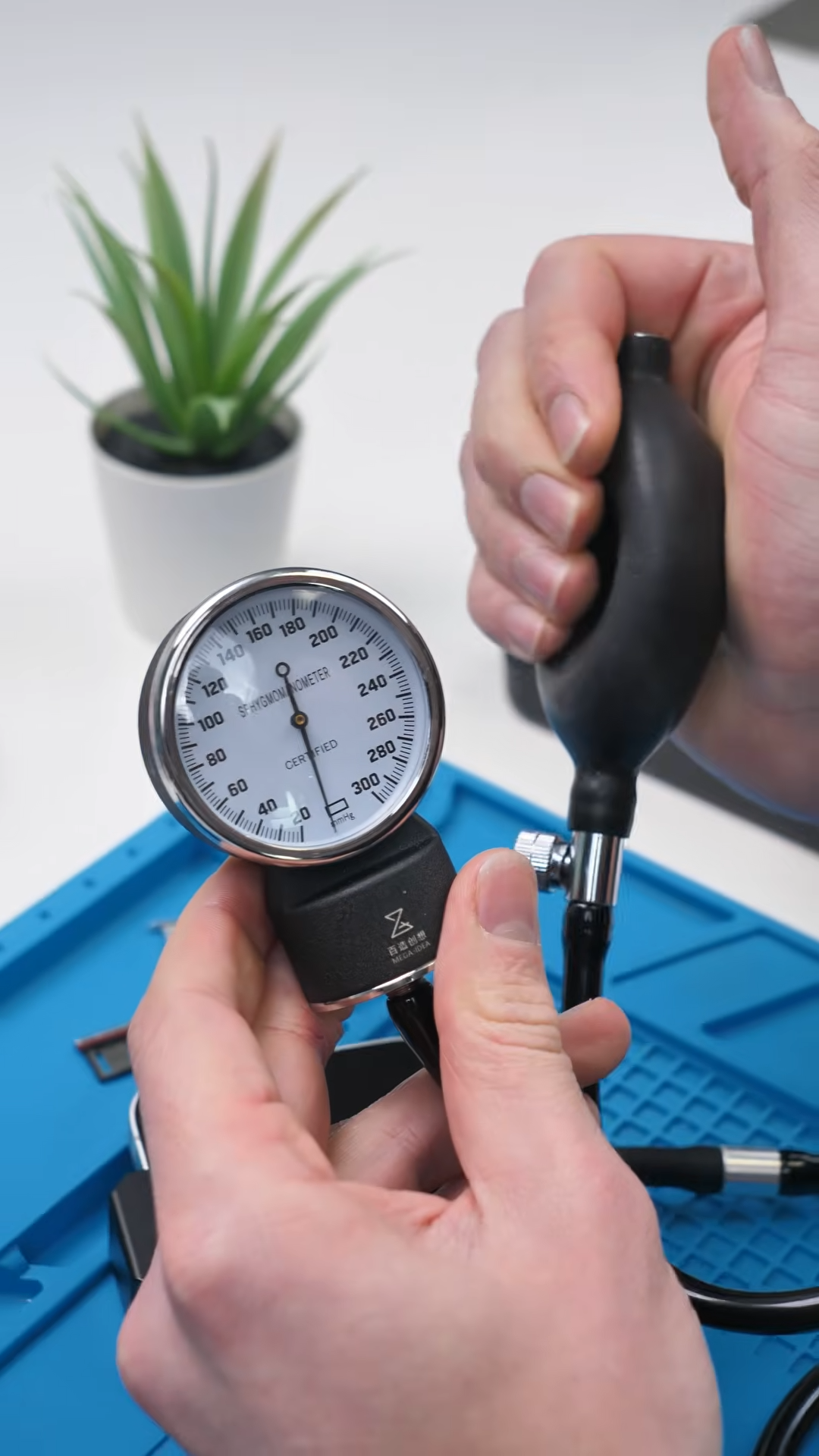
Repair shops use sealed chambers and calibrated gauges to detect pressure decay over time. The tool shown above is a proper pressure gauge. It measures how much pressure builds up inside the phone and gives a numerical reading.
With the SIM tray method, your mouth becomes the gauge. You are simply feeling whether pressure builds or escapes.
It’s not scientific, but it follows the same principle.
Understanding IP Ratings
An IP rating like IPX8 means the device is tested for continuous immersion in water under controlled lab conditions.
But here’s what most people don’t realize:
IP ratings apply to brand-new devices.
They do not account for drops, repairs, or aging.
Adhesives degrade over time due to heat cycles and flexing.
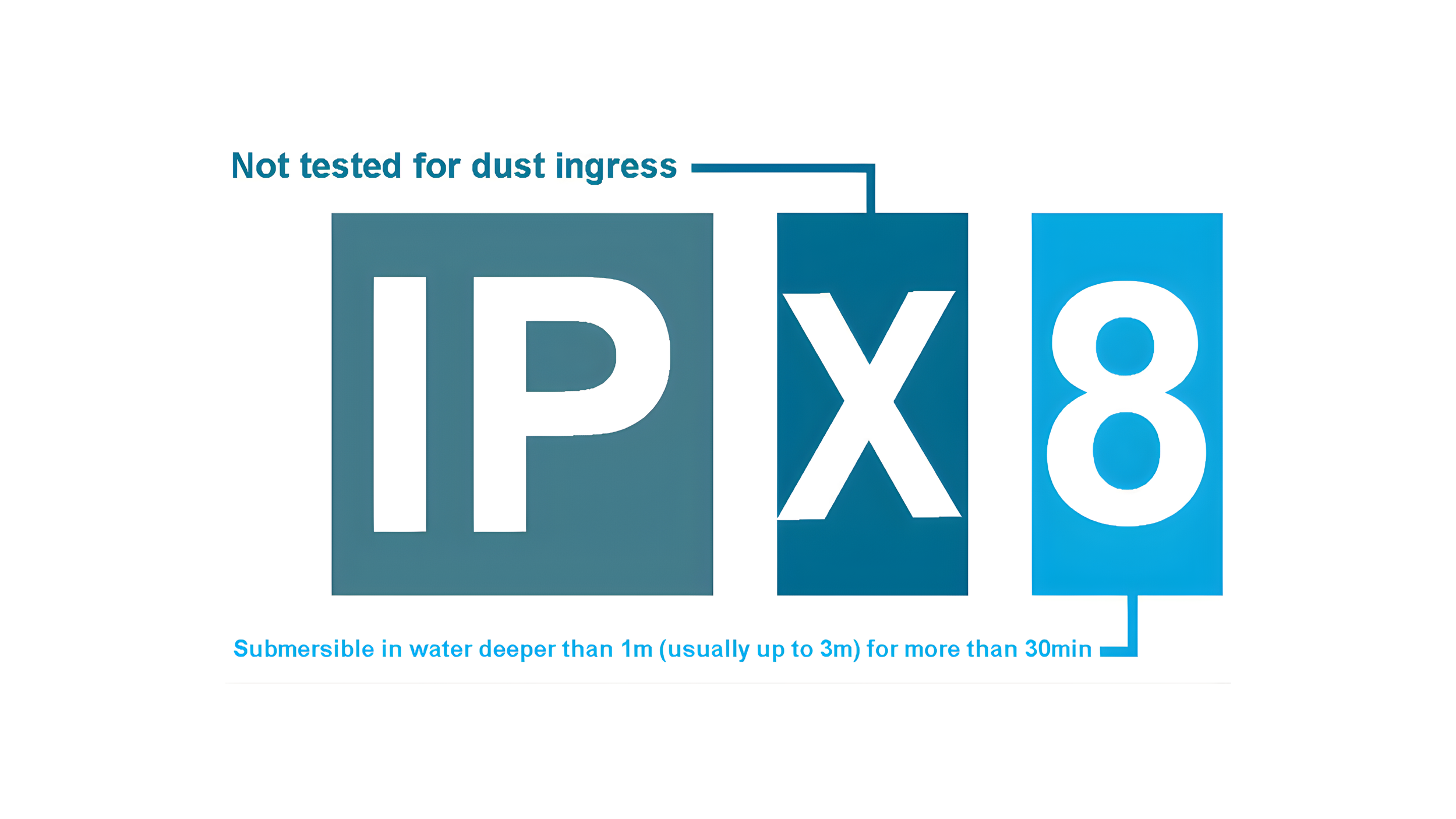
Phones expand and contract daily with temperature changes. Over months or years, that movement can weaken adhesive bonds. So even if a phone once had an IPX8 rating, it may not behave the same after two years or after a screen replacement.
That’s why this test can be useful.
What This Test Can and Cannot Tell You
This method is not 100 percent reliable.
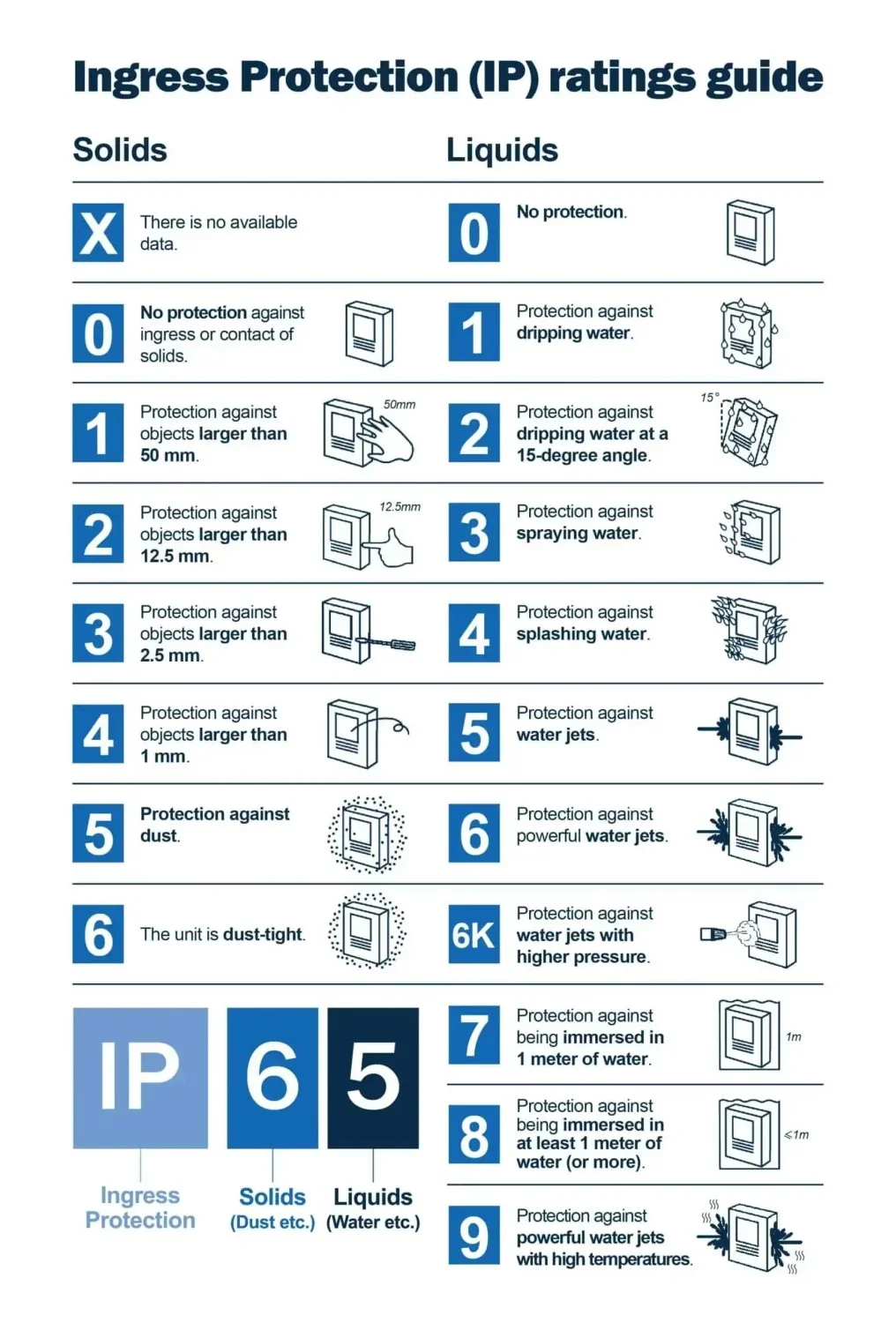
It will not confirm official IP ratings, guarantee waterproof performance or replace professional pressure testing.
Even though the Huawei Pura X carries an IPX8 rating, this test does not certify that rating. It only gives you a rough indication of whether the major seals are still holding.
What it can reveal is whether something feels obviously compromised.
If the phone:
Had a screen replacement
Was opened for repair
Has cracked glass
Shows frame separation
The adhesive integrity may be weakened.
If there is zero resistance during this test, that’s a red flag. If you feel noticeable pressure buildup, that’s generally a good sign.
Important Safety Notes
You can lightly blow or gently suck air through the SIM slot. The goal is simply to feel slight pressure resistance, not to force air into the device.
Do not forcefully blow air into the phone.
Do not introduce moisture.
Do not attempt this on a device that already has water damage.
Also, if you don’t have a reason to perform this test, don’t. And if you do, avoid repeating it over and over. One or two gentle attempts are more than enough. Repeated pressure changes can stress weakened seals.
This method can also indicate if a phone has been opened or repaired before. If the device was previously disassembled and not properly resealed, air will usually escape much more easily. The goal is to check resistance, not challenge the phone.
Final Thoughts
This SIM tray pressure test is a quick, tool-free way to get a rough idea of your phone’s sealing condition. It is not lab-grade and it will not confirm an official IP rating, but it follows the same principle used in professional pressure testing tools. The difference is that instead of a calibrated gauge, you are relying on feel.
If pressure builds up, your seals are likely still intact. If the air leaks freely, that is a strong sign the phone may no longer be properly sealed.
It is simple, fast, and surprisingly useful as a first check before trusting your phone anywhere near water.
See you in the next article!
