
The $60 Gadget That Saved My Sanity From Endless Static Shocks
The Shocking Problem

You know those days when you touch anything metal and instantly regret being alive. That was me this week. I was getting static shocks all over the place and started worrying about zapping something expensive on my desk.
Phones, logic boards, screens, all sitting there like static magnets. One tiny discharge can destroy sensitive components without even leaving visible damage.
It gets old fast, especially when you work around electronics all day.
So after dealing with these constant surprises, I picked up something that cost me about $60. Turns out it might save me a whole lot more in the long run.
Meet the Deionizer
This little device is called a deionizer. It looks simple, but the way it works is actually pretty cool. Under the metal plate on the front are small pins that generate high voltage. That voltage creates ions in the air, and the built in fan pushes those ions outward across your workspace.

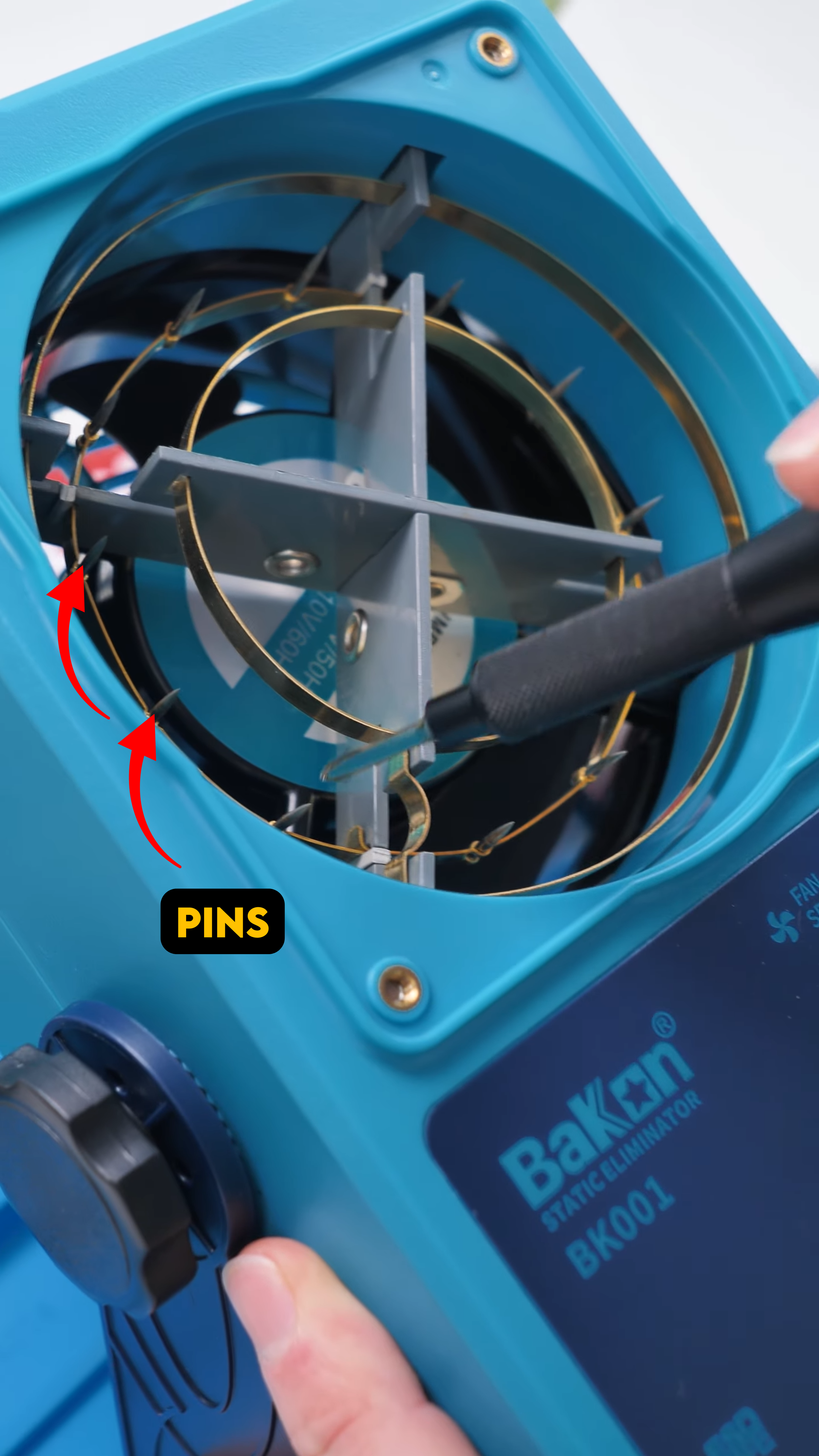
Those charged ions latch onto the static on your hands, tools, or devices.
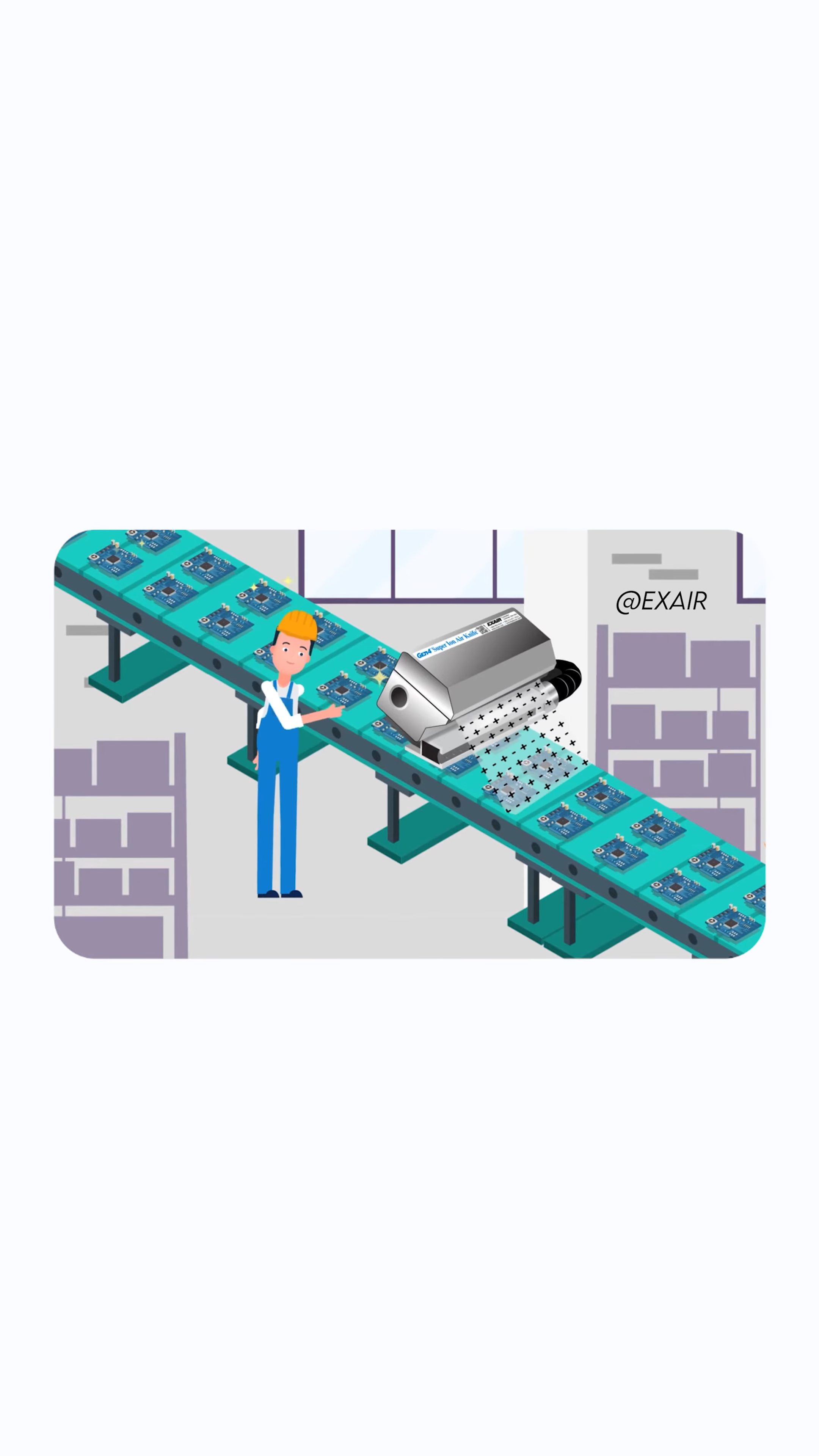
Once they attach, they neutralize the charge. That means fewer shocks for me and a lot less risk for the electronics I am handling every day.
Deionizers like this are standard equipment in electronics manufacturing. Companies use larger versions over assembly lines to prevent static from frying expensive components. Mine is obviously smaller, but it works the same way. It is basically a personal static windshield.
Why Not Just Use an Anti Static Wristband?
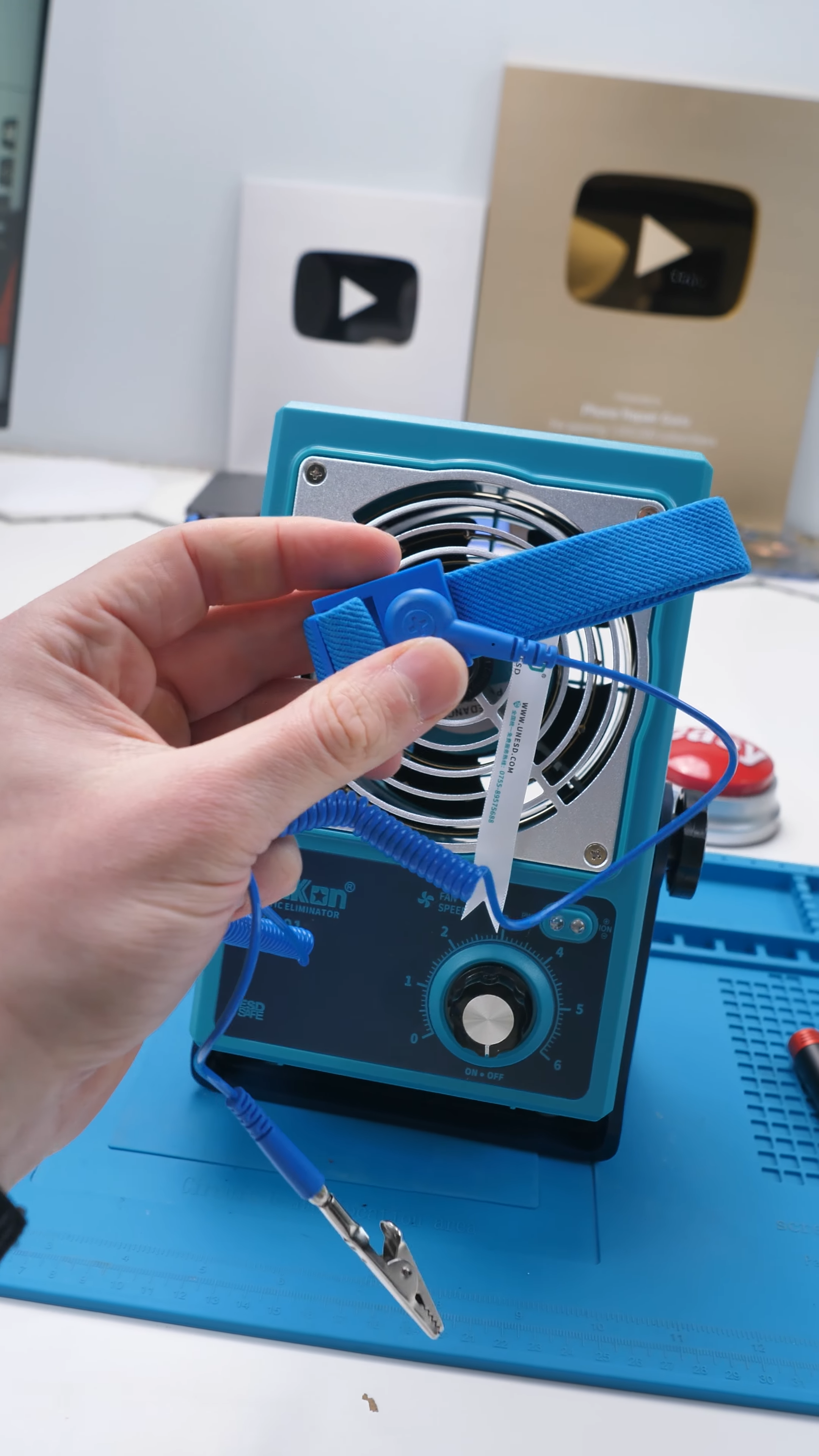
Of course, the classic solution is an anti static wristband. You clip it to ground and you are protected. The problem is that I hate feeling tethered. Every time I move around the desk, the cable gets in the way or pulls on something. It works, but it is annoying.
The deionizer solves that. I just put it on the desk, turn it on, and it neutralizes the entire area without me being attached to anything. For certain repairs where mobility matters, this is a lifesaver.
Using It in Real Repairs
Once I set it up, I noticed something immediately. No more surprise zaps when handling displays, battery connectors, or delicate power flex cables. I even tested it before touching a metal tool and there was nothing. The air genuinely feels different when the thing is running. Almost like it removes that dry crackly feeling that builds right before a shock.
It is not replacing full ESD protection in a professional setting, but for a small repair bench or a home workspace, it is way better than I expected.
Is a Deionizer Worth Buying
| Who Will Benefit From a Deionizer |
|---|
| Anyone repairing or modding phones |
| People in dry climates |
| Anyone who keeps touching their PC and shocking it |
| Anyone who hates wrist straps |
| Creators who work around open electronics all day |
If you are constantly getting shocked, sixty dollars feels cheap compared to frying a logic board.
Final Thoughts
I bought this thing out of pure frustration, and it turned out to be one of the most useful tools on my desk. Not glamorous, not high tech, but incredibly practical. If you work on electronics, a deionizer is one of those tools you do not know you need until you try it.
Also, fun fact. If you hold your hand too close to the ion pins, you might feel a weird tingle. They should really call that a bonus feature.
See you in the next article!
