
I Removed the iPhone 17 Pro Vapor Chamber… Here’s What Happened
Apple made a big deal about improved thermal performance on the iPhone 17 Pro Max, and a lot of that credit goes to the vapor chamber cooling system.
On paper, it promises better heat dissipation, more sustained performance, and less throttling during heavy workloads. But I wanted to know the real answer: if you remove it completely, does it actually make a difference? So I tested it.
Baseline Test With the Vapor Chamber Installed
Before tearing anything apart, I needed a control test. With the phone fully assembled and the vapor chamber still inside, I ran a full stress test to see how hot it would get under sustained load.


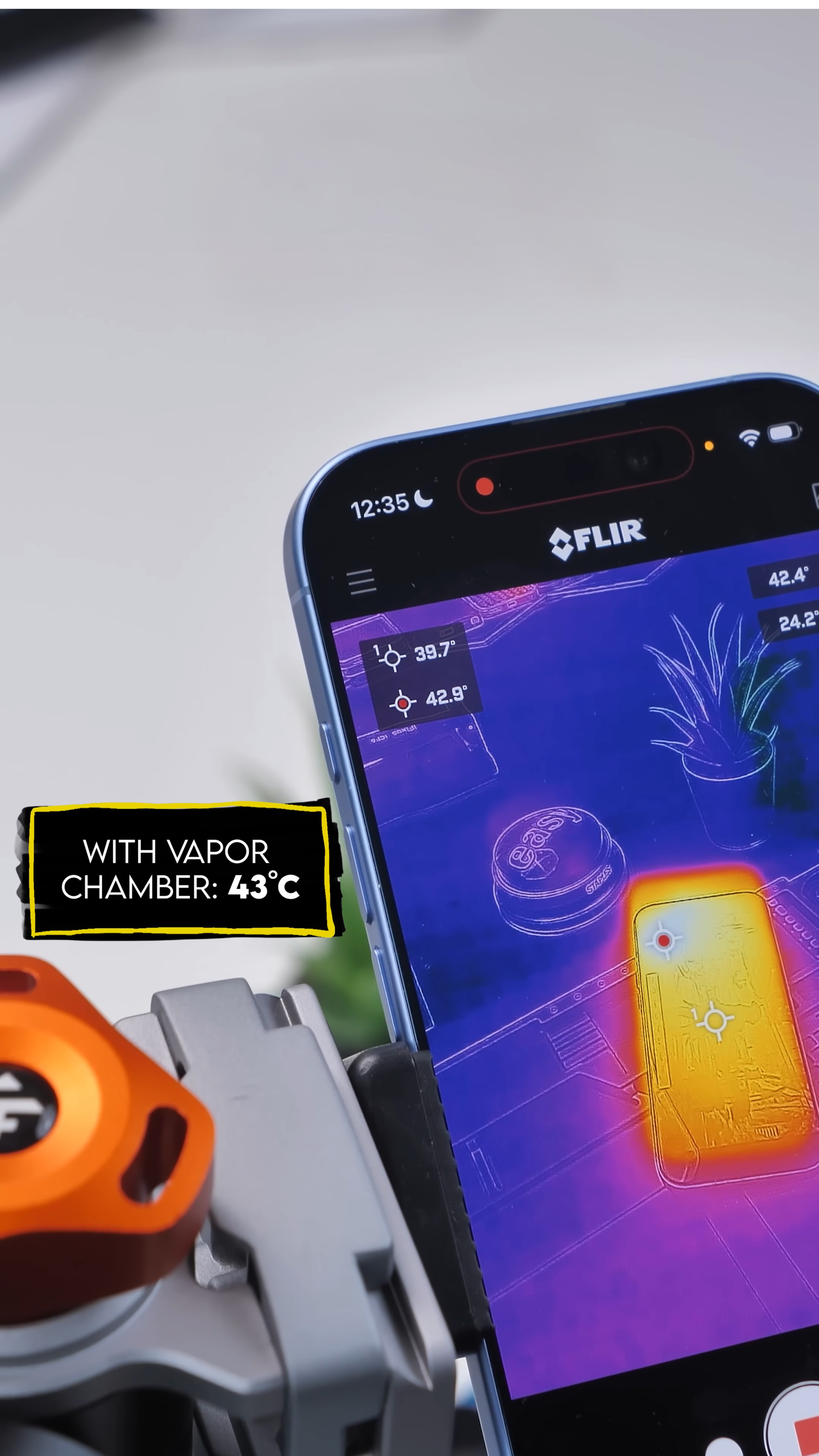
After pushing the CPU and GPU as hard as possible, the hottest temperature I recorded was about 43°C (roughly 110°F) due to the. At that point, the device was clearly thermally throttling, which likely prevented temperatures from climbing any higher.
Opening the iPhone and Removing the Vapor Chamber
Next came the teardown.
I opened the device and started removing internal components, including the Torx screws and the metal plate over the battery. The vapor chamber is integrated right into that assembly, so once the plate came off, the vapor chamber was effectively gone.
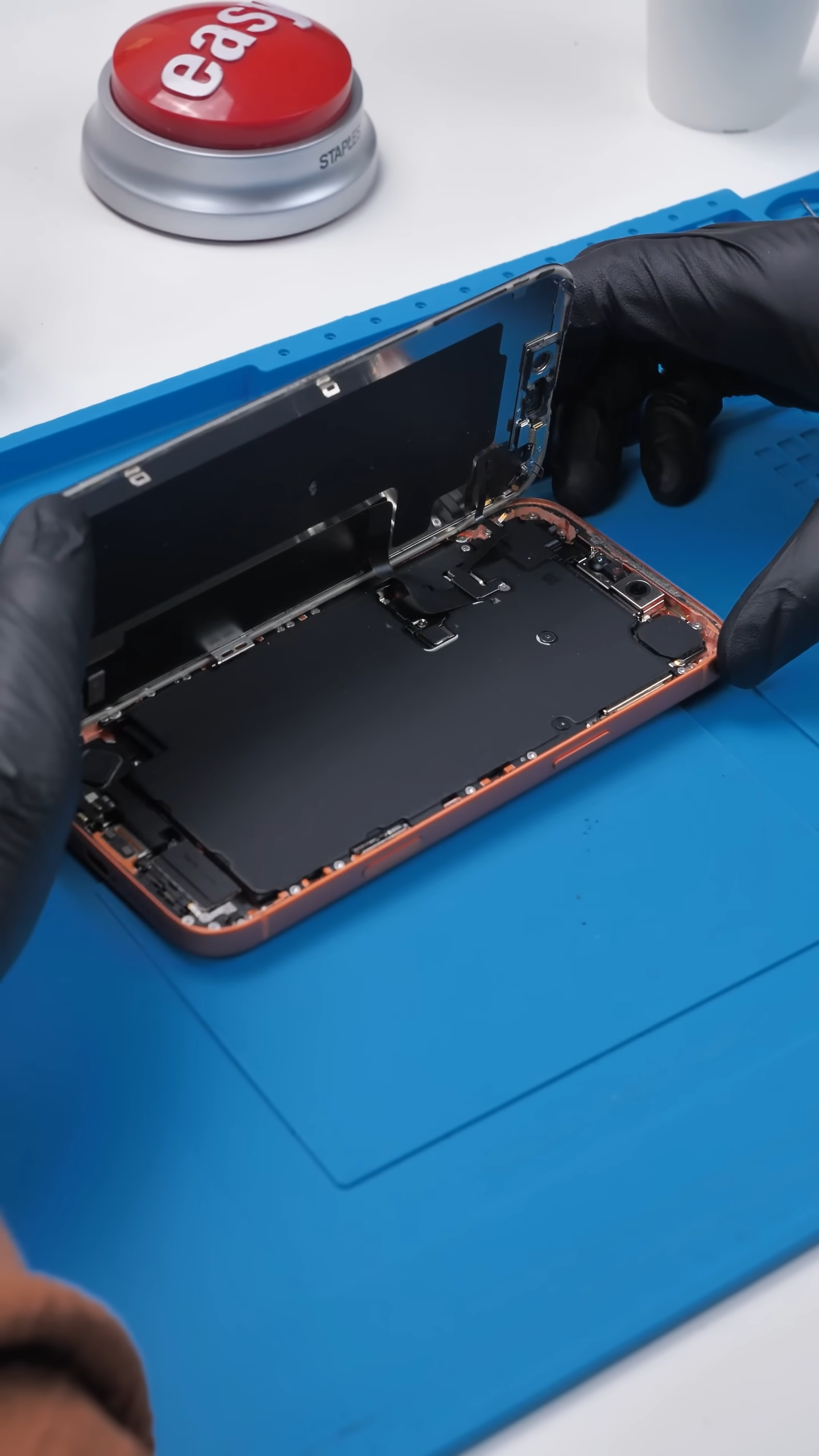
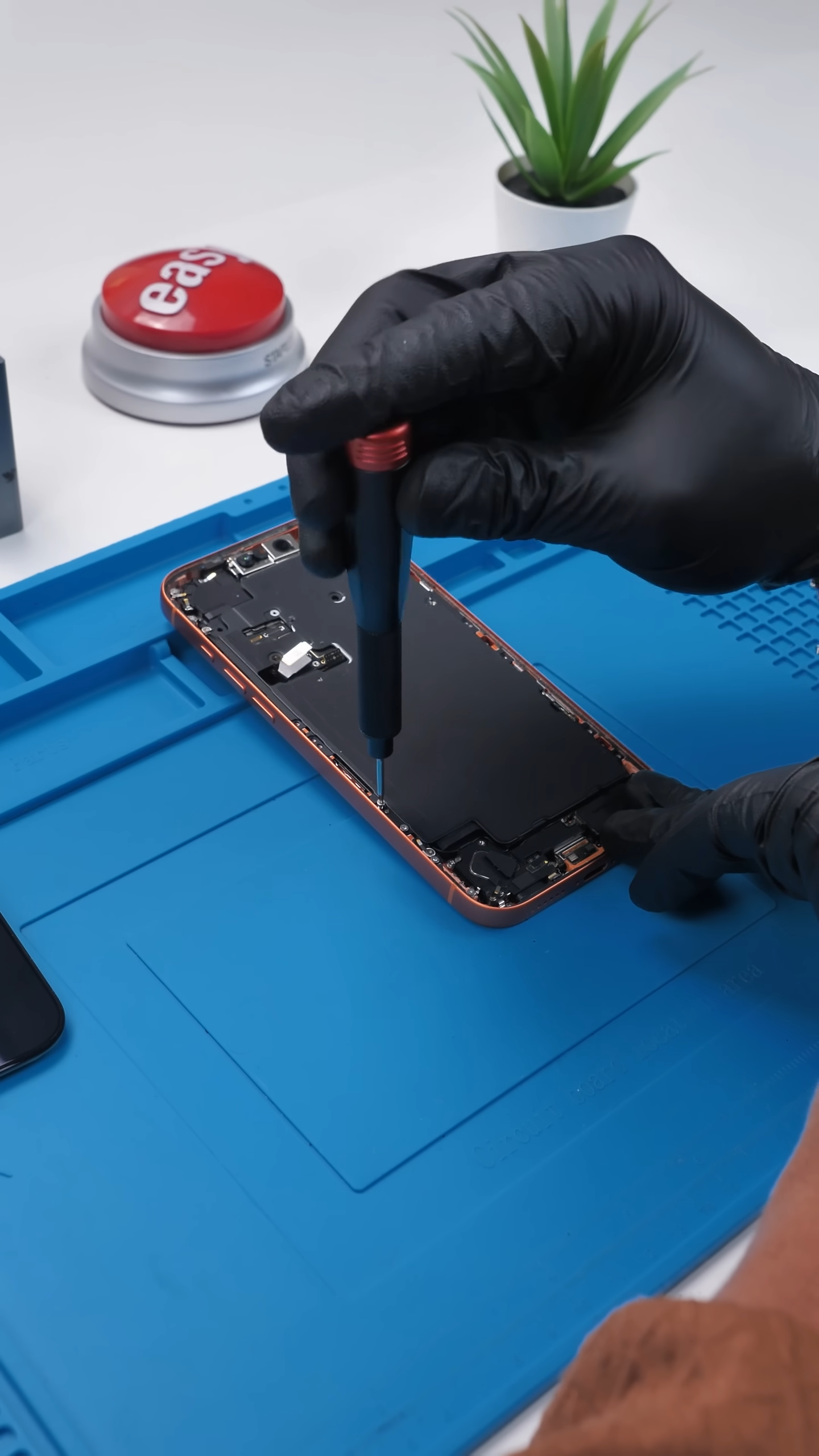
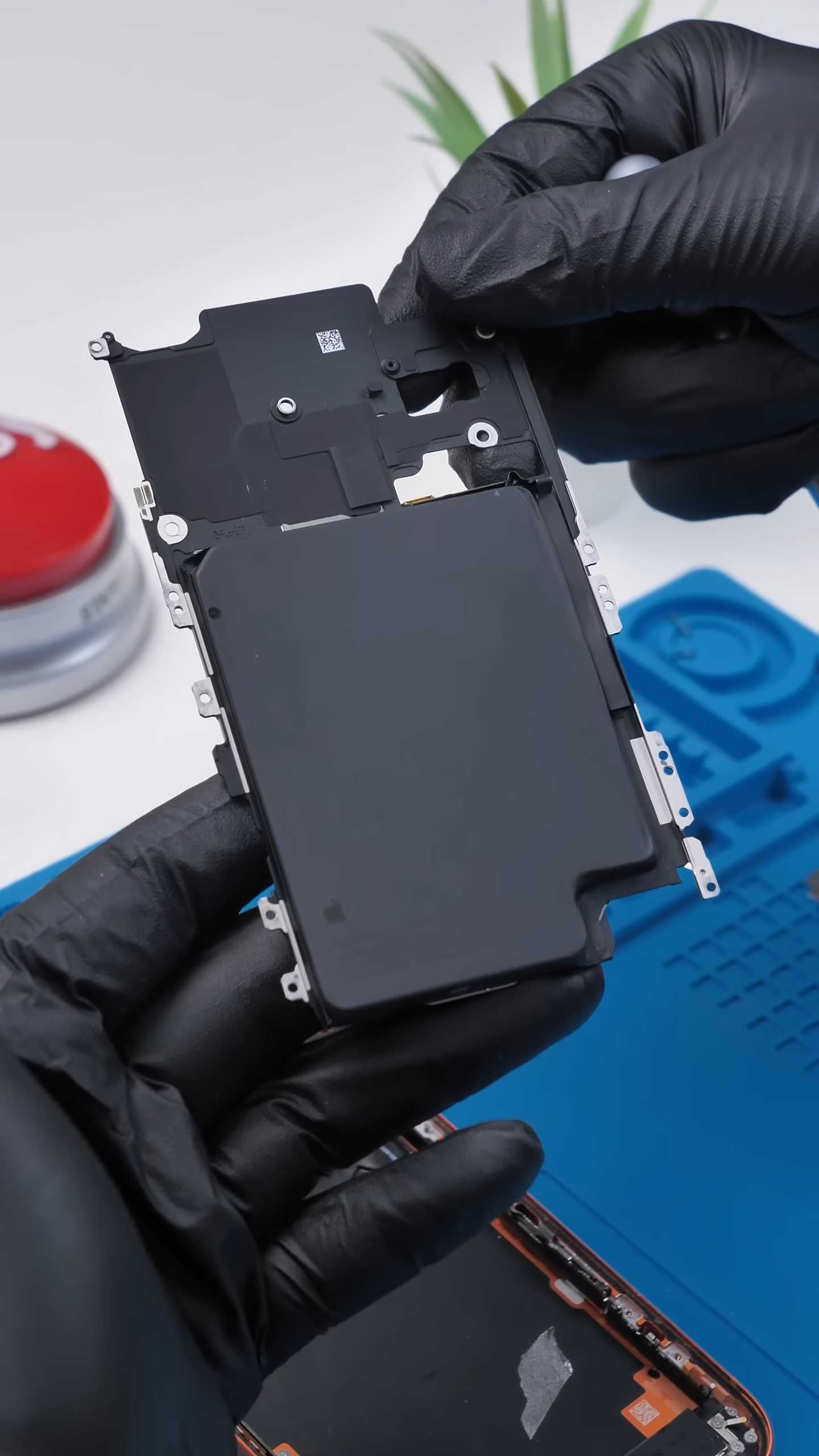
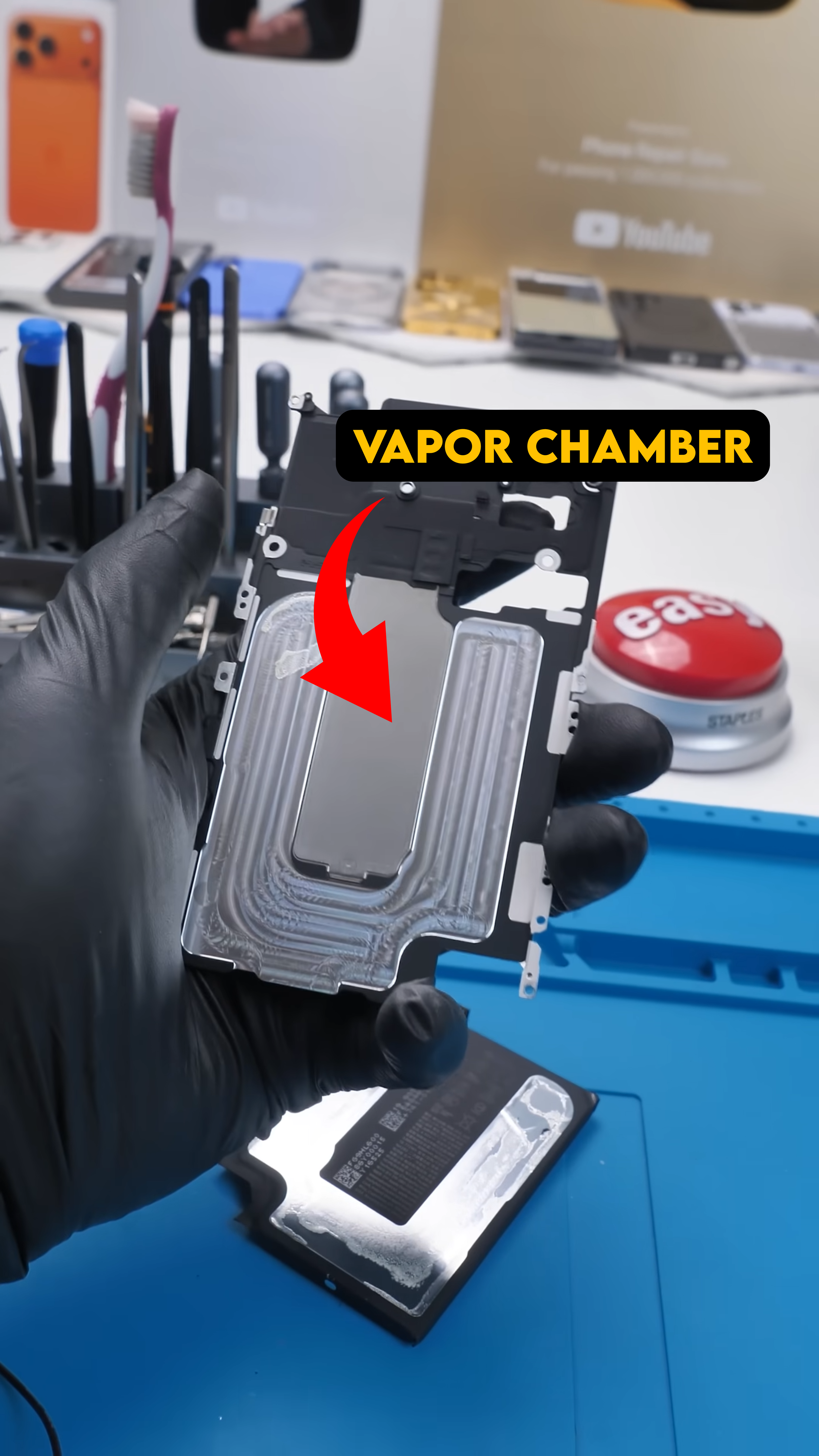
I used Apple’s electrically activated adhesive system to safely remove the battery. With the vapor chamber removed, the phone was ready for round two.
Stress Test With No Vapor Chamber
I fully expected this test to go sideways with higher temperatures and faster throttling, but surprisingly, it didn’t. I ran the exact same stress test again with no vapor chamber, and the phone peaked at 43°C, the same temperature as before.
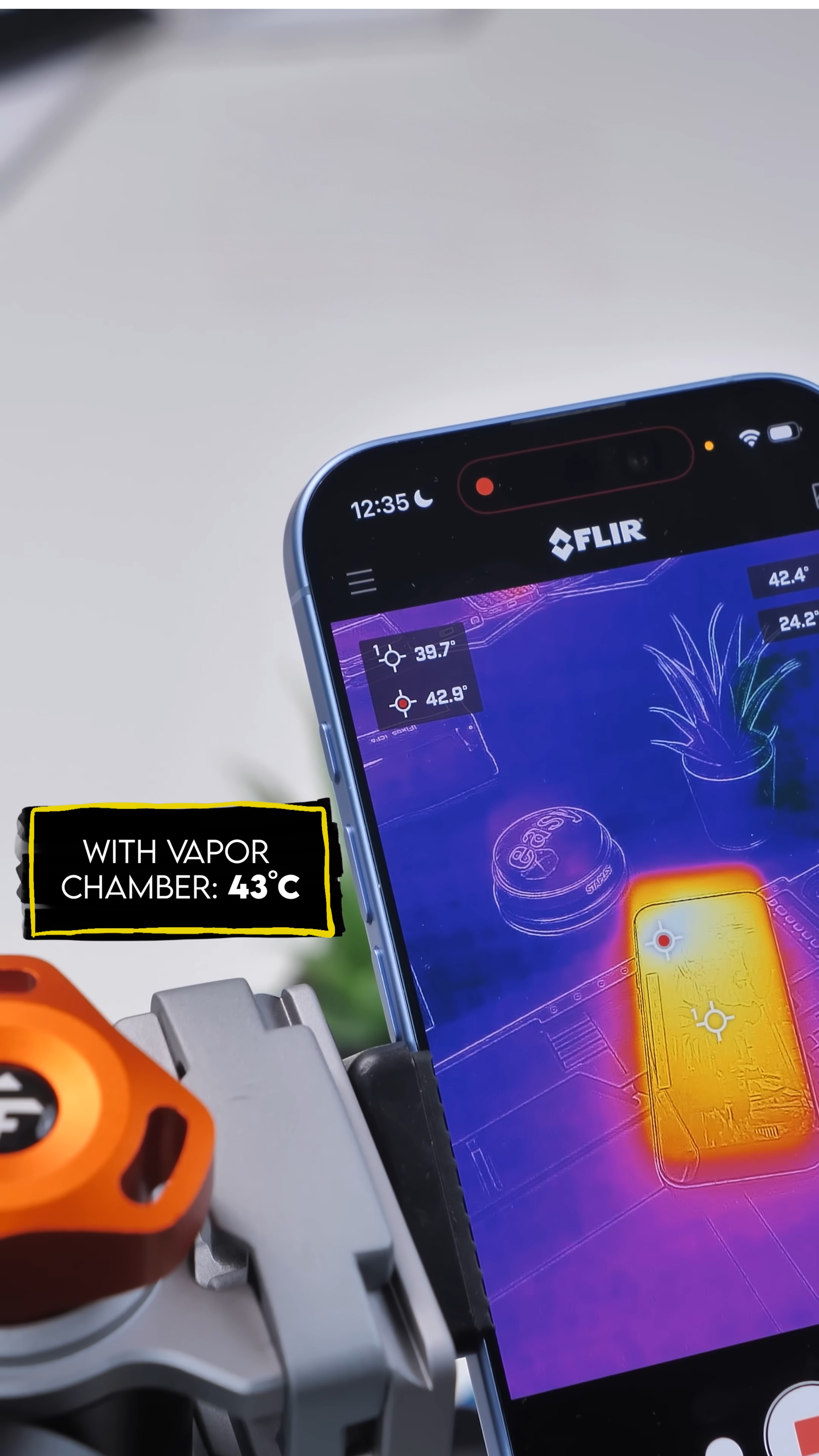
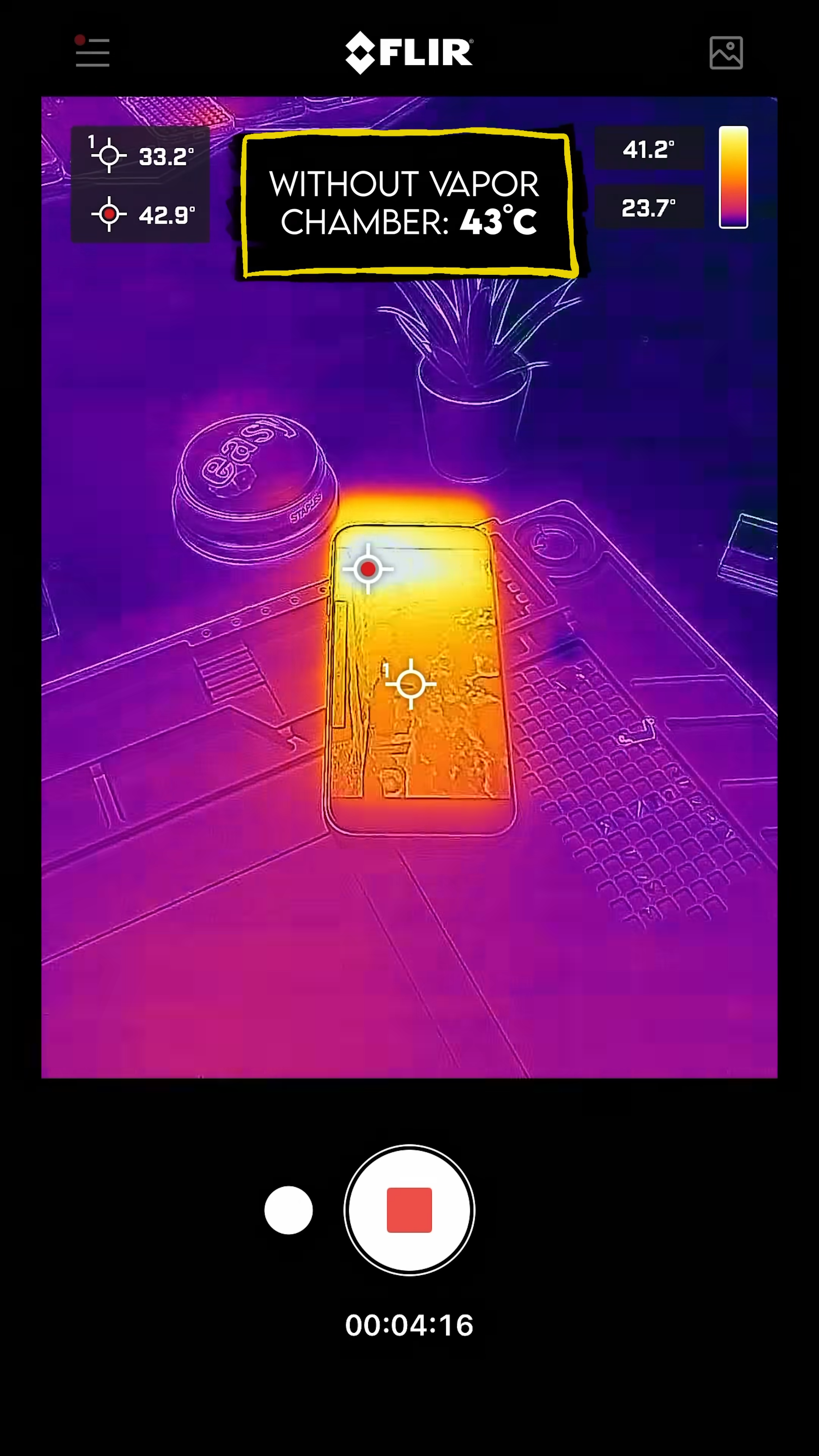
At this point, I was genuinely surprised. From a pure temperature standpoint, removing the vapor chamber didn’t seem to matter at all, even though I had braced for a noticeable spike or instability.
So Why Does Performance Change?
Here’s where things get interesting.
Even though the peak temperature stayed the same, 3DMark showed noticeably better performance when the vapor chamber was installed.
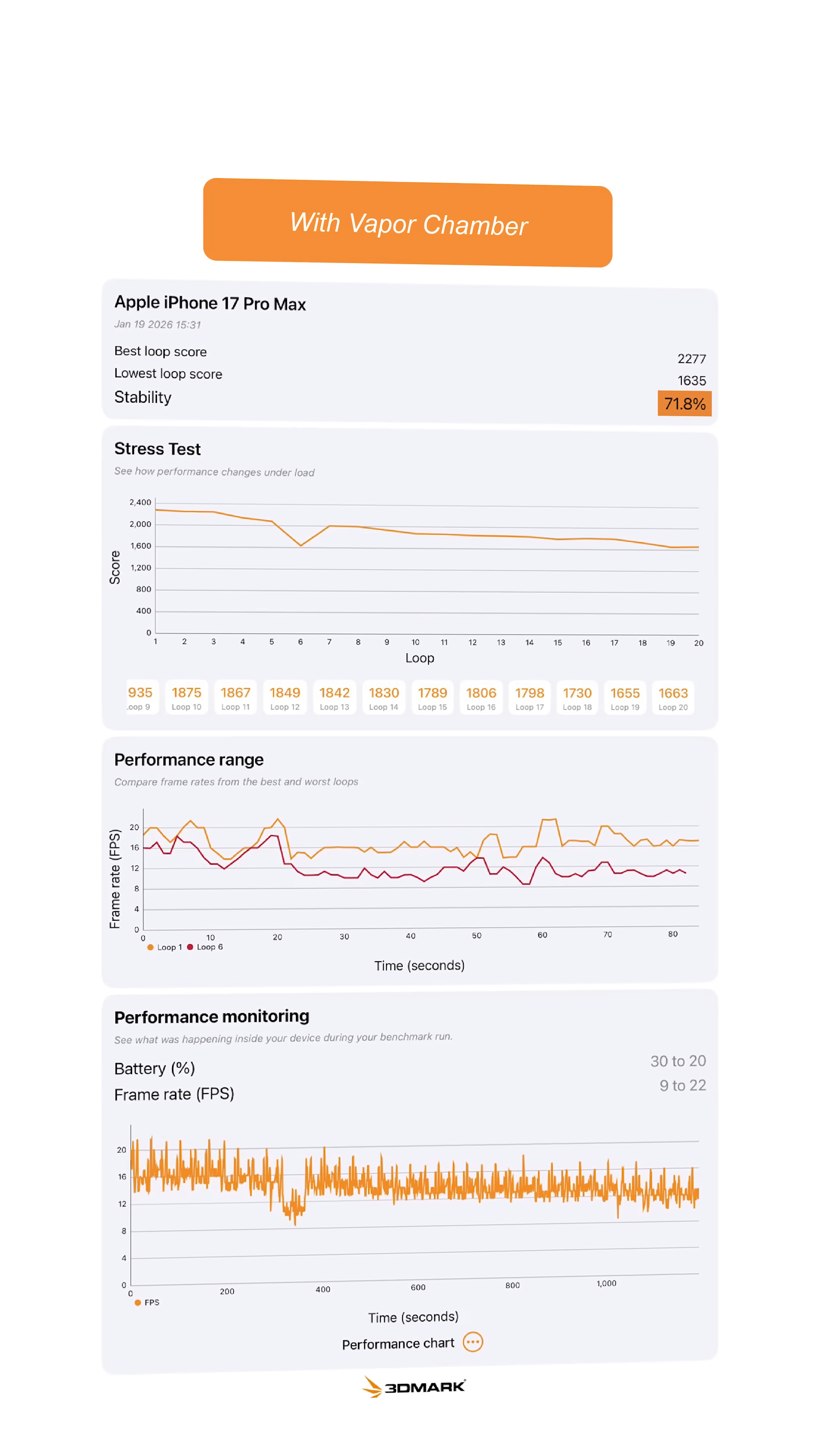
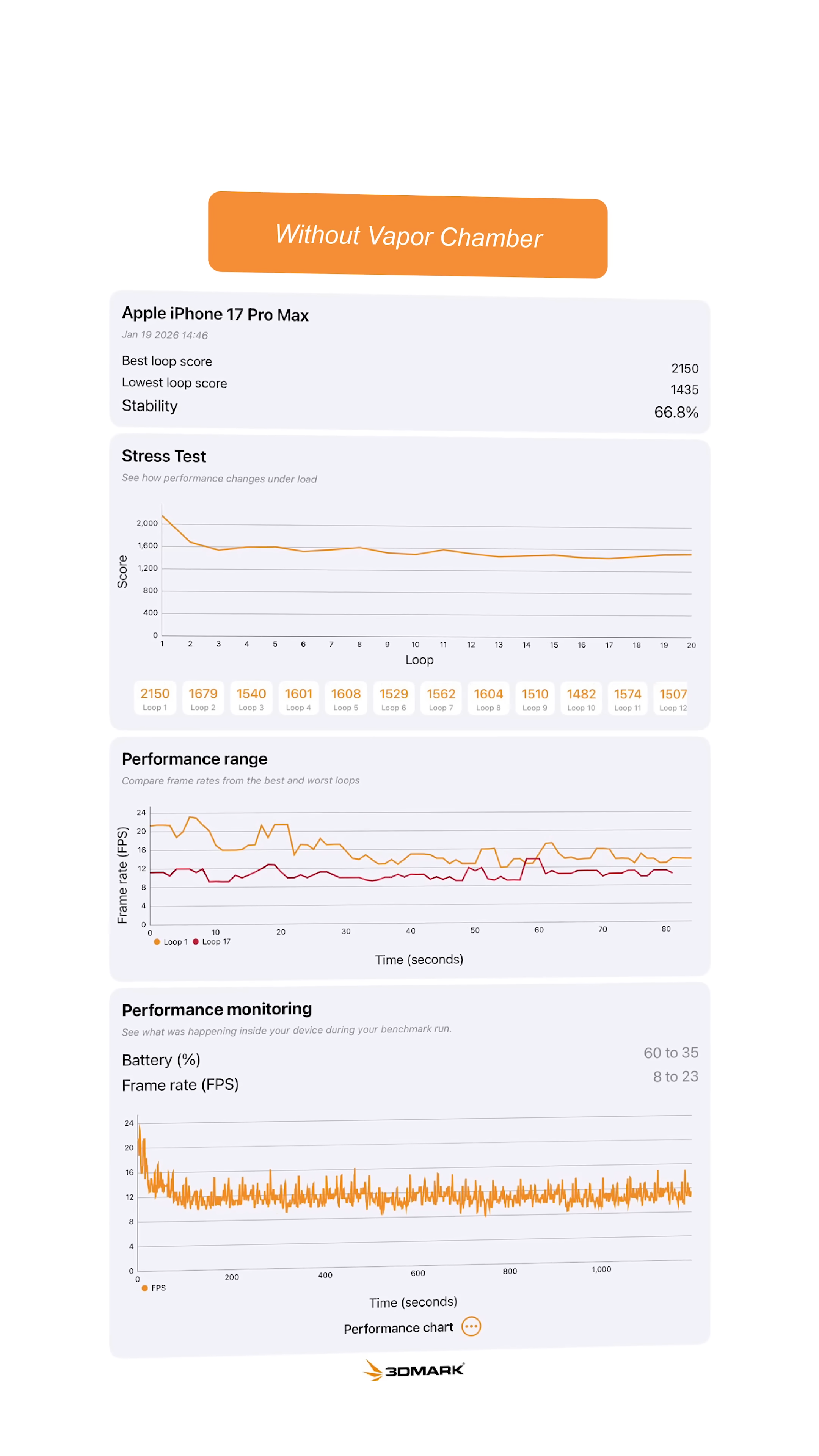
The vapor chamber is not necessarily about lowering peak temperature. It is about spreading heat more evenly and delaying thermal throttling.
With better heat distribution, the processor can maintain higher clock speeds for longer periods, even if the max temperature number looks identical. In other words, the phone feels cooler under load, even if the thermometer disagrees.
Final Thoughts
If you only look at surface temperatures, removing the vapor chamber seems pointless. The phone does not suddenly overheat or become unusable. But once you look at sustained performance, the vapor chamber clearly earns its place.
It helps the iPhone 17 Pro Max maintain higher performance for longer, showing that Apple’s thermal design focuses on efficiency and stability under load.
Unless your goal is turning a brand new iPhone into a thermal science experiment, leave it where Apple put it.
See you in the next article!
