
The $2 iPhone Adhesive That Actually Matters More Than You Think
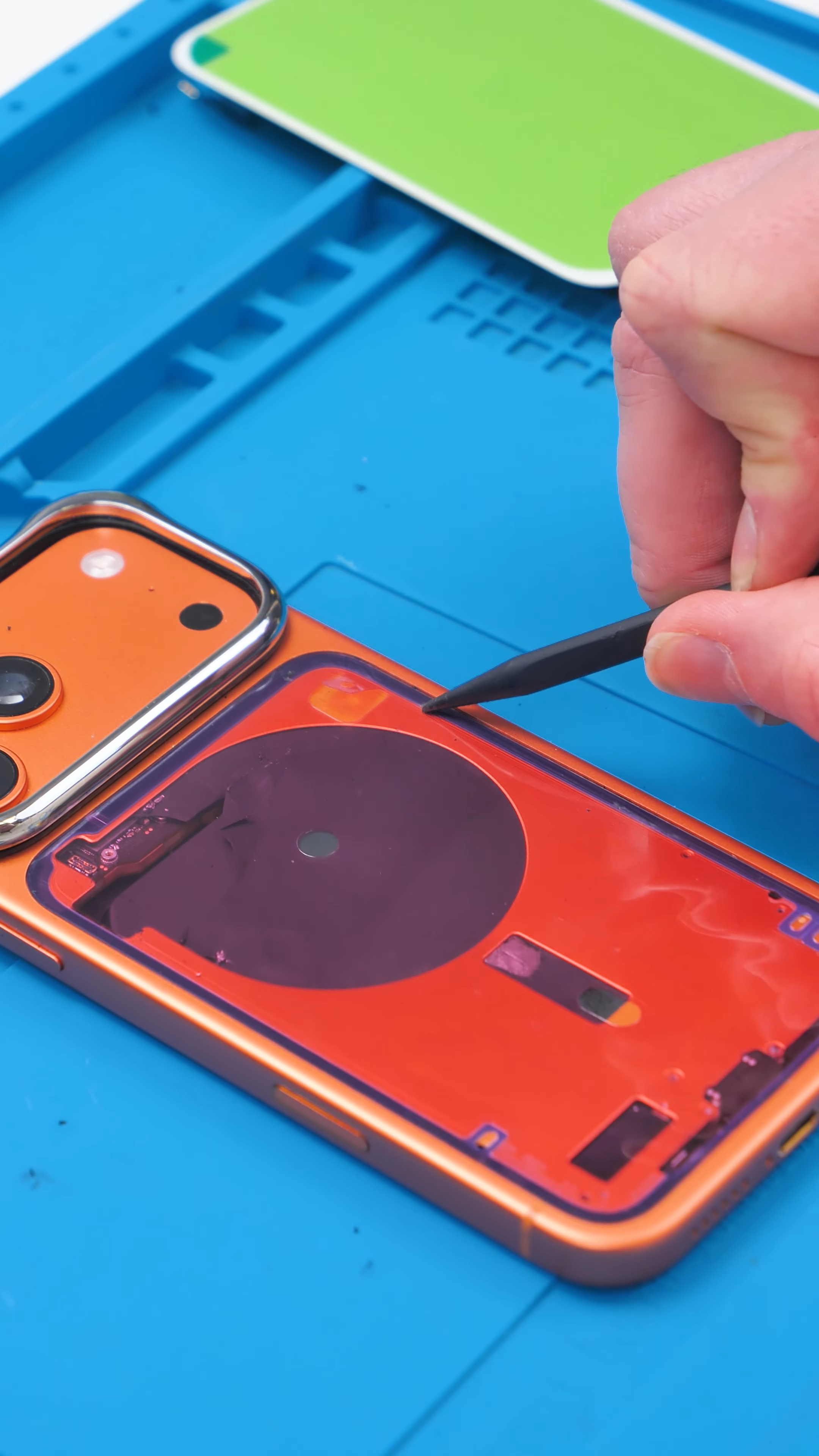
When you open up an iPhone, that thin strip of adhesive around the frame doesn’t look like much. It’s easy to assume it’s just there to hold things together, but in reality, it’s doing something far more important.
That adhesive is the phone’s first line of defense against water and dust. It’s what helps maintain the device’s water resistance rating, sealing the internals tightly against the frame. Once you break that seal during a repair, it’s on you to restore it properly.
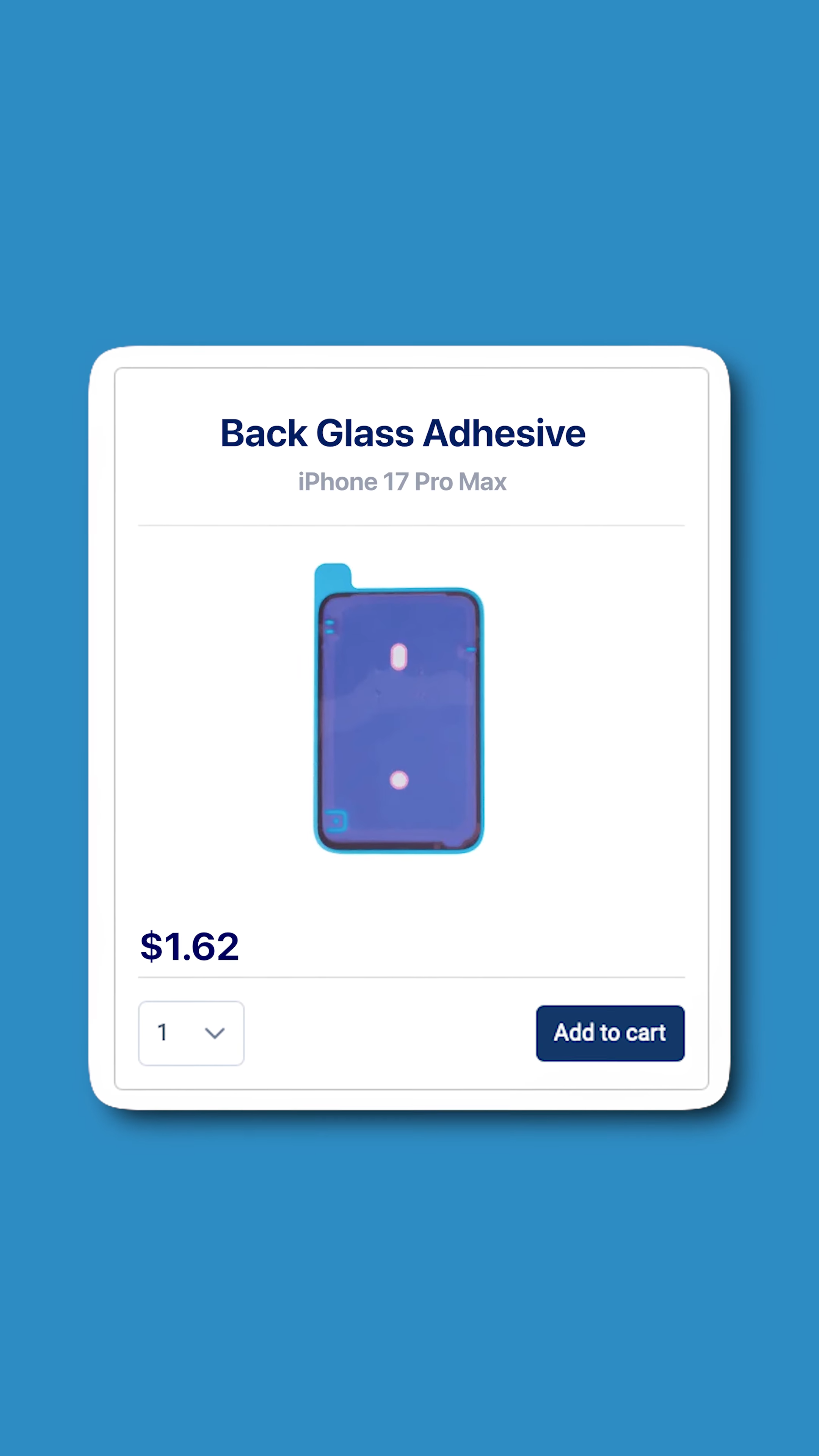
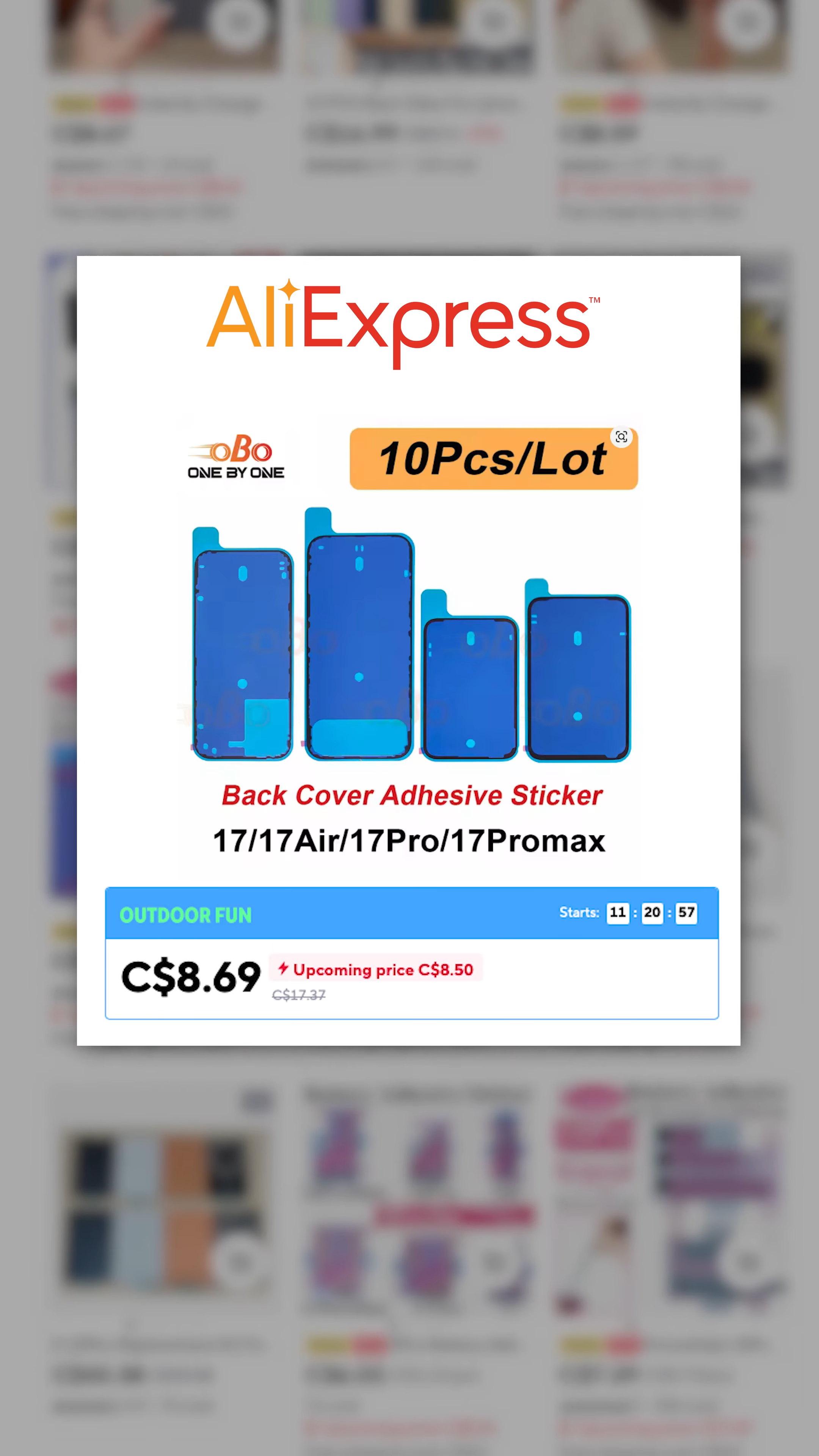
And here’s where things get interesting. You can either go with Apple’s OEM adhesive, which costs a couple of dollars, or pick up a cheaper aftermarket version that looks almost identical. On the surface, it feels like an easy way to save money.
Side by Side, They Look the Same
Laying both adhesives next to each other, there’s almost no visible difference. Same shape, same color, same texture. Even when stretching them out, they behave nearly the same and break at similar points.
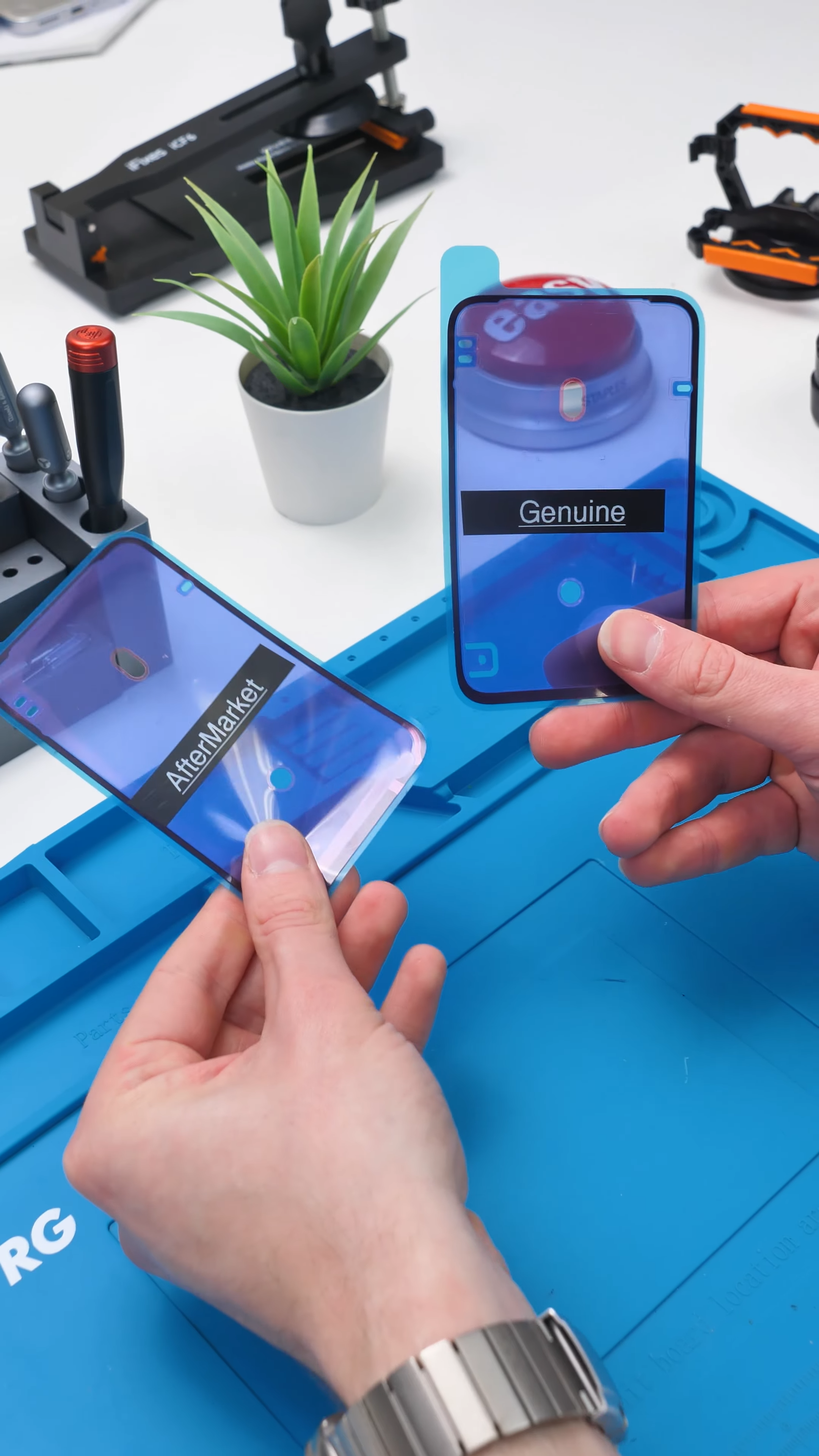
This is exactly why most people don’t think twice about using aftermarket parts. If it looks the same and feels the same, it should perform the same, right? But that assumption only holds up at a glance. Once you stop looking at it like a piece of tape and start thinking of it as a precision seal, the differences start to matter.
The Microscope Doesn’t Lie
Taking both adhesives under a microscope is where things start to separate. The aftermarket adhesive shows an inconsistent coating, with uneven distribution across the surface.
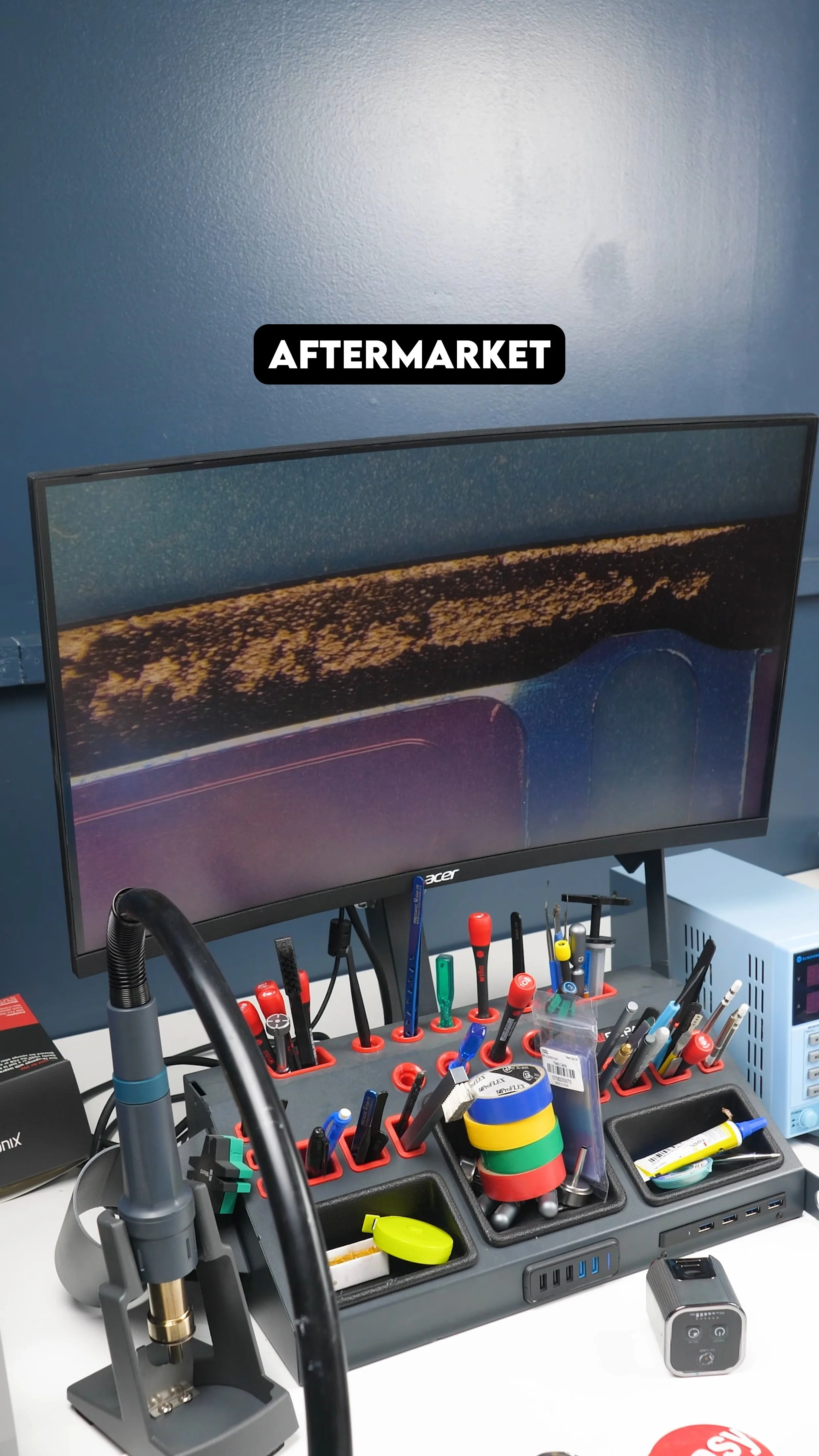
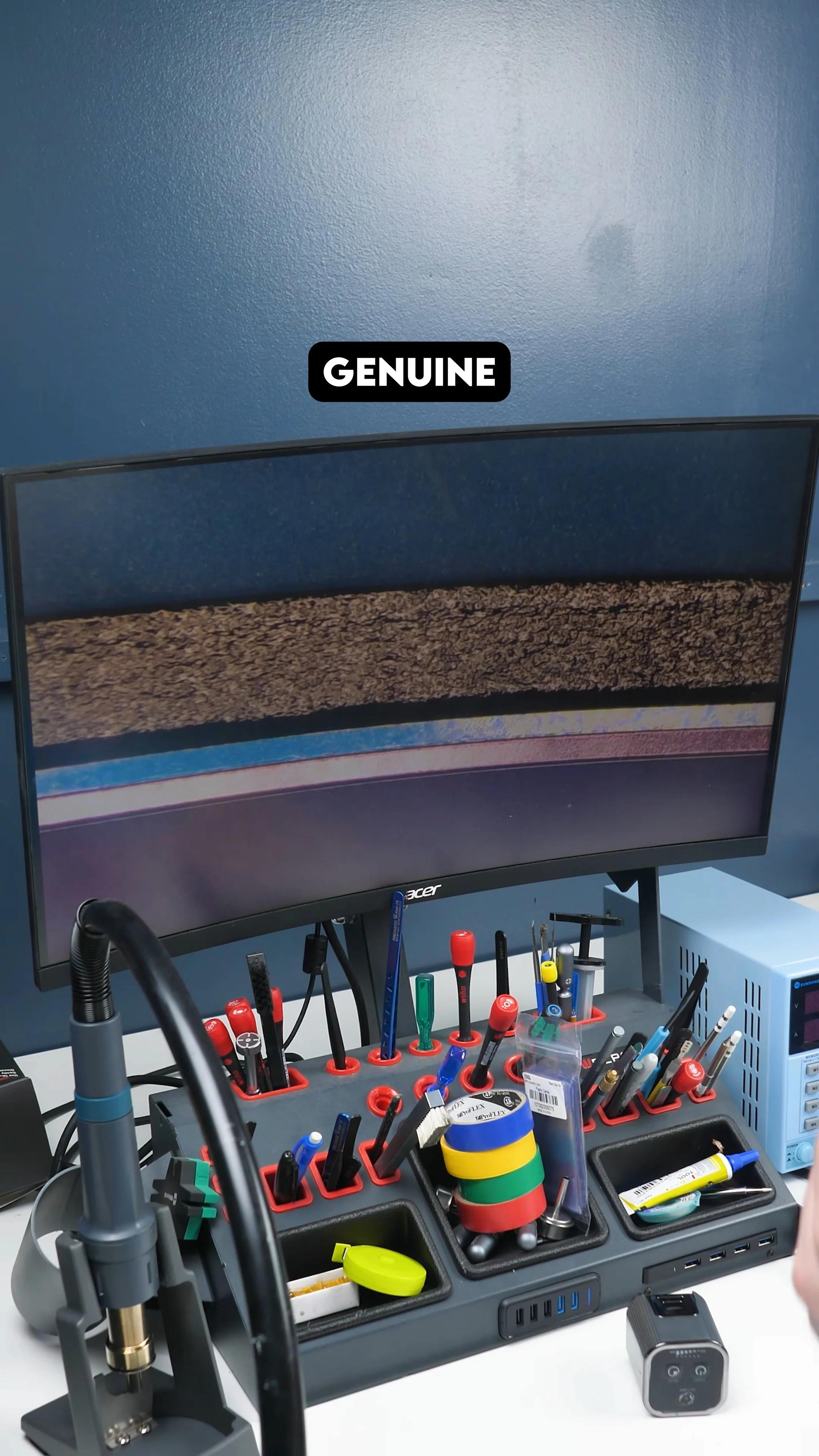
The OEM adhesive, on the other hand, looks almost perfect. The layer is smooth, uniform, and consistent throughout. That kind of quality control is not something you notice with the naked eye, but it makes a big difference in how well the seal performs.
This is the part most people never see. Two products can look identical externally, but internally, one is engineered with tighter tolerances while the other is more of a hit or miss.
The Water Test Changes Everything
To really test it, both adhesives were used to reseal identical iPhones. Water was then applied around the perimeter, simulating real-world exposure like splashes or light rain.
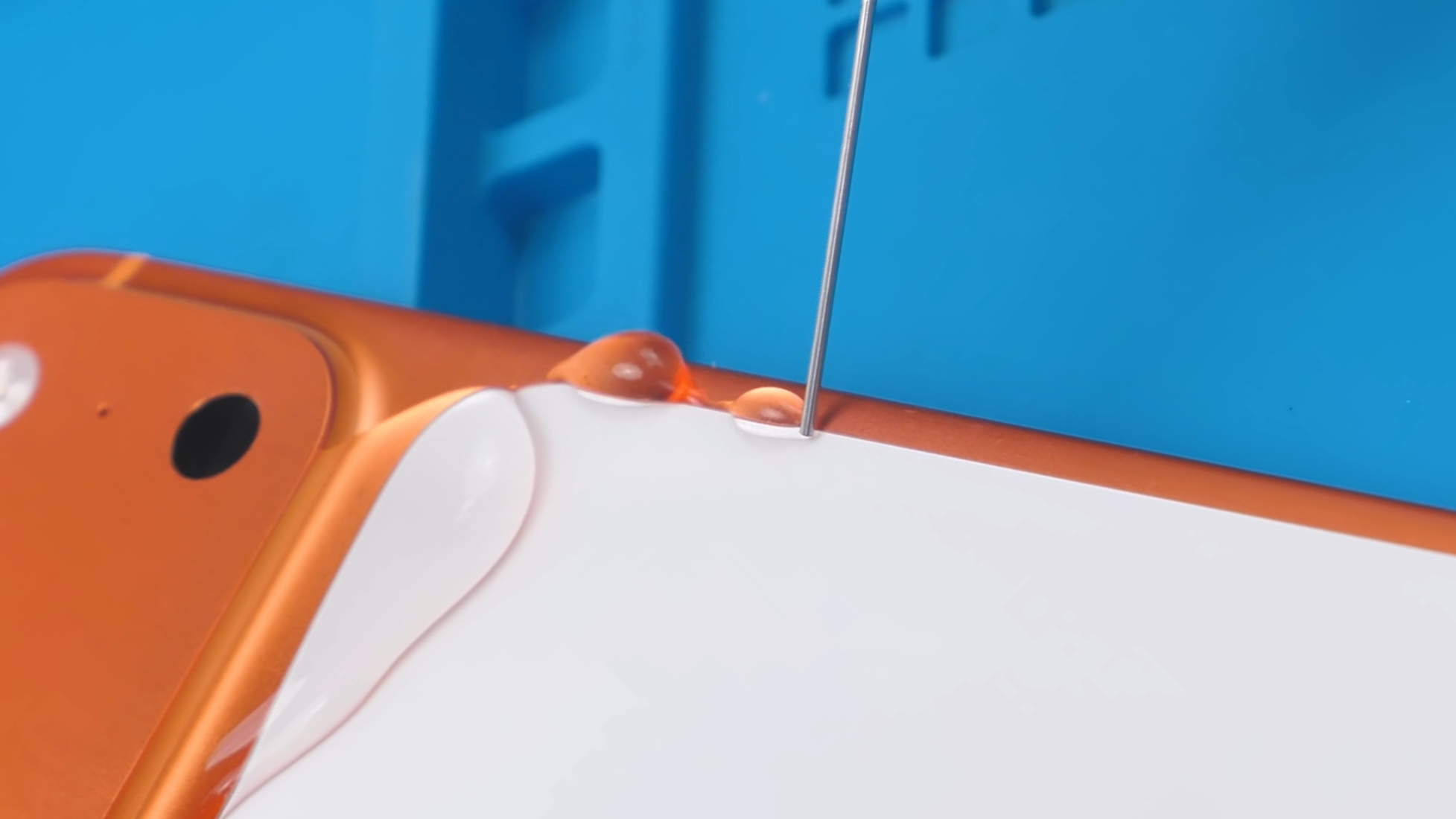
The phone sealed with OEM adhesive came out completely dry. No moisture, no signs of failure, exactly what you’d expect from a proper seal. While the aftermarket one told a different story. It didn’t completely fail, but there was a small amount of water inside. And that’s without full submersion. Just a bit of exposure was enough to get past the seal.
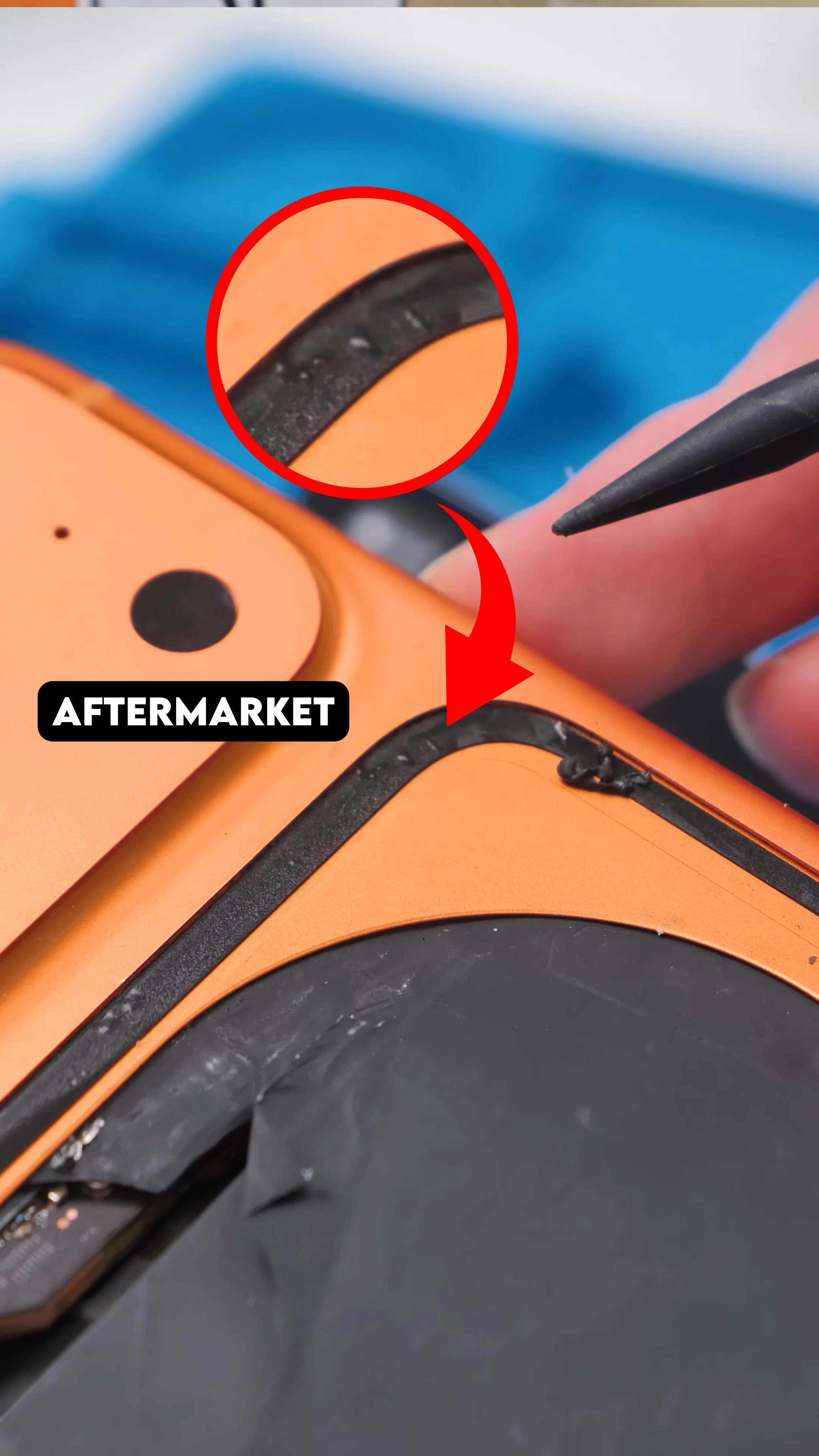
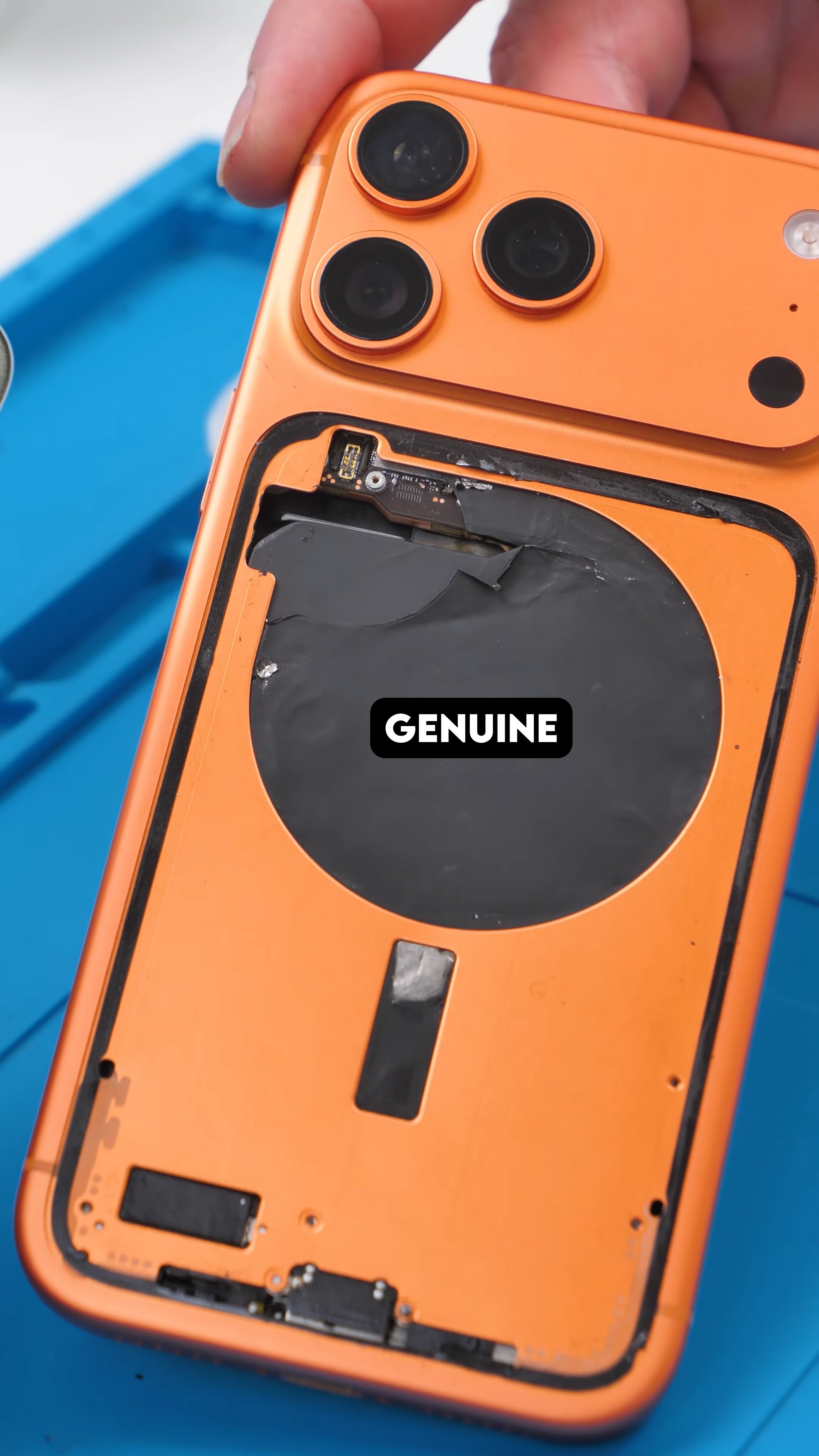
That’s the difference between “good enough” and actually reliable.
So, Is the Cheaper Option Worth It?
At the end of the day, both adhesives technically work. For most repairs, especially if the phone isn’t going anywhere near water, the cheaper option will probably hold up just fine.
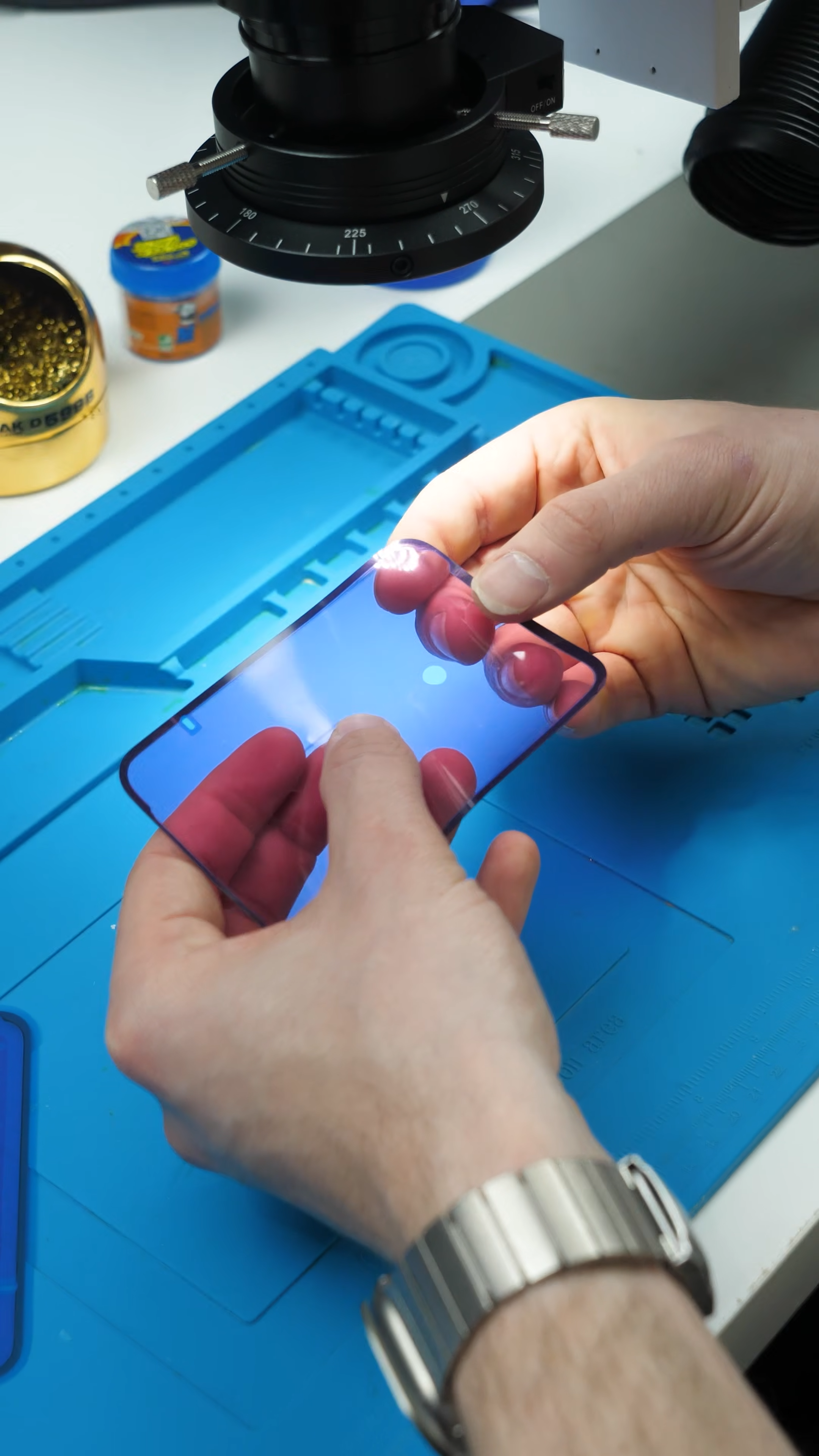
But if you care about restoring the phone as close to original condition as possible, that extra consistency from OEM starts to matter. You’re not just paying for adhesive, you’re paying for reliability and predictability.
And when you think about it, spending an extra $2 to protect a $1,000 device isn’t really a hard decision.
Final Thoughts
This is one of those details that’s easy to overlook but makes a real difference. Adhesive isn’t just glue, it’s part of the phone’s structural and environmental protection.
Most of the time, aftermarket will get the job done. But if you want to do it right, or avoid even the smallest risk, OEM is the safer bet. Because sometimes, the smallest part is the one that matters the most.
See you in the next article!
