
Apple Never Meant to Sell This Apple Watch Tool
There’s a website called AppleUnsold that sells the kind of gear you’d normally only encounter inside Apple Stores, repair channels, or employee-only setups.

We’re talking display parts, cables, demo accessories, and even those strange little tools that look unmistakably Apple but were never intended for a public storefront. AppleUnsold leans into that aura of exclusivity, marketing them as the Apple products “they won’t sell you.”
That alone already makes the whole thing feel a little sketchy.



Not necessarily fake, just unofficial. Like the kind of item that probably had a very specific purpose somewhere in Apple’s service ecosystem, and then somehow ended up floating around the resale market.
So naturally, I bought one.
So What Even Is This Thing?
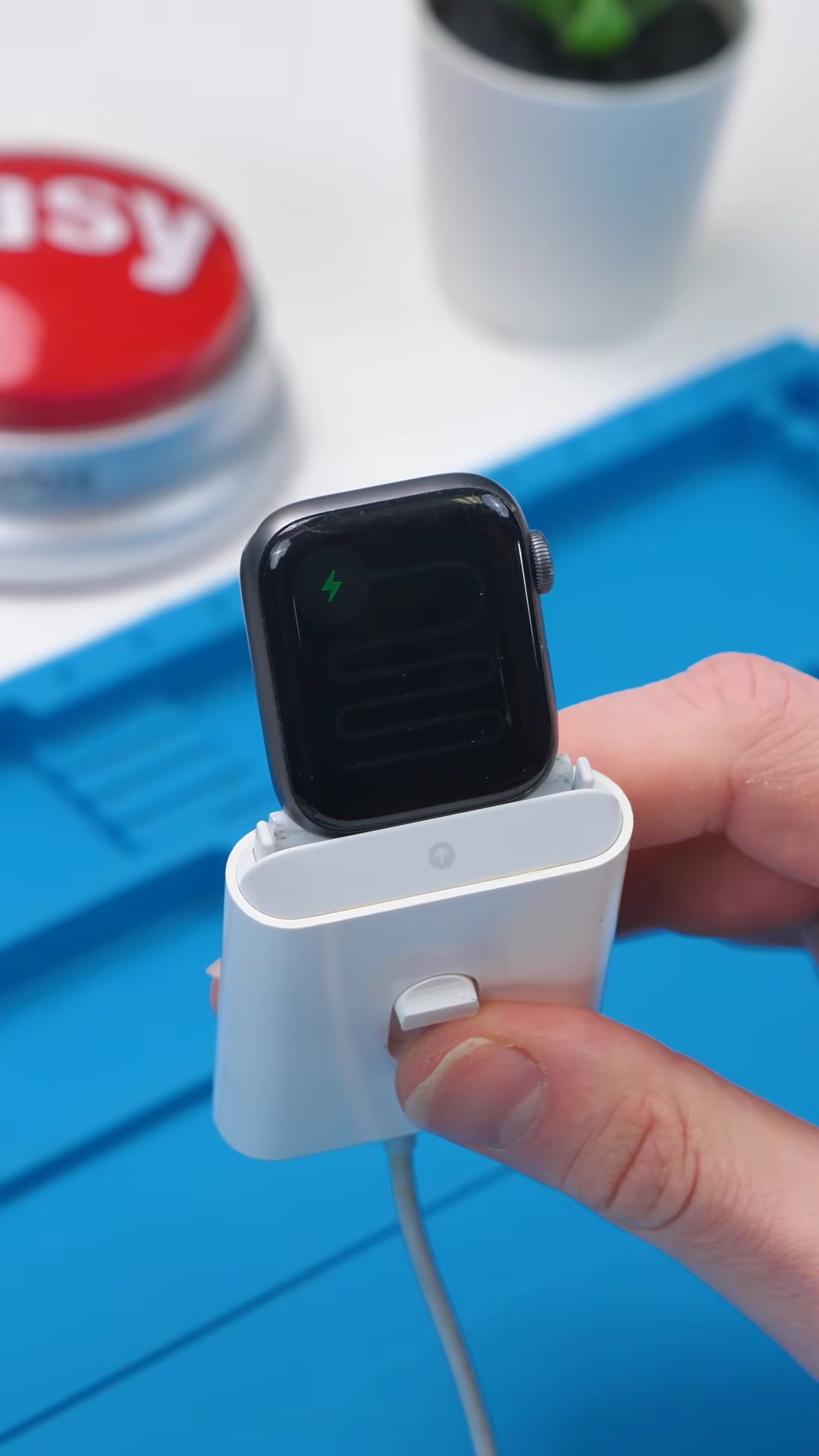
This accessory is called the Apple Watch Restore Dock, and it’s priced at $89 USD.
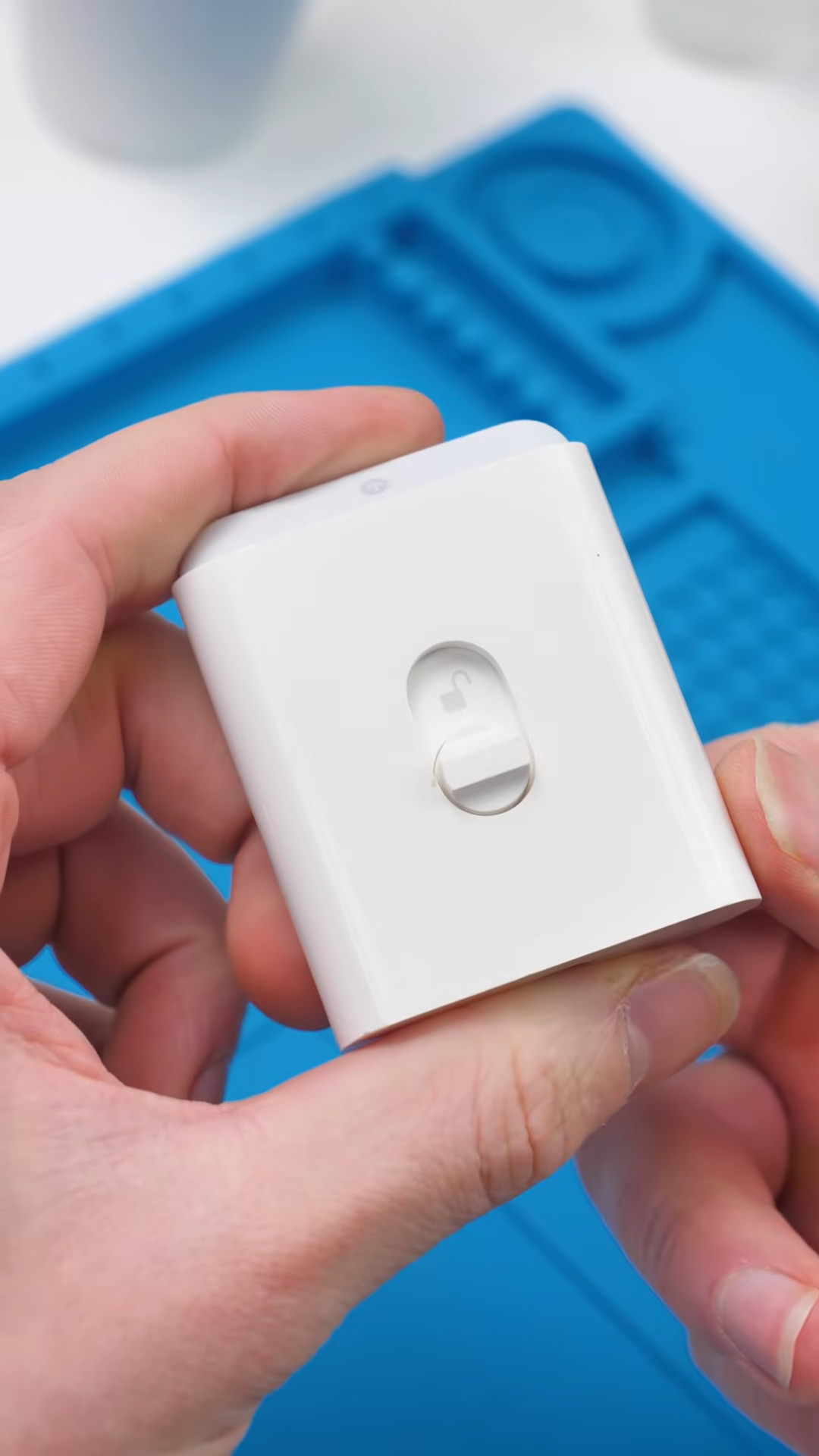
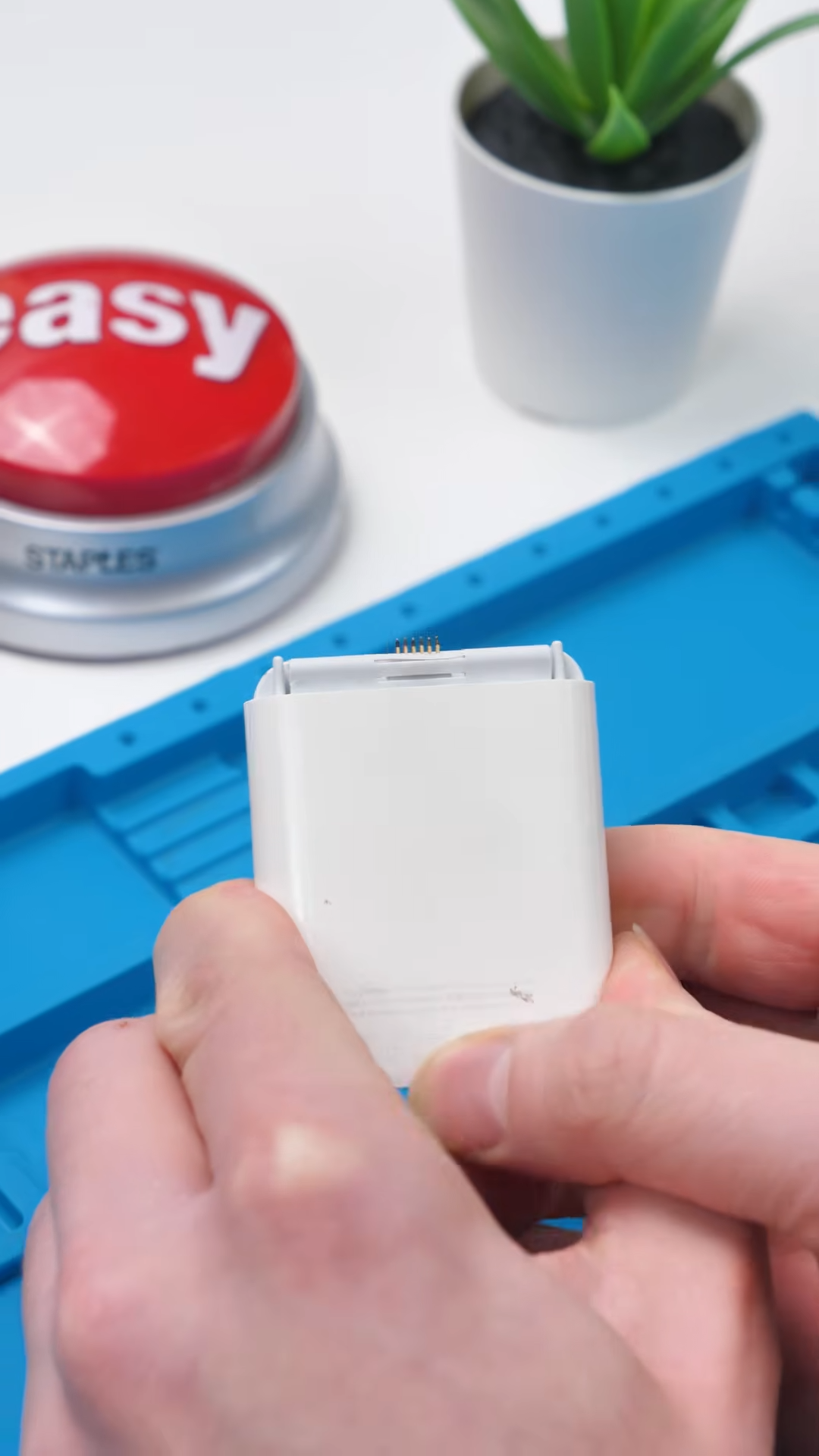
According to the AppleUnsold listing, it was used by Apple employees for software restoration or diagnostics, and the model they list is A2073. The same listing says it supports the following Apple Watch models:
Series 4
Series 5
SE (1st generation)
Series 6.
That might sound ridiculous at first, because most people think of the Apple Watch as a sealed little wearable that only charges wirelessly and just talks to your iPhone. But hidden inside many older Apple Watches is a tiny diagnostic port that Apple used internally.
The Secret Port on the Apple Watch
That port lives inside the watch band slot and is normally covered up, so unless you know exactly where to look, you would never even realize it exists.
To access it, you remove the small cover hidden inside the band channel. Once exposed, this dock connects directly to the watch through that interface. And that’s where things get interesting.
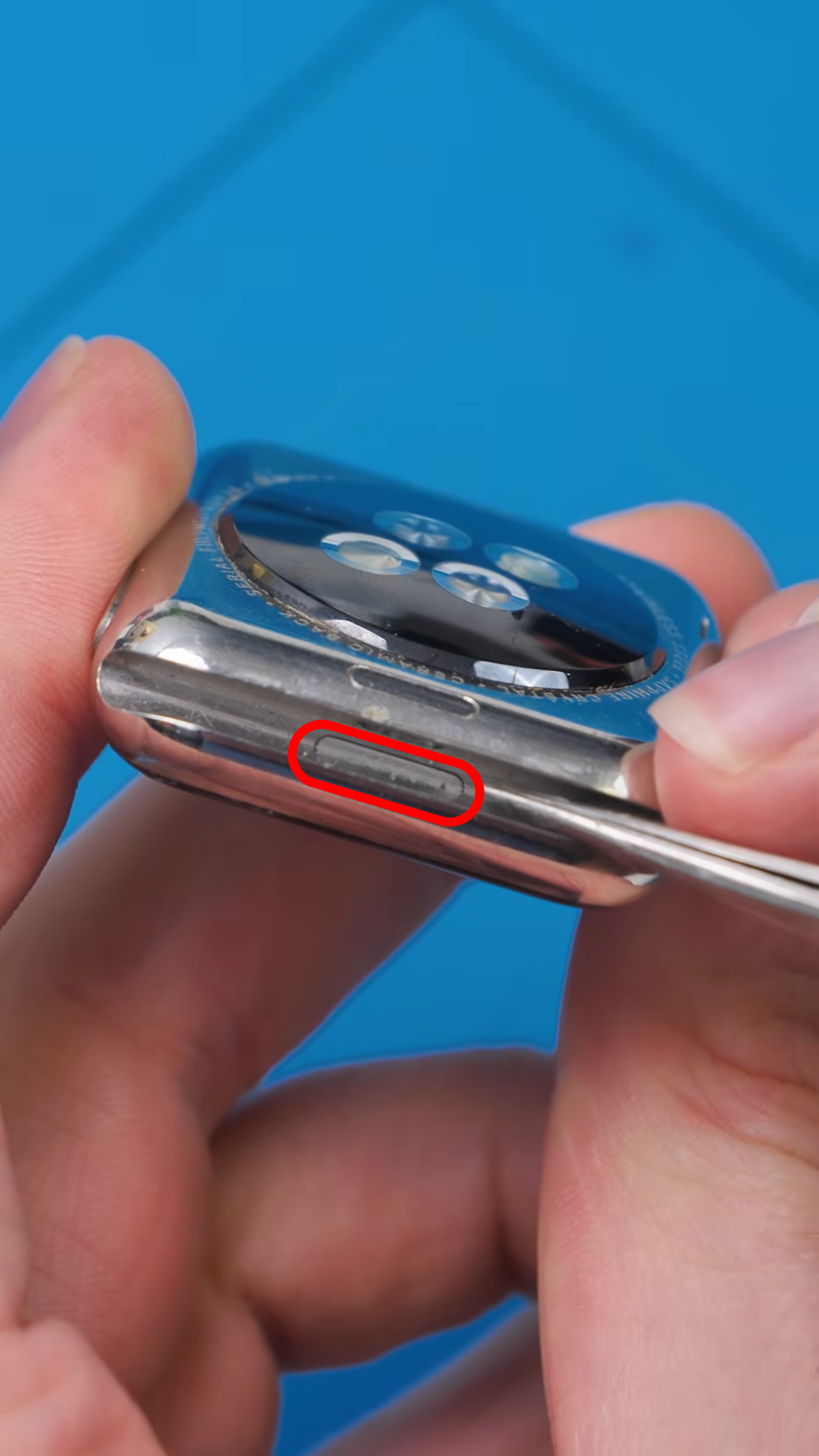
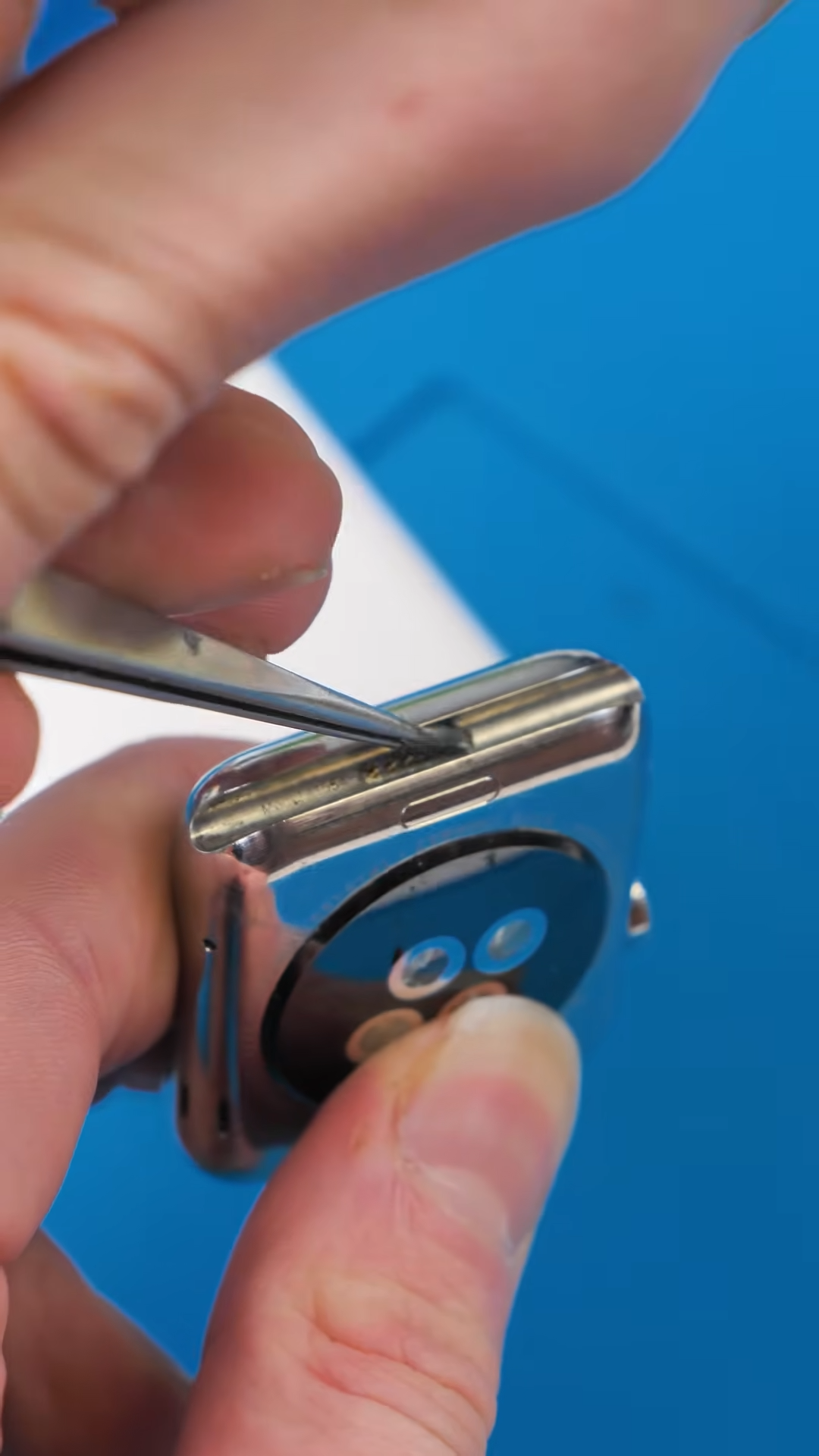
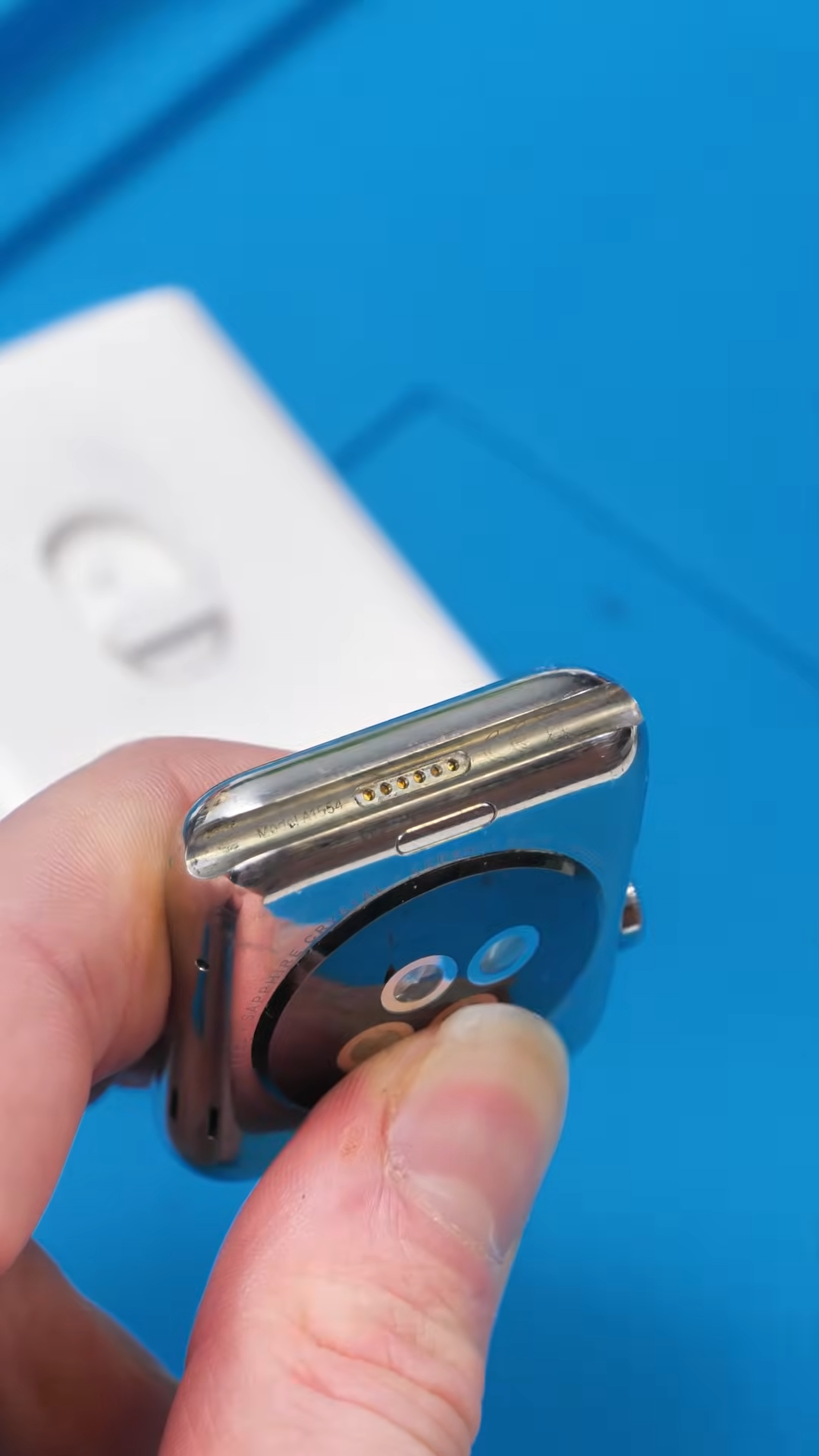
Because with the right hardware, you can actually connect an Apple Watch to a computer. Something that feels completely backwards for a device that’s supposed to be fully wireless. But this wasn’t built for convenience. It was built for recovery.
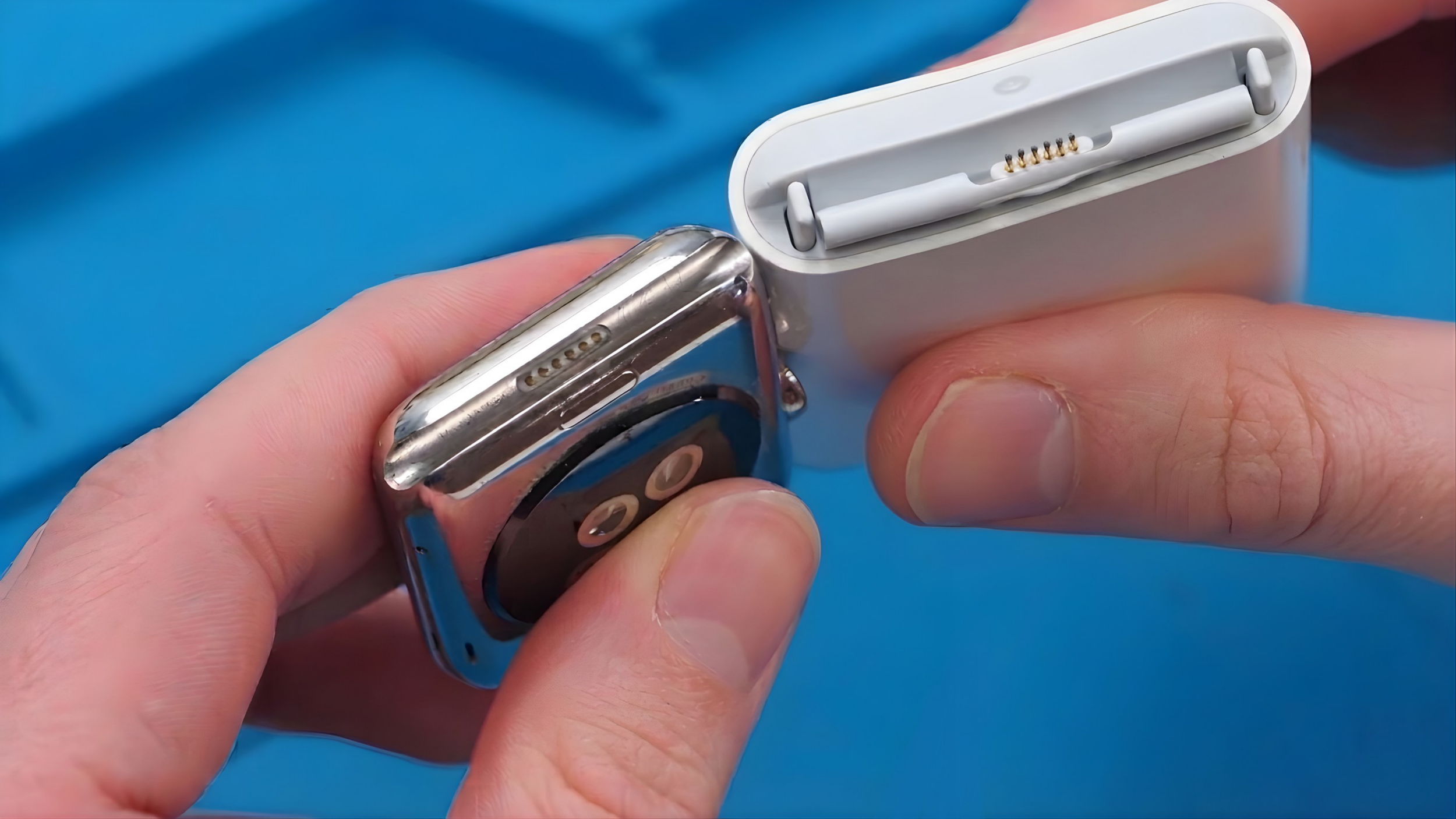
If an Apple Watch gets stuck during an update or runs into serious software issues, wireless recovery isn’t always reliable. A direct wired connection makes restoring it much more consistent. That means if a watch was completely unresponsive or stuck in a bad state, Apple had another way to bring it back without replacing the entire device.
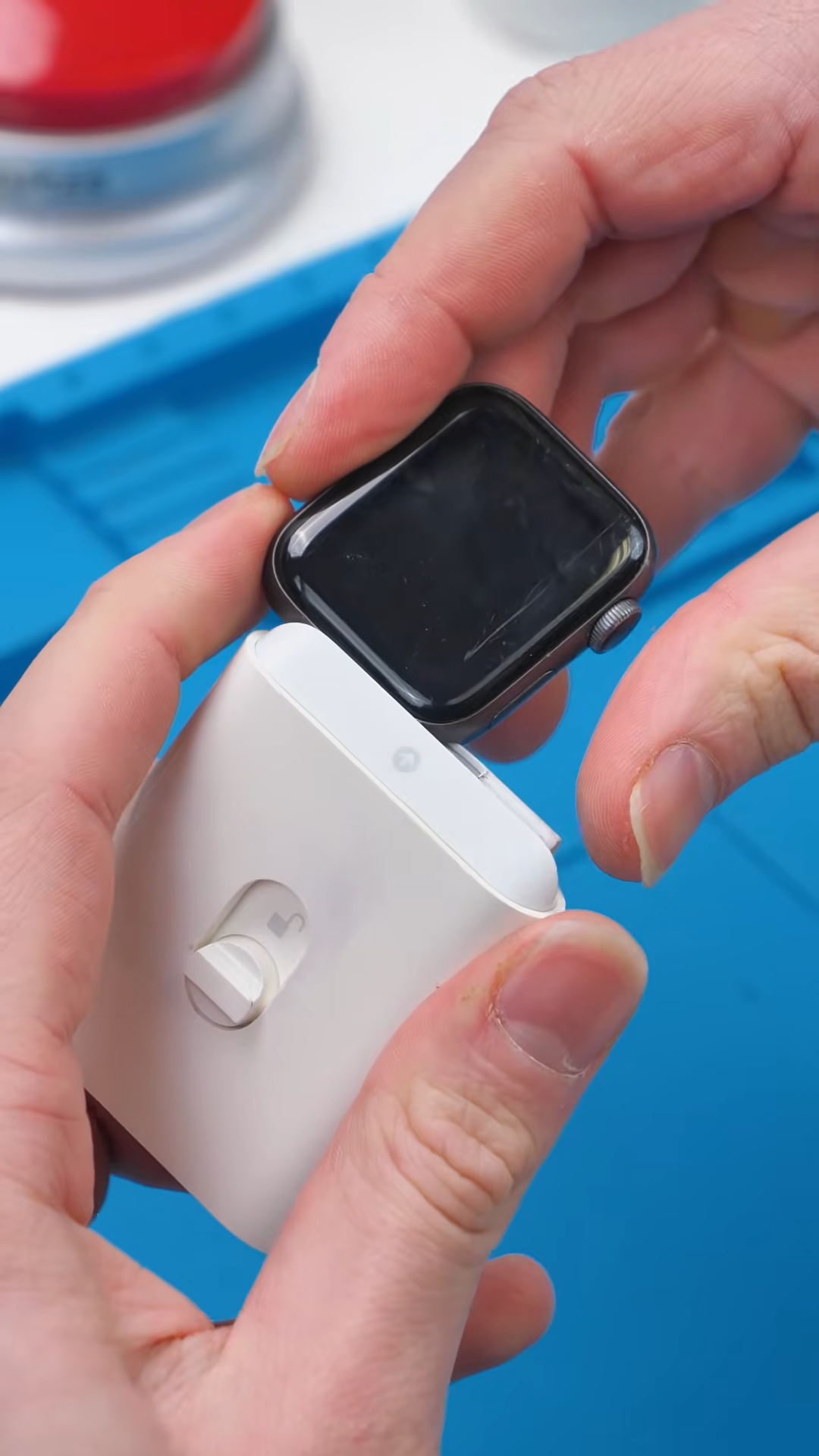
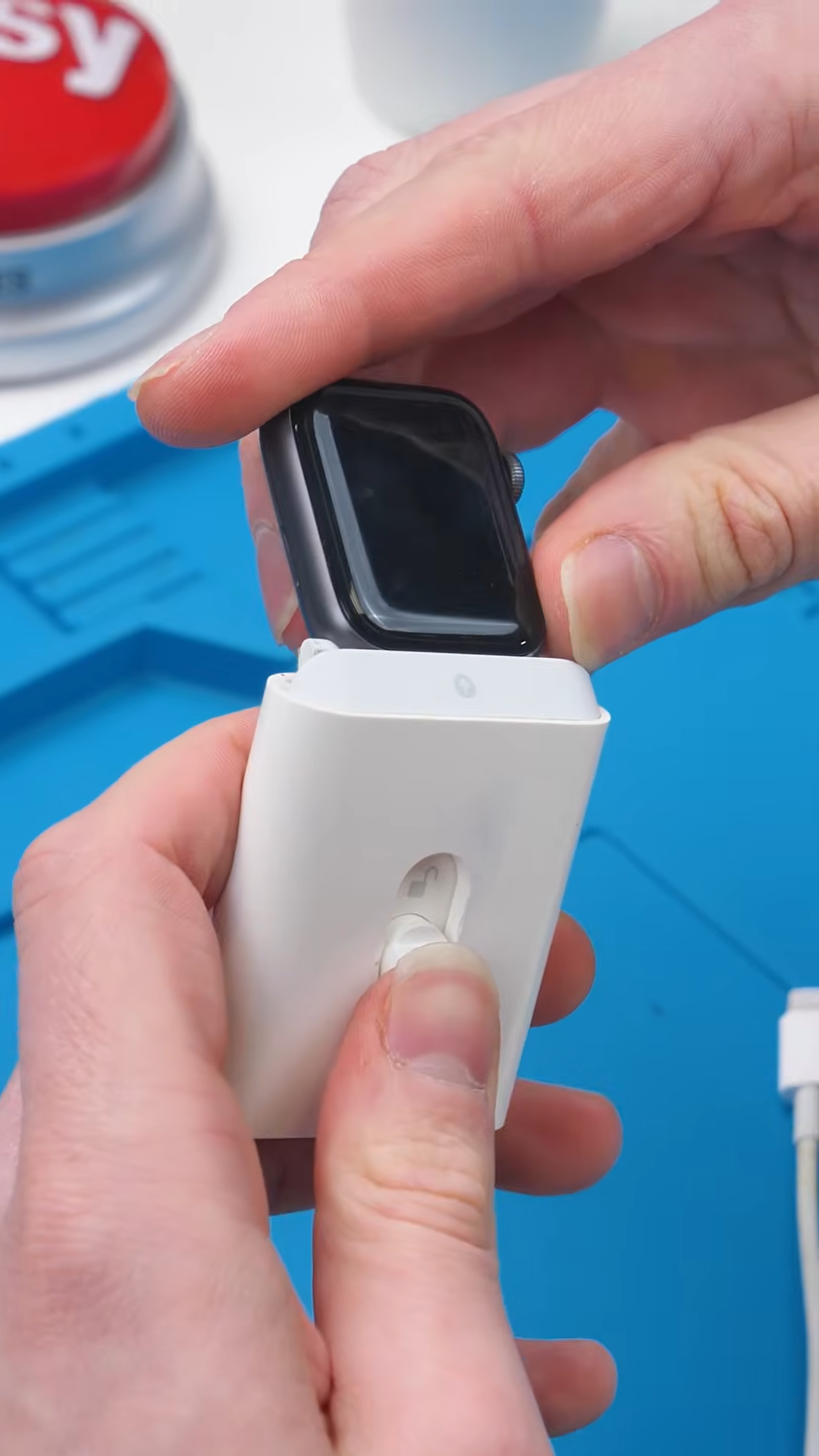
This hidden port wasn’t just leftover hardware either. It was designed specifically for diagnostics, service, and deeper-level repairs behind the scenes. This dock is basically the key to that system.
Apple Watch to a Desktop
This is where things stop being theoretical and start looking like an actual service process.
Once the watch is seated into the restore dock, the dock itself connects out to a computer. At that point, the Apple Watch is no longer just a wireless accessory. It behaves more like a device in recovery mode.
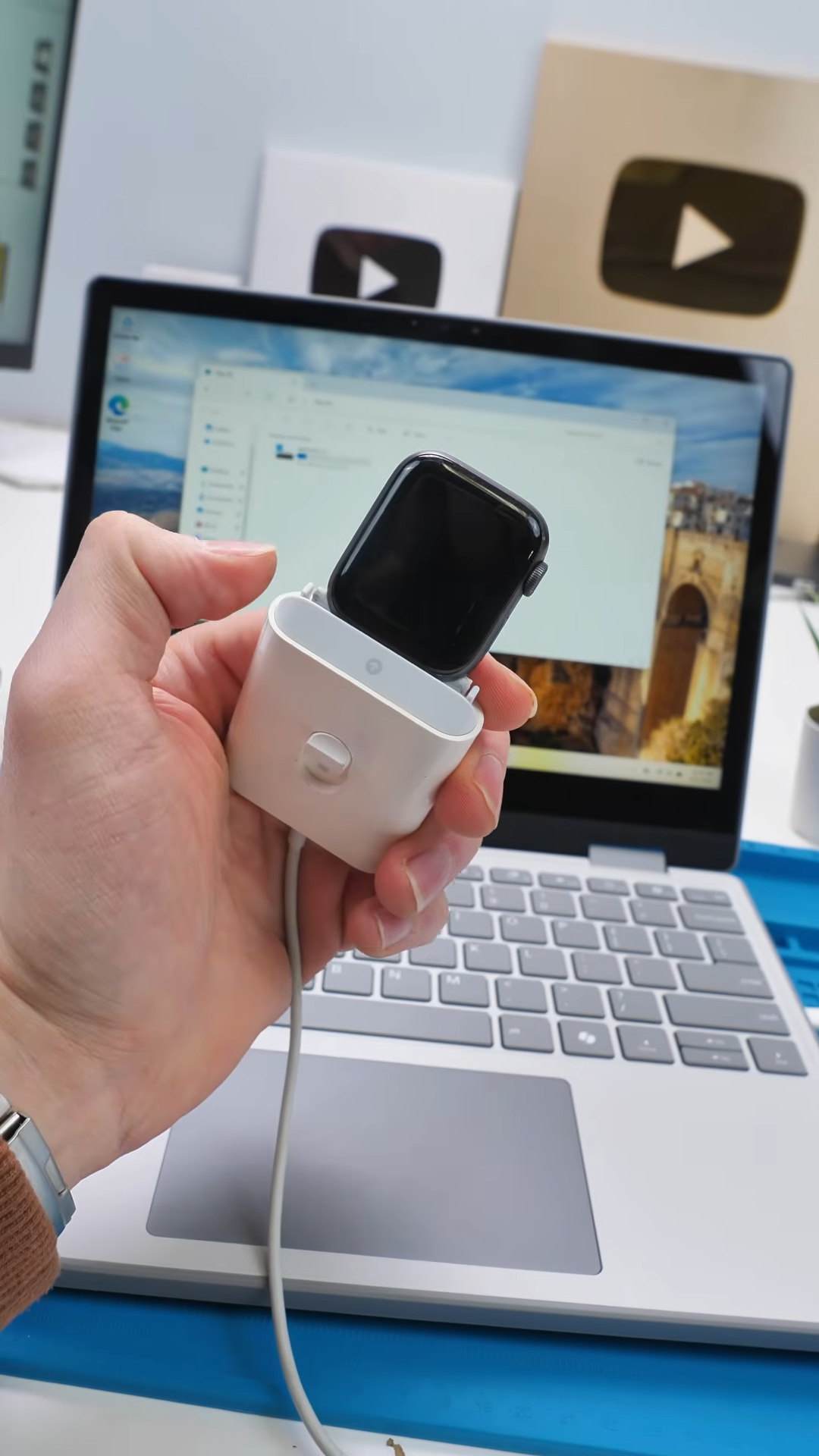
From there, the workflow is pretty straightforward:
| What Happens | Why It Matters |
|---|---|
| Direct wired connection through the hidden port | Bypasses wireless limitations and enables stable communication |
| Computer recognizes the Apple Watch as a service device | Allows access to recovery and diagnostic tools not available to users |
| Firmware or software can be pushed directly to the watch | Enables full system restore even if the watch is unresponsive |
| System can restore or recover a stuck device | Prevents unnecessary replacements by reviving failed units |
This process is completely different from how an Apple Watch normally operates. There’s no pairing screen, no reliance on an iPhone, and no wireless handshake happening in the background. Instead, it becomes a direct wired connection straight into the watch’s internal system, which is exactly the part Apple never intended users to see.
Why This Exists at All
Apple’s public support flow for Apple Watch is pretty simple. Restart it. Update it. Send it in for service if needed. Apple’s official support pages point customers toward standard troubleshooting and Apple-certified repair channels, not secret restore hardware.
That is what makes tools like this so interesting.
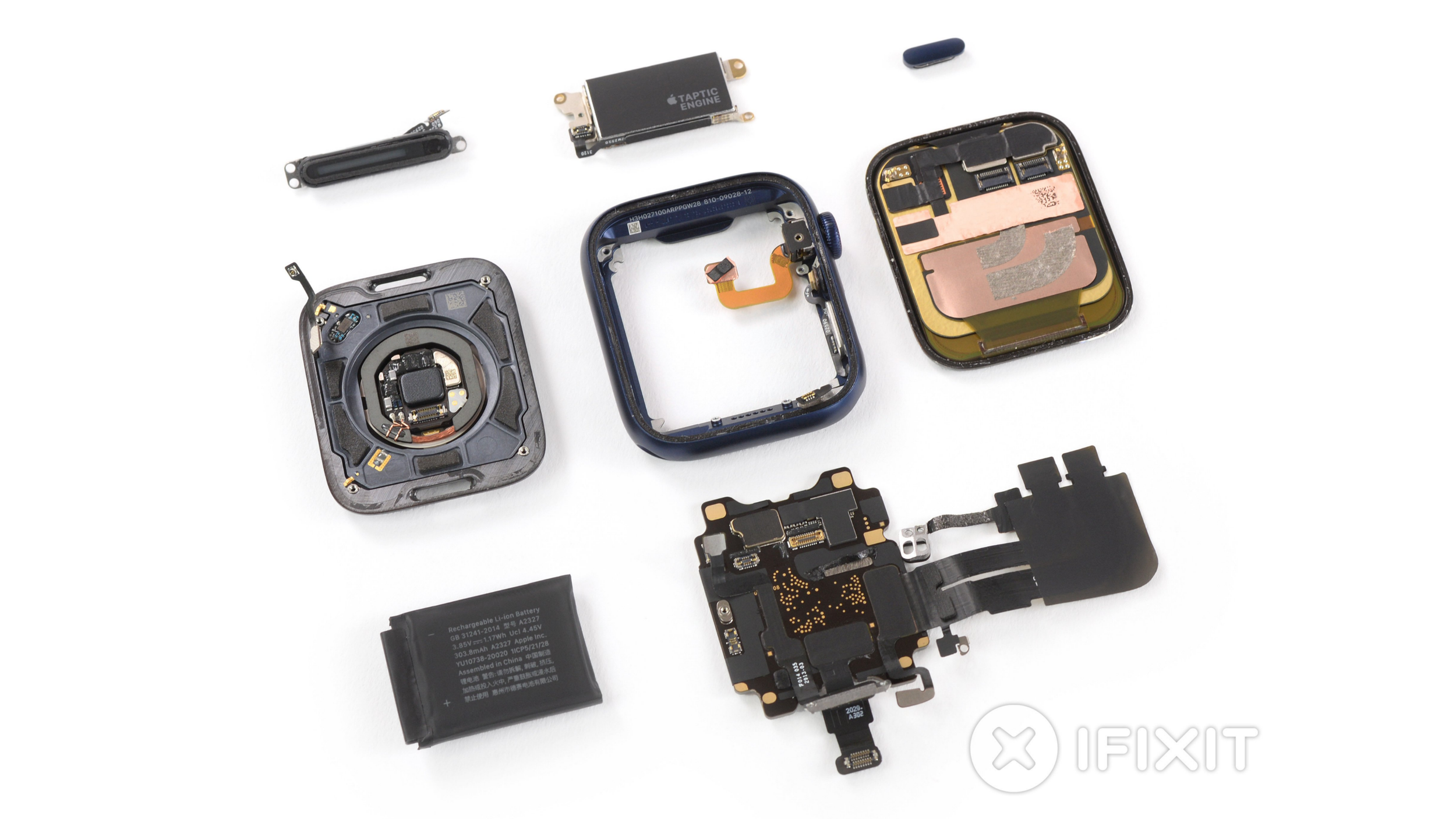
They reveal the second layer behind consumer tech, the part you’re not supposed to see. The internal tools, service workflows, and recovery methods that only show up when something actually goes wrong.
Apple never intended regular users to think about any of that. But this dock is one of those rare pieces that pulls back the curtain and shows how Apple really handles deeper-level repairs.
A Tool From a Different Era
What makes this even more interesting is that Apple has already moved on from this entire approach. With newer models like the Apple Watch Series 7, the hidden diagnostic port inside the band slot is no longer there, replaced by a wireless service system that reportedly uses a high-frequency connection for diagnostics and data transfer.
That shift makes this dock incredibly specific. It only works with a certain generation of Apple Watches, from a time when Apple still relied on a physical hidden connector for recovery and diagnostics, which means this isn’t just a strange accessory but a leftover from a very particular era of Apple Watch servicing.

And that also explains its limitations. Even if you own one, it doesn’t automatically unlock full Apple-level repair capabilities, since tools like this were designed to work alongside internal software, controlled workflows, and systems that were never meant to leave Apple’s ecosystem.
So in practice, it’s not something you’d realistically buy to fix watches, but as a piece of Apple history, it’s incredibly cool. It shows how Apple quietly built a wired recovery path into older Apple Watches, hid it inside the band slot, and packaged it into a tool that was never meant to be seen, let alone sold.
Final Thoughts
This might be one of the most Apple things ever. Not because it’s sleek or expensive, but because it solves a real problem in a way most people were never supposed to see. To normal users, the Apple Watch is just a sealed device that either works or doesn’t, but behind that simplicity, Apple had an entirely separate system for recovery, hidden ports, and internal tools designed for when things went wrong.
This dock is one of the few pieces of that system that escaped into the real world, from a time when Apple still relied on a physical connection to bring devices back to life. Today, they’ve already moved on to newer, more hidden methods, which makes this even more interesting. It’s not just a tool, it’s a glimpse into how Apple used to handle repairs behind the scenes.
Apple made a secret dock for a secret port on a watch that was never supposed to have secrets.
See you in the next article!
