
We Put an iPhone 16e Motherboard Inside the iPhone 17e… and It Actually Worked
When you place the iPhone 17e next to the iPhone 16e, it becomes pretty obvious that something is going on here. Externally the layout looks almost identical, and if you’ve followed Apple’s budget phones over the years this actually isn’t that surprising.
Apple has a habit of reusing hardware from previous generations in these lower-priced models. It helps them keep manufacturing costs down, but it also means replacement parts are easier to find and usually much cheaper. For repair shops, that’s always a win.
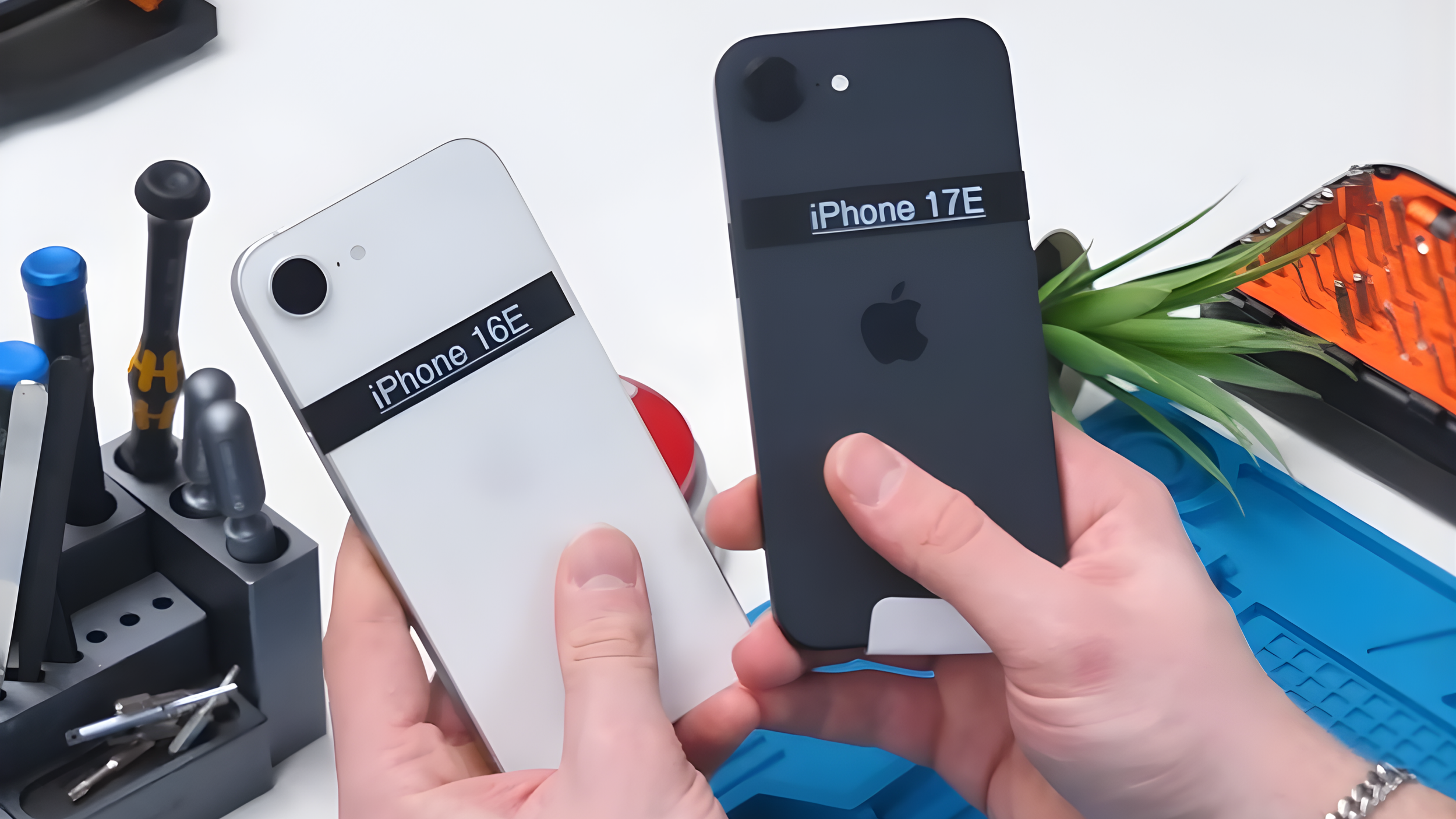
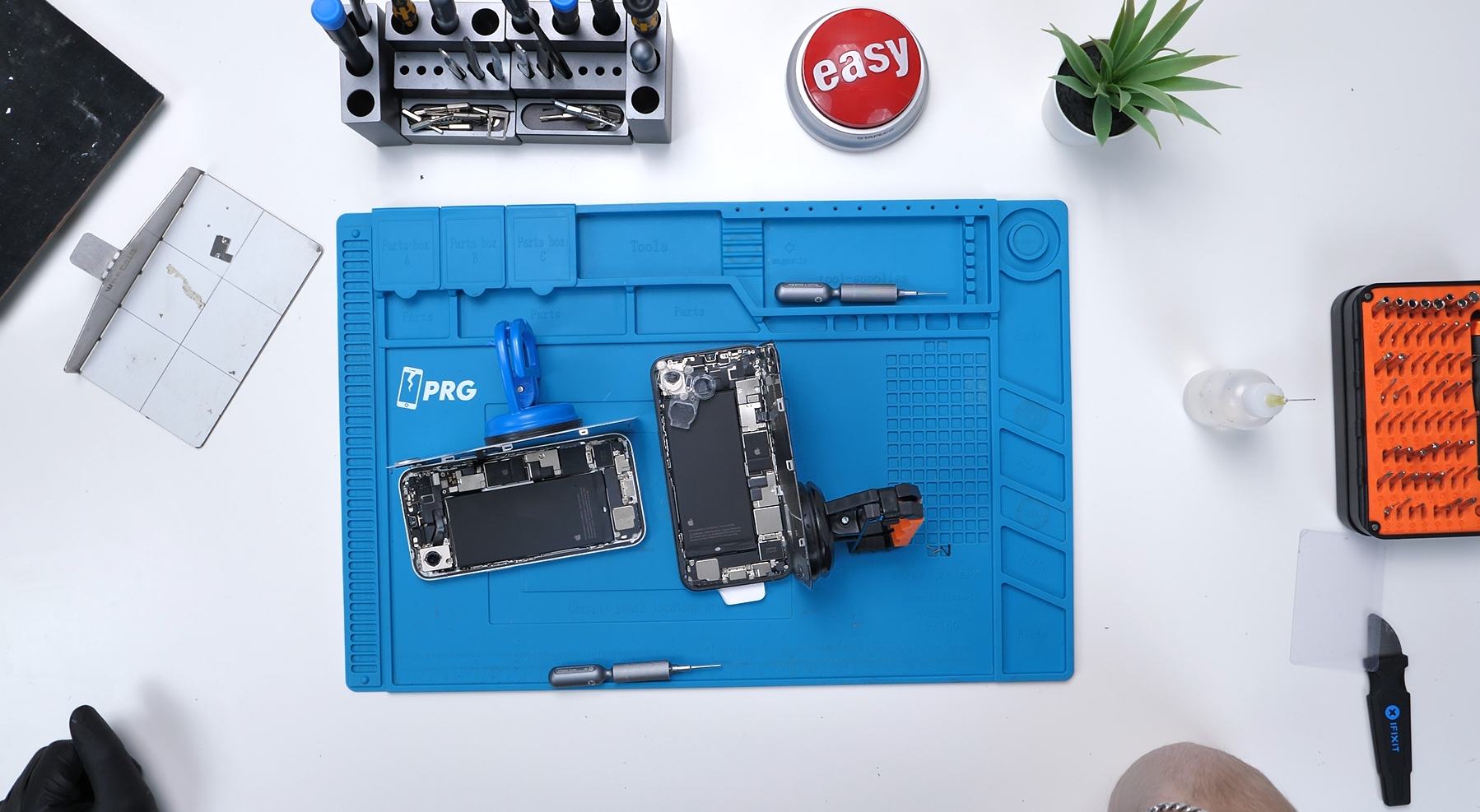
Looking at these two phones side by side, the similarities were hard to ignore. The connector layout looked the same, the board placement was the same, and the overall internal structure barely seemed to change. At that point the question basically asked itself.
Could the motherboard from the iPhone 16e actually run inside the iPhone 17e?
Swapping the Motherboards
To test that idea, we decided to try something that normally shouldn’t work. We took the motherboard from the iPhone 16e and installed it directly into the iPhone 17e chassis just to see what would happen.
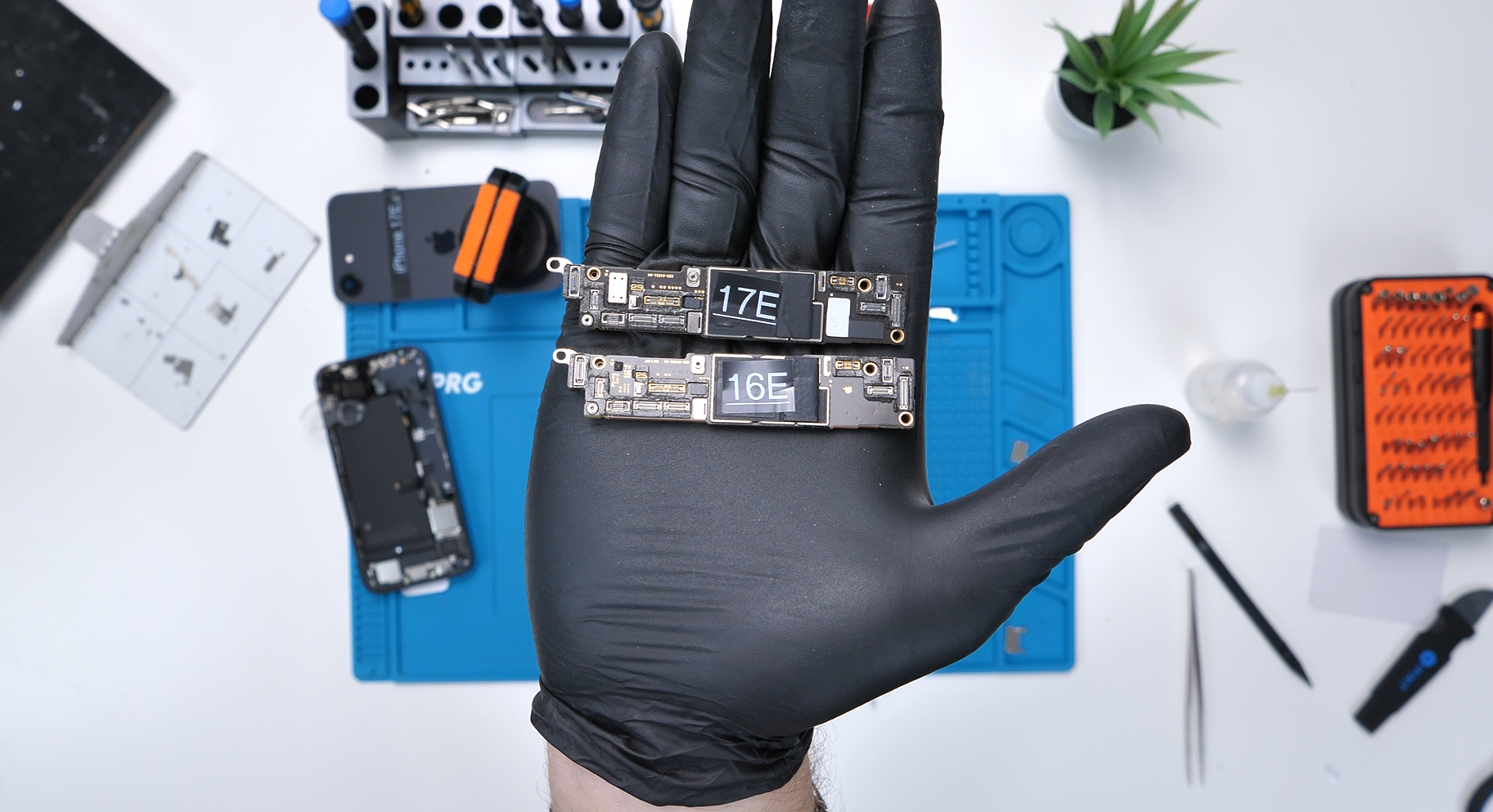
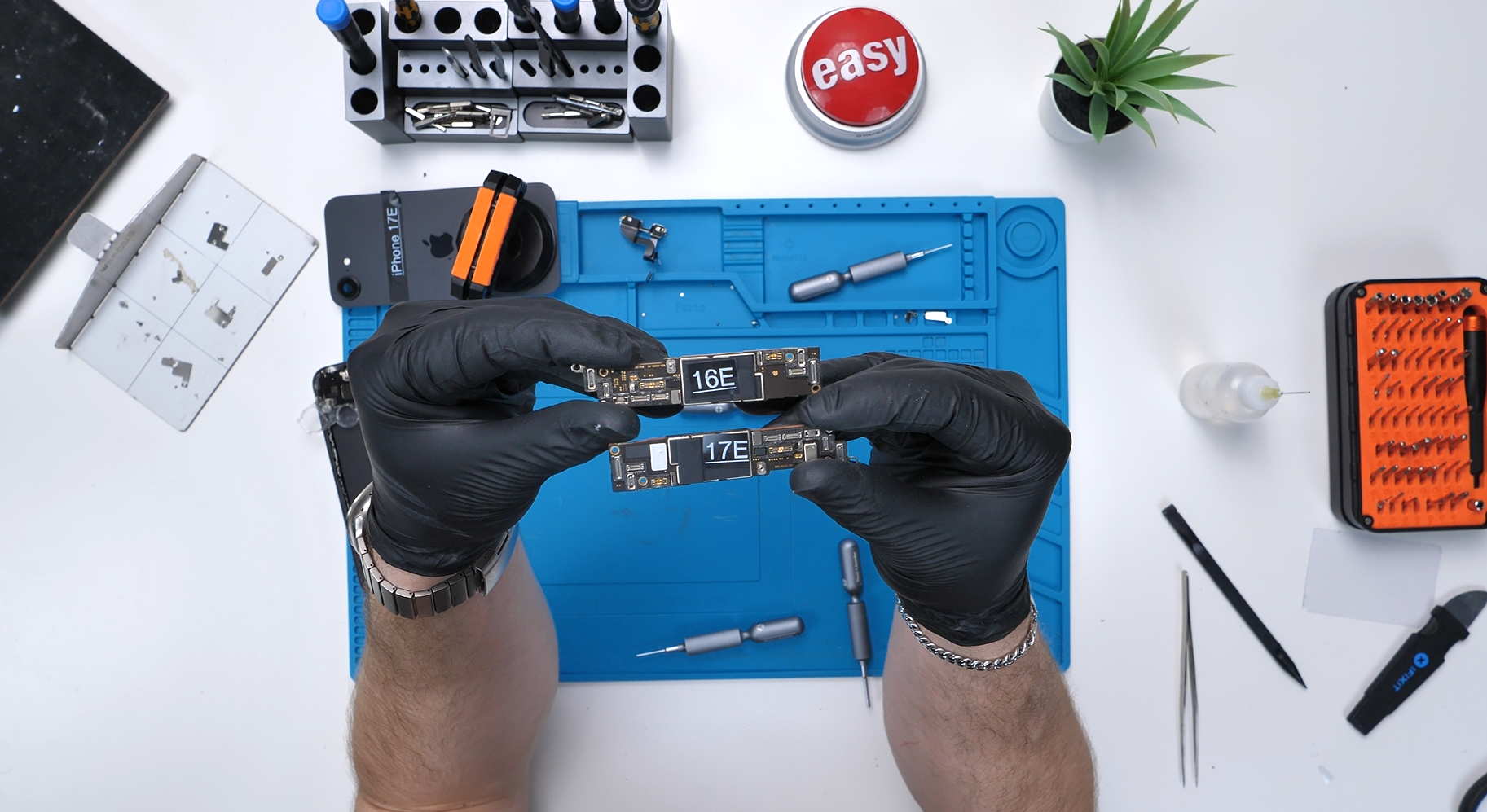
Normally this kind of swap fails immediately because Apple usually changes enough small details between generations to prevent compatibility. Even a slight shift in connector placement can make the entire experiment impossible.
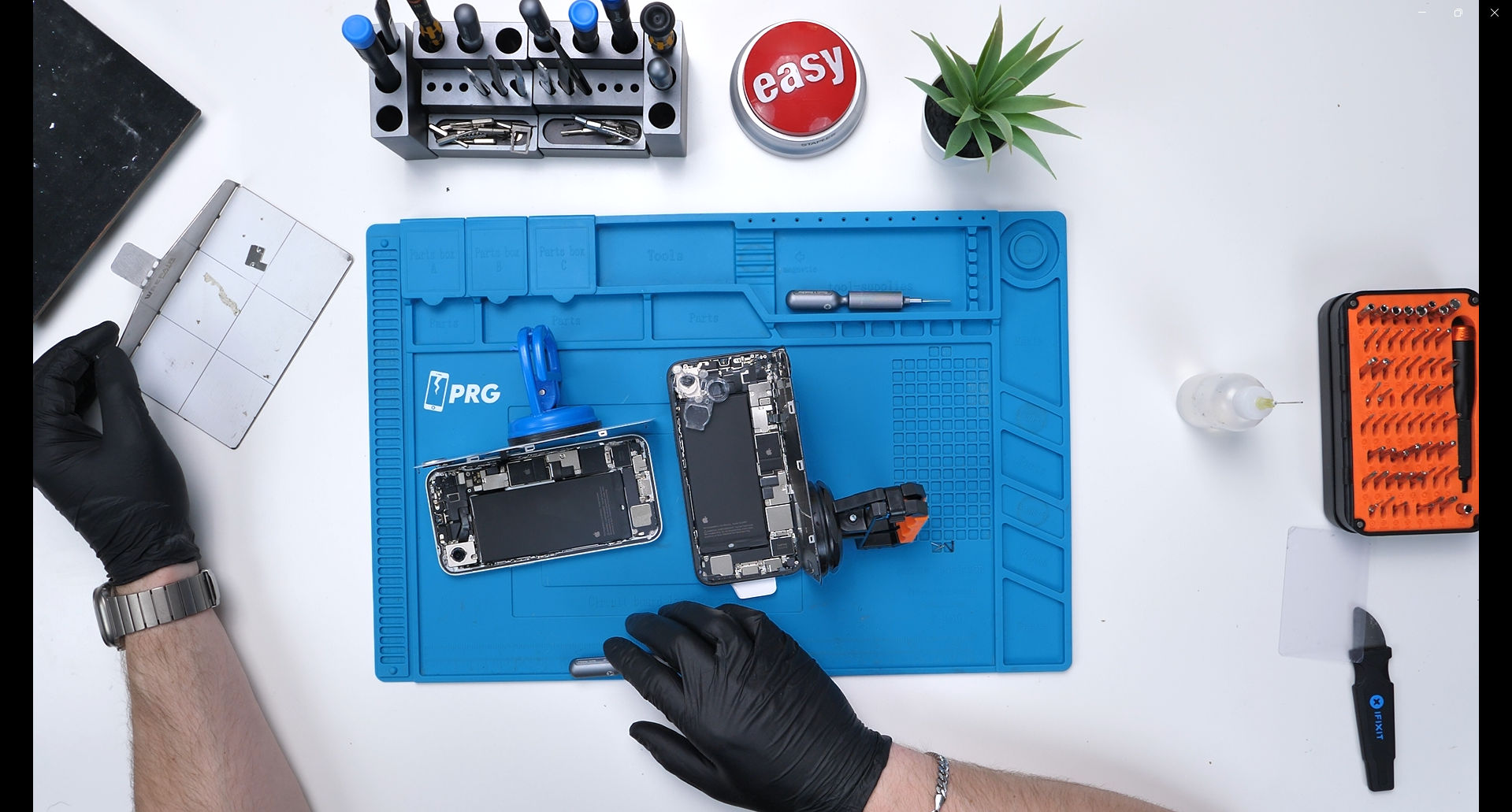
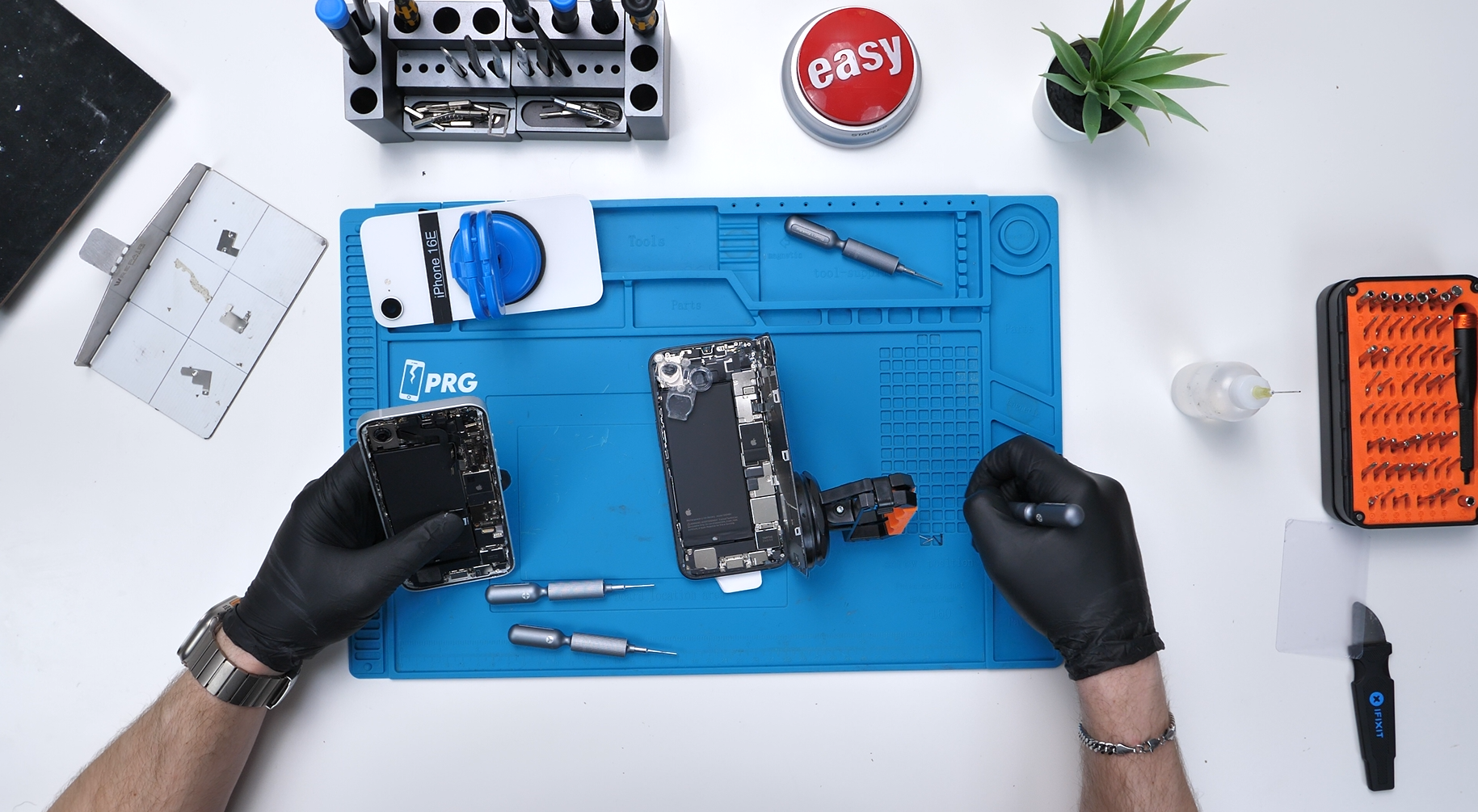
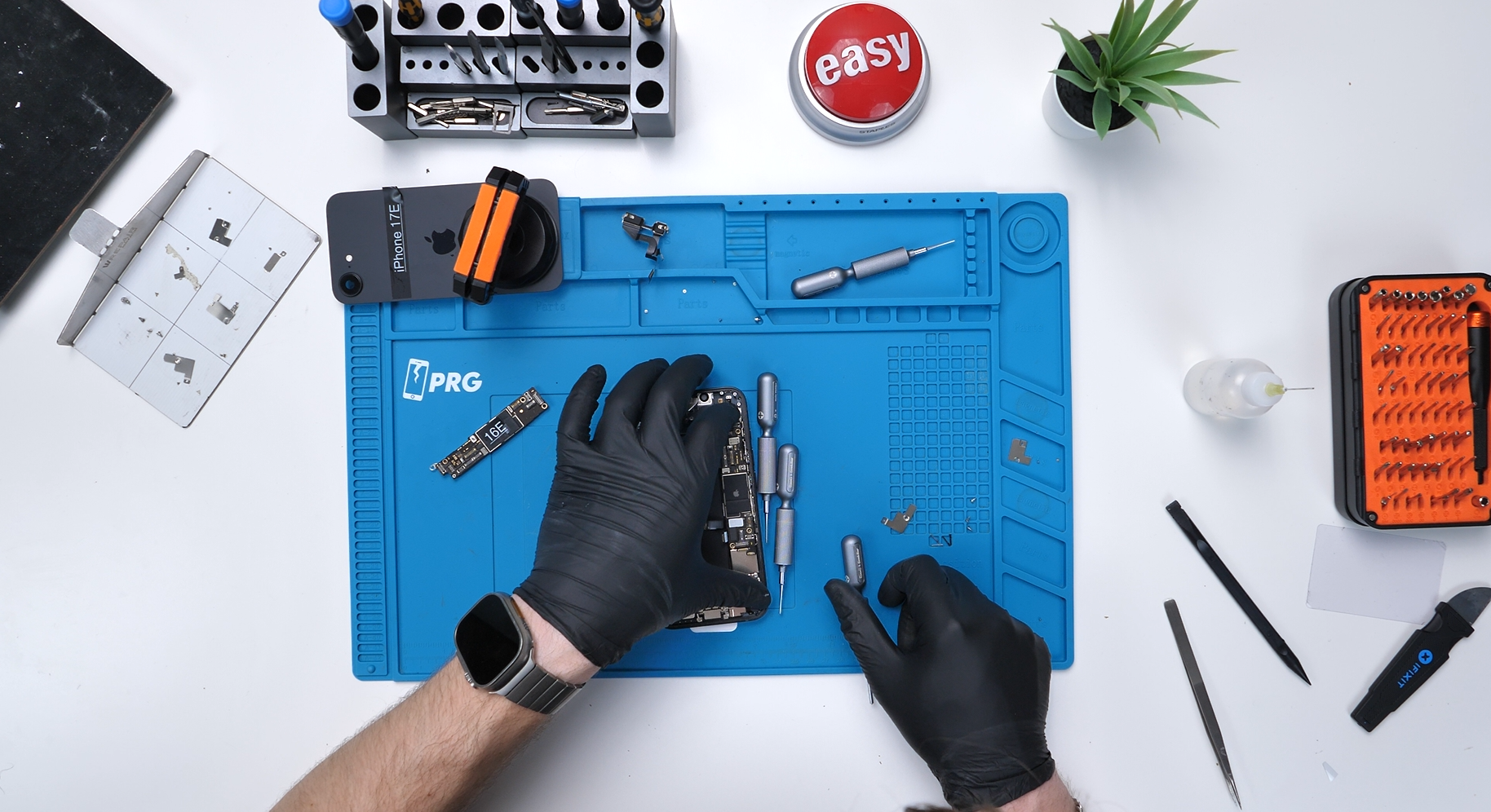
But once the board was placed inside the 17e frame, something pretty unexpected happened. Everything lined up almost perfectly. The screw holes matched the frame, the connectors landed exactly where they should, and the board seated into the housing like it belonged there.
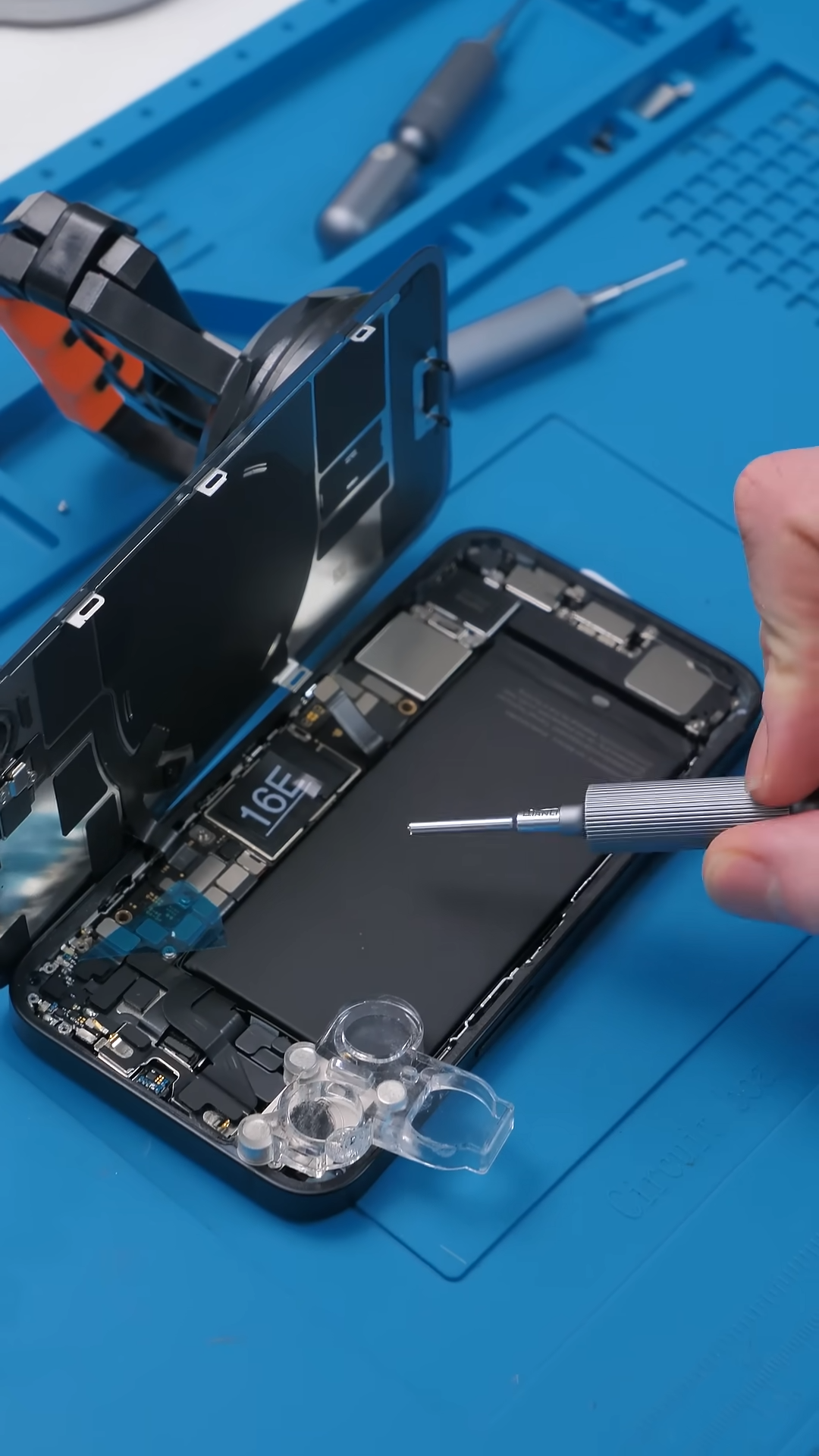
The only thing that felt slightly off was one connector that seemed a little loose, which is why you can see a small piece of tape holding it down in the image above. Aside from that tiny adjustment, the board installation looked completely normal.
Powering It On
After putting the phone back together, it was time to see if it would actually work.
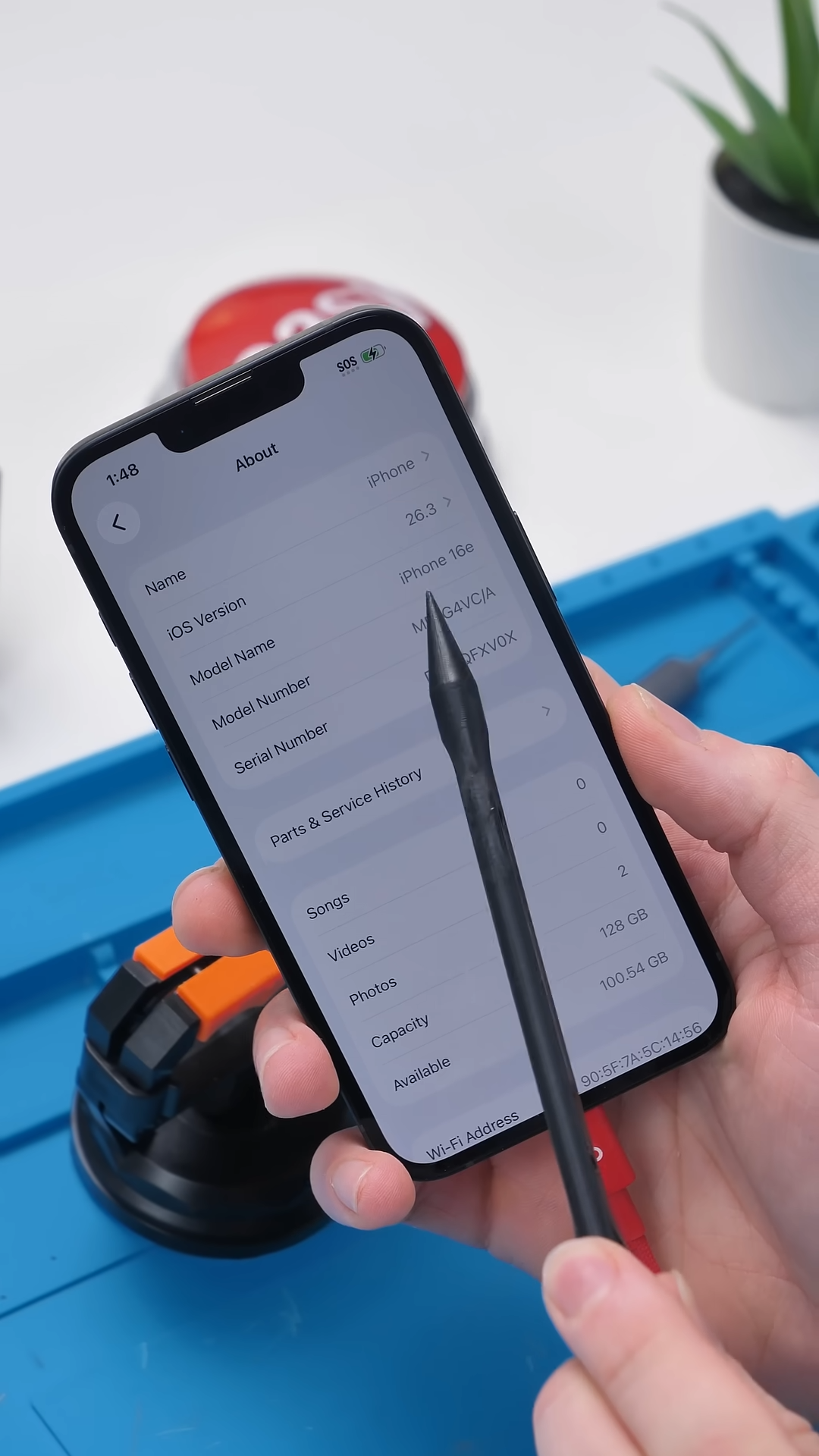
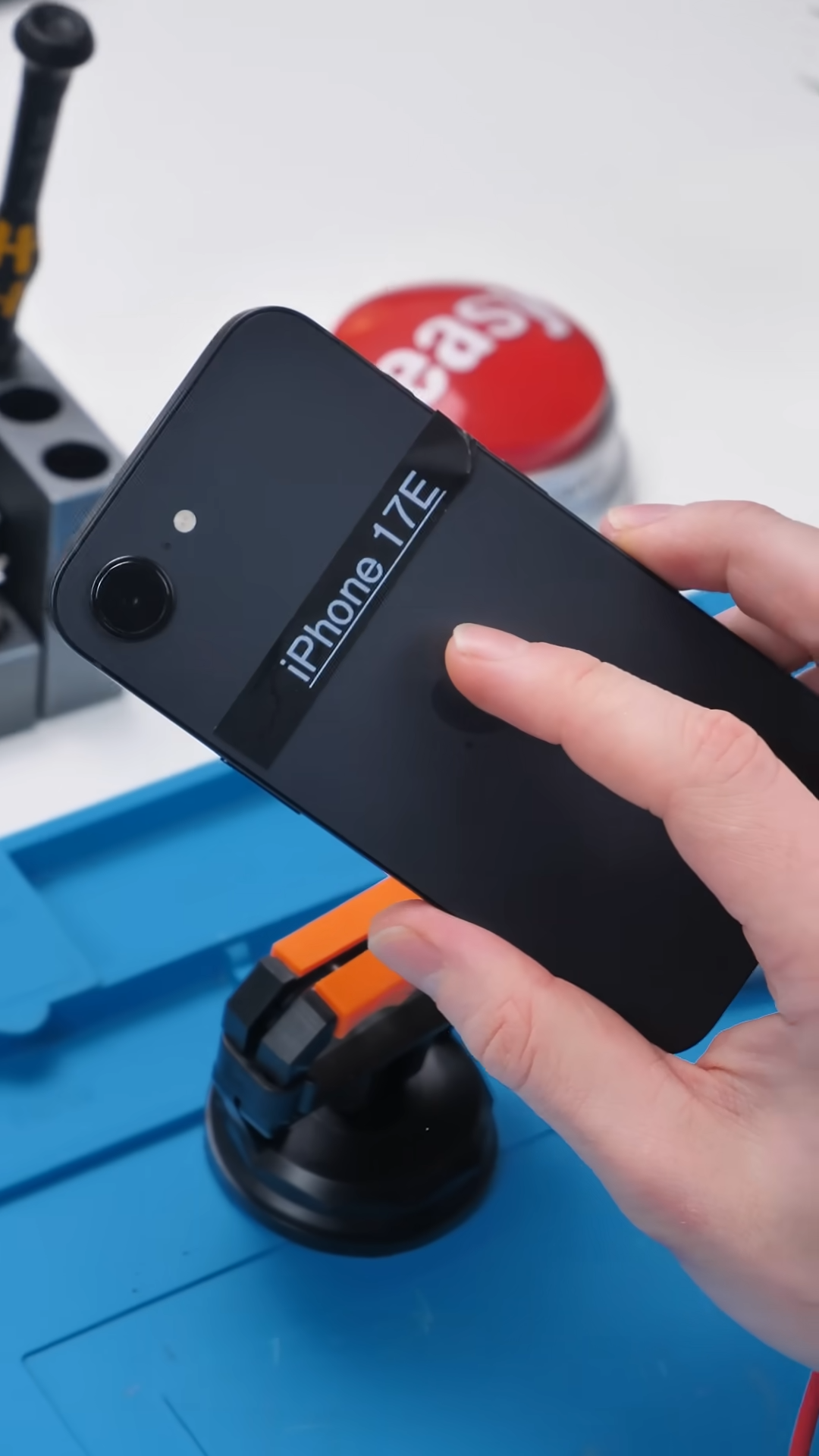
The phone powered on without any issues and booted just like a normal device. Even more surprising was how many components worked immediately. The display functioned properly, the buttons responded, the speakers worked, and charging behaved exactly as expected.
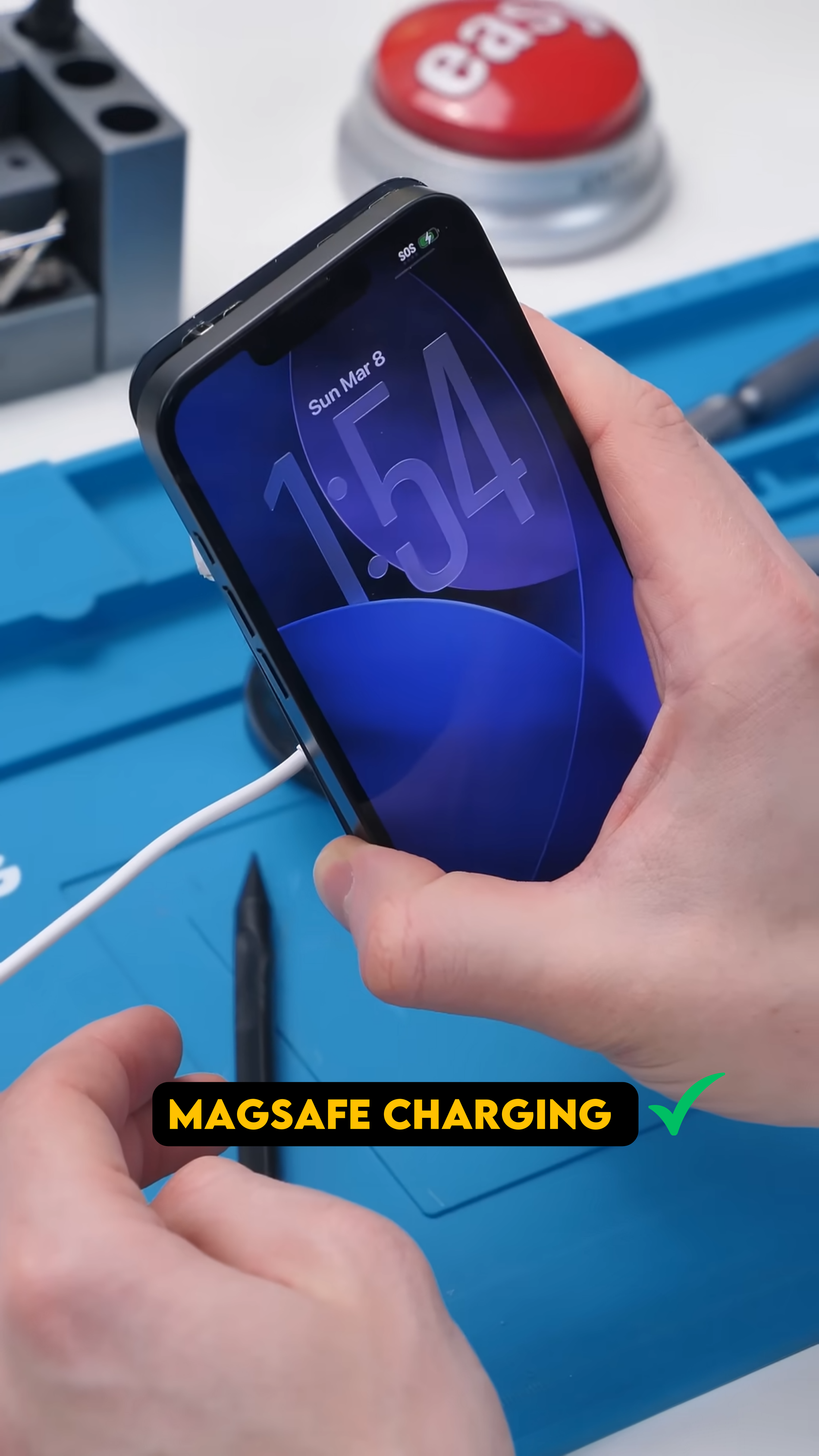
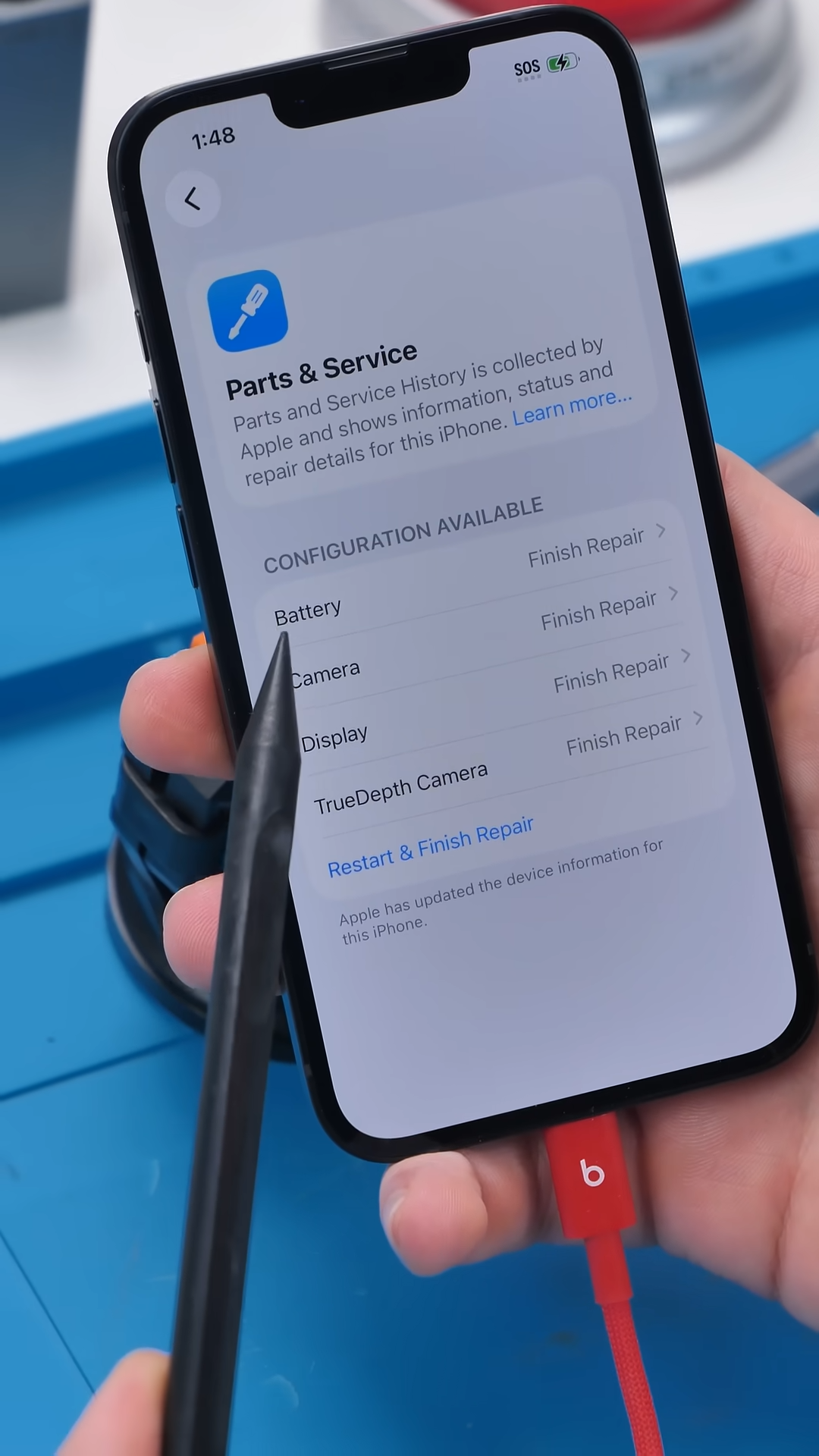
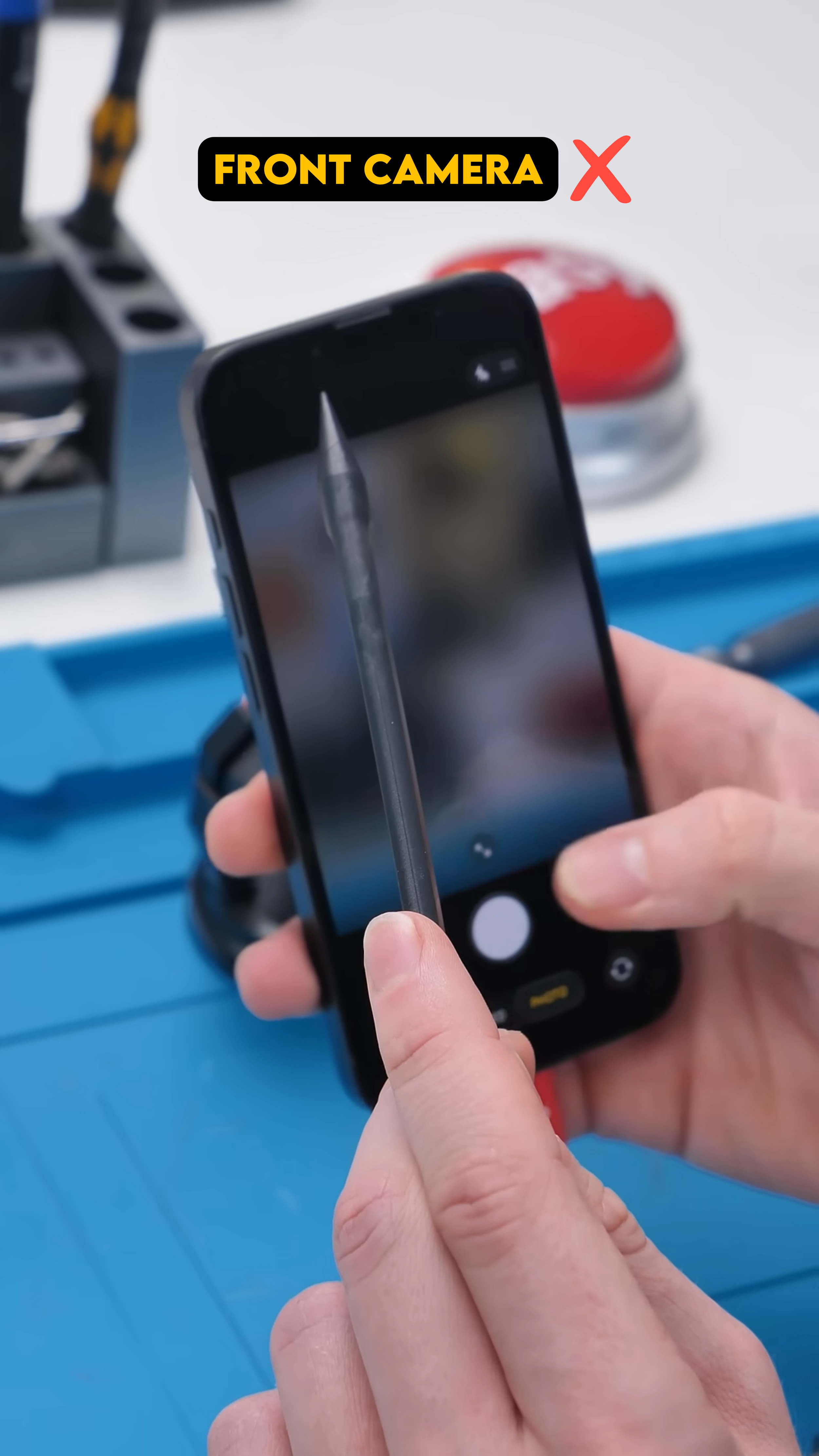
The only thing that didn’t cooperate was the front camera, which refused to function with the swapped motherboard.
Aside from that single issue, the phone behaved completely normally. We even left the device running for quite a while just to see if anything strange would happen, but there were no crashes, no boot loops, and no obvious instability.
Why the Swap Works
After taking a closer look at the hardware, the reason this experiment worked starts to make sense.
The two motherboards are practically identical. The only real differences we could spot were a small metal shield near the top of the board and the fact that the newer phone moves to eSIM instead of using a physical SIM card slot.
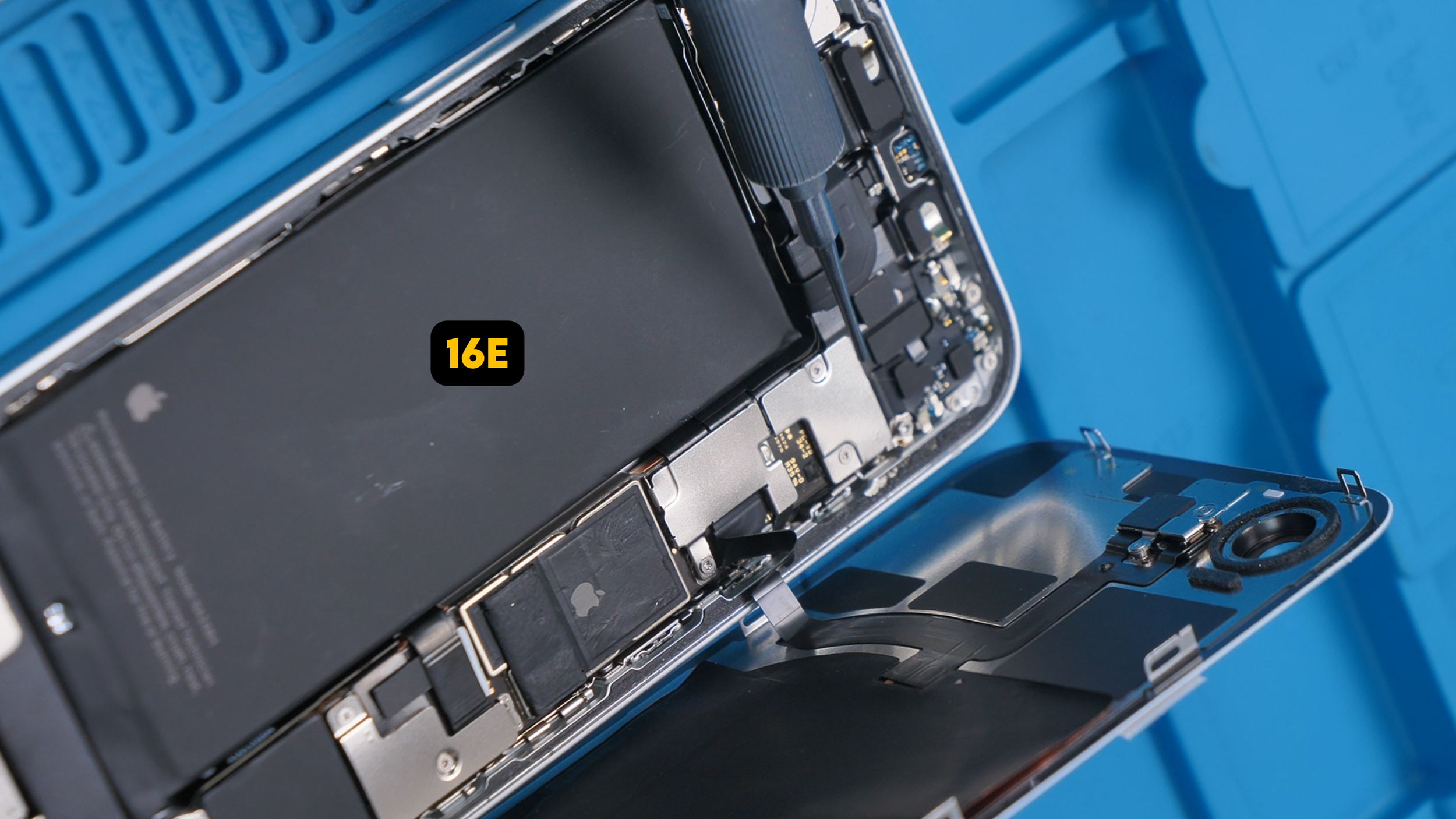
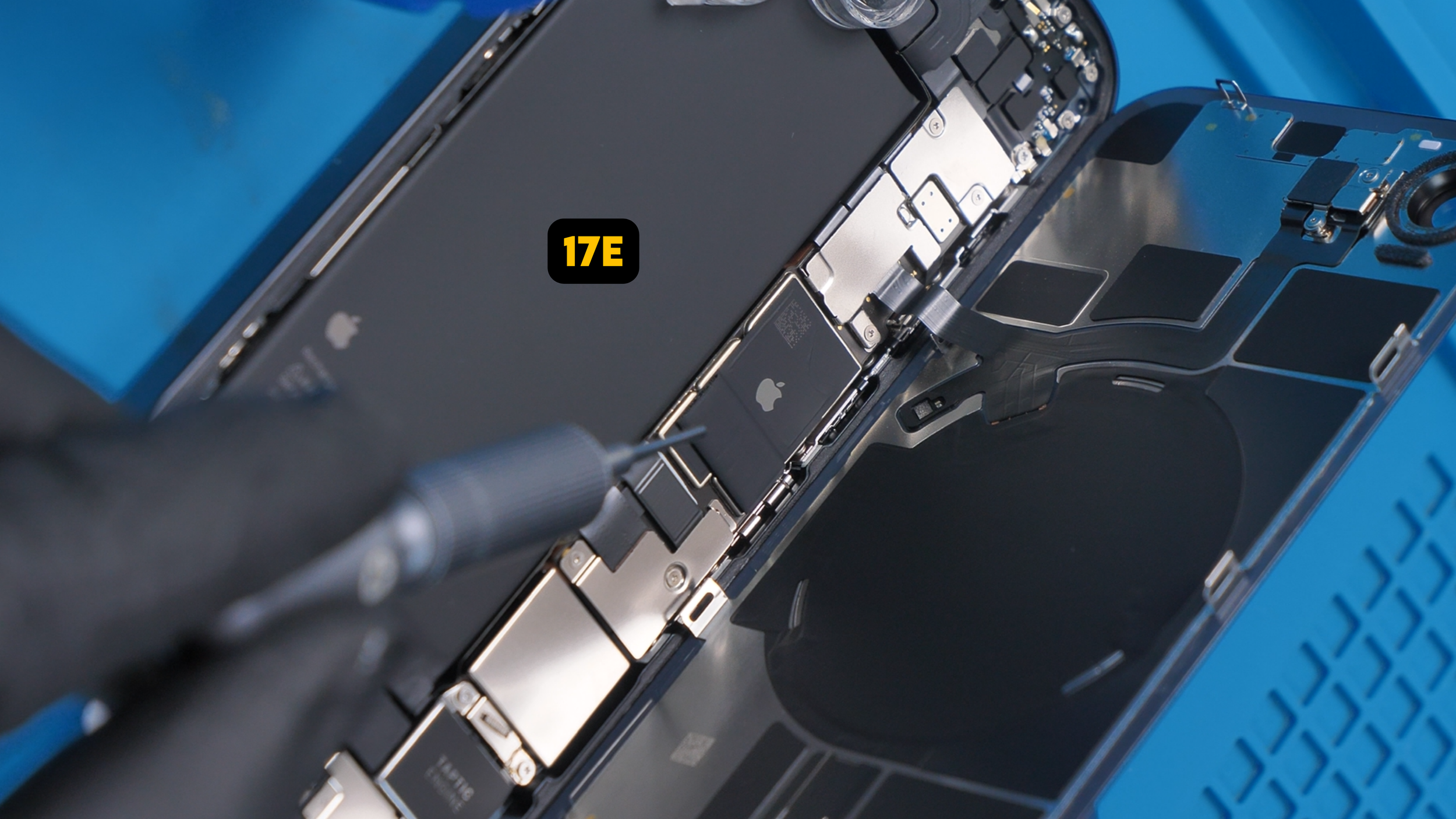
Outside of those minor changes, the internal layout appears almost unchanged. Because of that, many components seem to work interchangeably between the two phones. Based on what we’ve seen so far, it’s very possible that several parts from the 16e could work inside the 17e, potentially even things like the back glass with MagSafe.
Of course this is still early testing, and it would take a lot more experimentation to confirm full compatibility across every component. But the early results are definitely promising.
Additional Context From the 16e Teardown
When we originally tore down the iPhone 16e, it already showed signs of being built from a mix of older hardware.
Several components from previous iPhones were tested for compatibility, and some of the results were pretty interesting. The iPhone 14 display powered on and worked with full touch functionality, while the iPhone 14 Taptic Engine also fit and worked without any issues. The loudspeaker from the iPhone 15 turned out to be compatible as well.
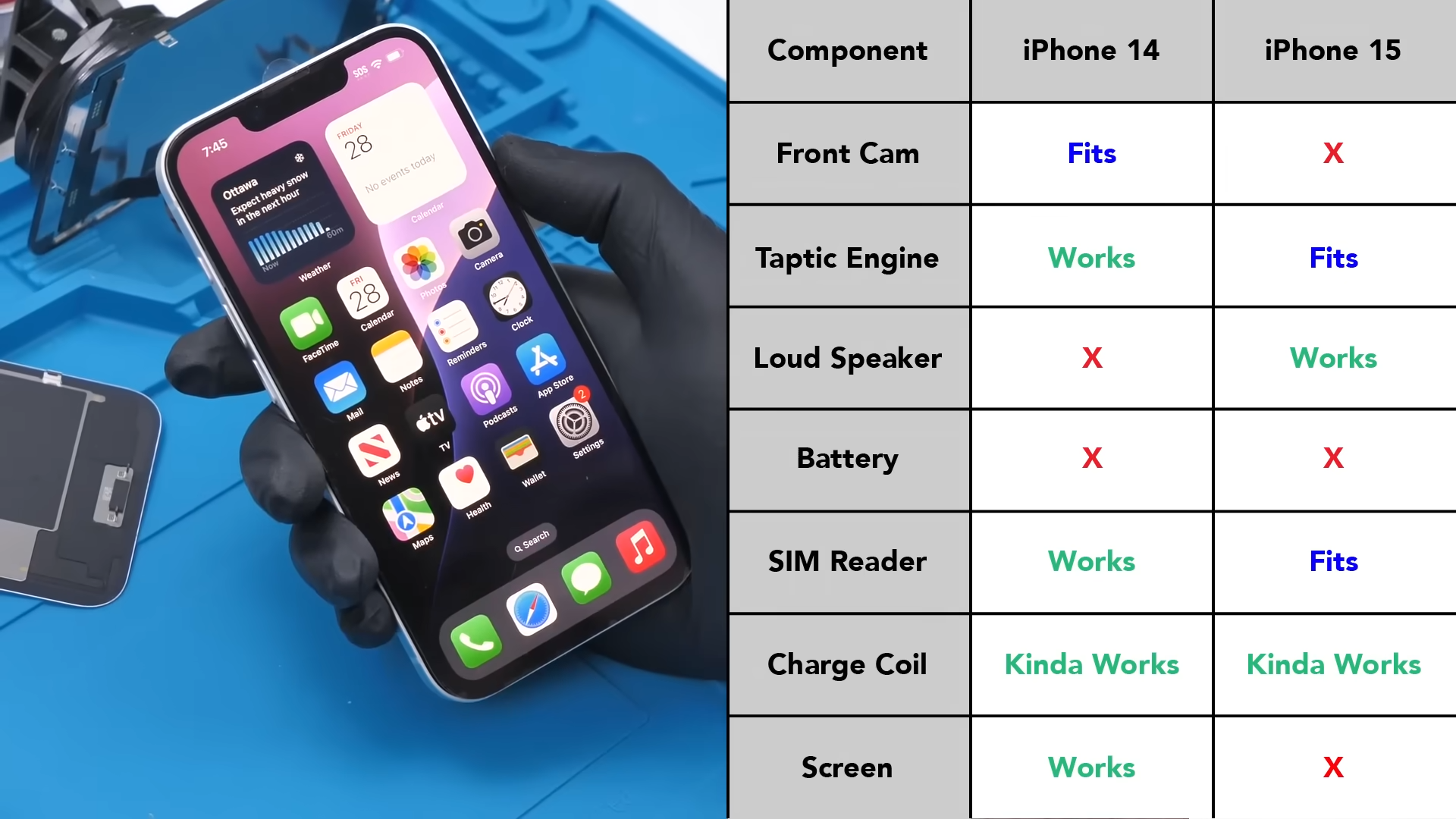
Other parts physically fit but didn’t function properly. The iPhone 14 front camera fits but doesn’t work, and the iPhone 15 Taptic Engine fits but fails to operate. Interestingly, the SIM reader from the iPhone 14 works with the 16e while the one from the iPhone 15 does not.
That teardown already showed that the 16e relies heavily on reused hardware from previous models, which likely explains why the 17e ended up sharing such a similar internal design.
A Big Win for Repairability
It’s actually pretty rare to see two iPhone generations share this much hardware compatibility. Apple normally changes enough internally that something like a motherboard swap would be impossible, but in this case the similarities between the two devices suggest that many parts could remain interchangeable.
If that turns out to be true, it would be great news for repairability because replacement components would stay more abundant and likely cheaper for longer. This experiment is still preliminary and more testing would be needed to confirm full compatibility, but if these early results hold up, this could be one of the first times you can swap a motherboard between two iPhone generations and have it work almost perfectly.
See you in the next article!
